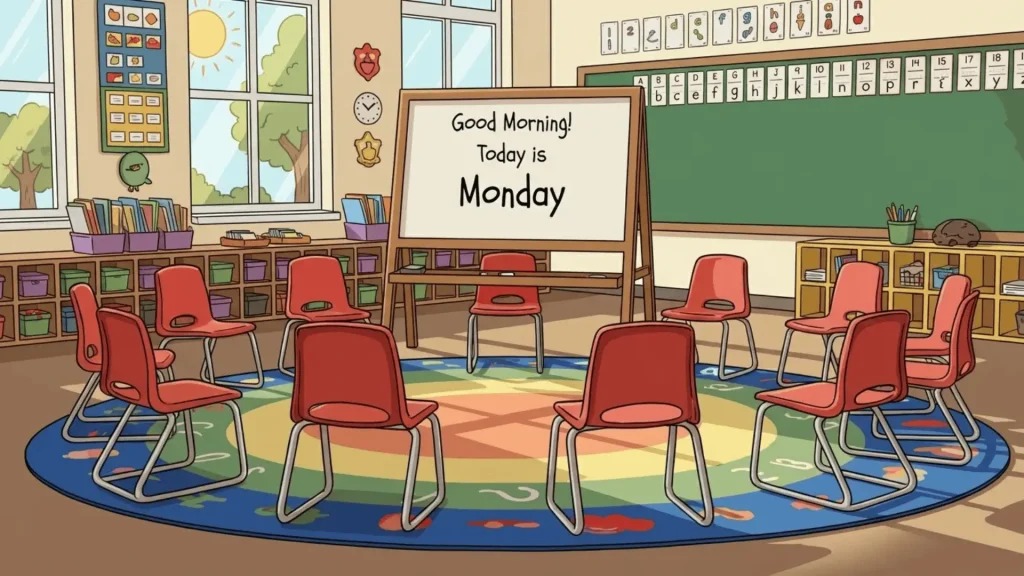
The first few minutes of a school day often set the tone for everything that follows. That’s where morning meeting activities can quietly shape how students feel, think, and interact in class.
Instead of jumping straight into lessons, these small routines give students a chance to settle in, connect, and get mentally ready.
In this blog, I’ll walk you through practical ideas that fit different classroom needs, along with simple ways to keep them effective and engaging.
If done right, even a short morning routine can change how your entire day flows.
Why Morning Meeting Activities Matter
Morning meeting activities help students start the day in a positive and organized way. These short routines support classroom relationships, improve focus, and encourage respectful communication among students.
- Builds Classroom Community: Morning meetings help students connect with classmates through short conversations and group activities. This encourages positive interaction and helps create a supportive classroom environment.
- Improves Student Focus: Short activities help students transition into learning time. They create a calm start to the day and help students prepare for lessons.
- Supports Social and Emotional Learning: Morning meetings encourage sharing, listening, and understanding others. These activities help students develop communication skills, empathy, and teamwork.
Morning Meeting Activities
Morning meeting activities help students begin the day with connection, focus, and positive interaction. These simple routines encourage participation and help teachers create a supportive classroom environment before lessons start.
Greeting Activities
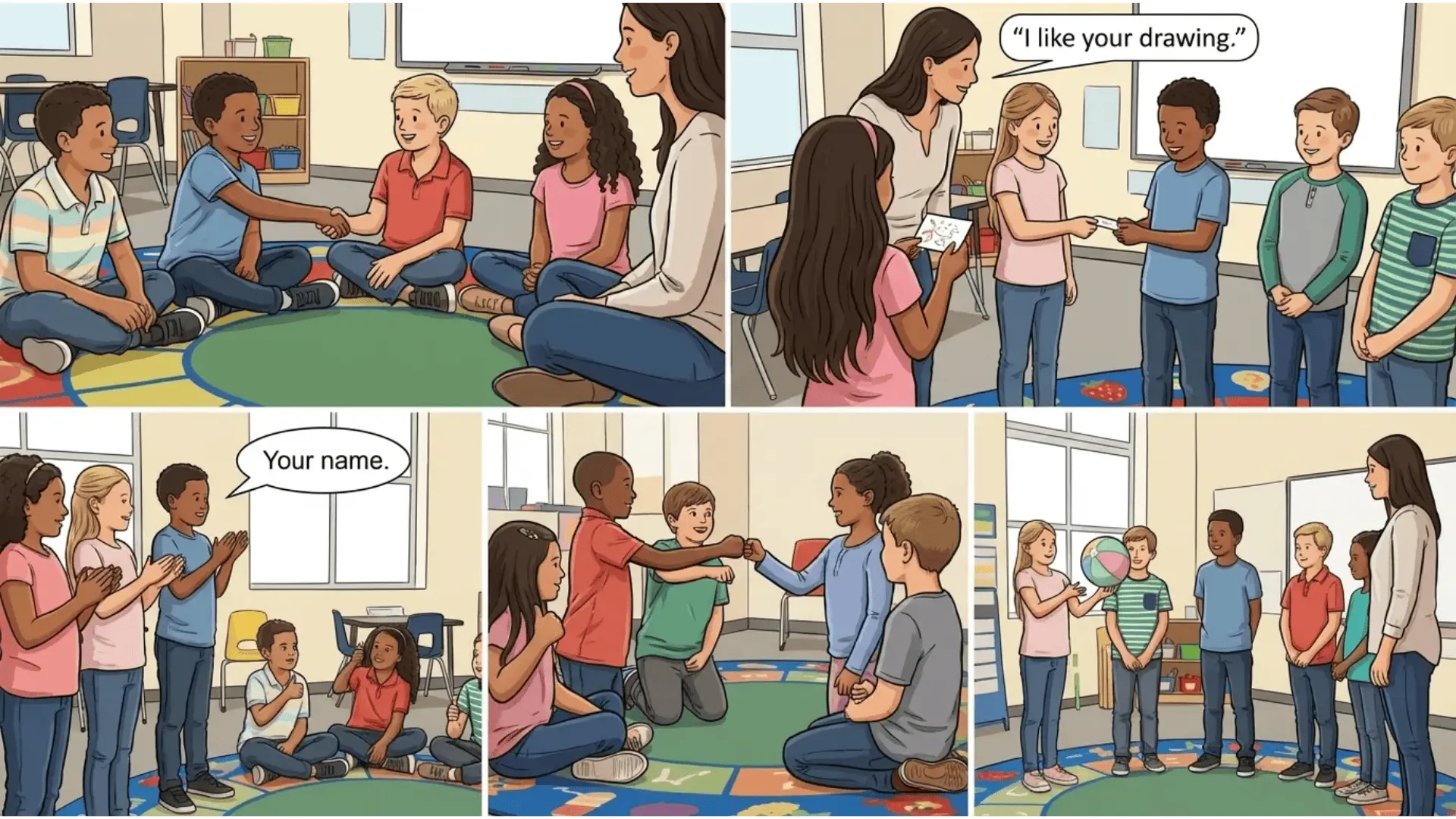
Greeting activities help students acknowledge classmates and start the day with friendly interaction. These short routines build classroom connection and encourage respectful communication.
1. Circle Greeting
Students sit in a circle and greet the person next to them. Each student says hello using the classmate’s name. This activity helps students learn names, practice polite greetings, and start the day with positive interaction among classmates.
2. Compliment Greeting
Students greet a classmate and share a kind comment. The compliment may focus on effort, helpful actions, or positive behavior in class.
This activity encourages supportive communication and helps students notice good qualities in others.
3. Name and Action Greeting
Each student says their name and performs a simple action such as clapping or waving. The class repeats the name and action together.
This activity builds participation, helps students remember names, and adds a small movement break to the morning meeting.
4. Themed Greeting
Students greet classmates using a fun weekly theme such as a wave, handshake, or elbow bump. The greeting style changes each week to keep the activity interesting.
This routine encourages interaction and helps students start the day with energy and positive engagement.
5. Silent Greeting
Students greet classmates without speaking by using gestures such as waving, smiling, or giving a thumbs-up. This activity helps students communicate through body language while maintaining a calm classroom atmosphere at the start of the day.
6. Greeting Ball Toss
Students stand in a circle, while one student tosses a soft ball to a classmate and greets them by name.
The student receiving the ball returns the greeting and tosses it to another classmate. This activity encourages participation and helps students learn each other’s names.
Icebreaker Activities
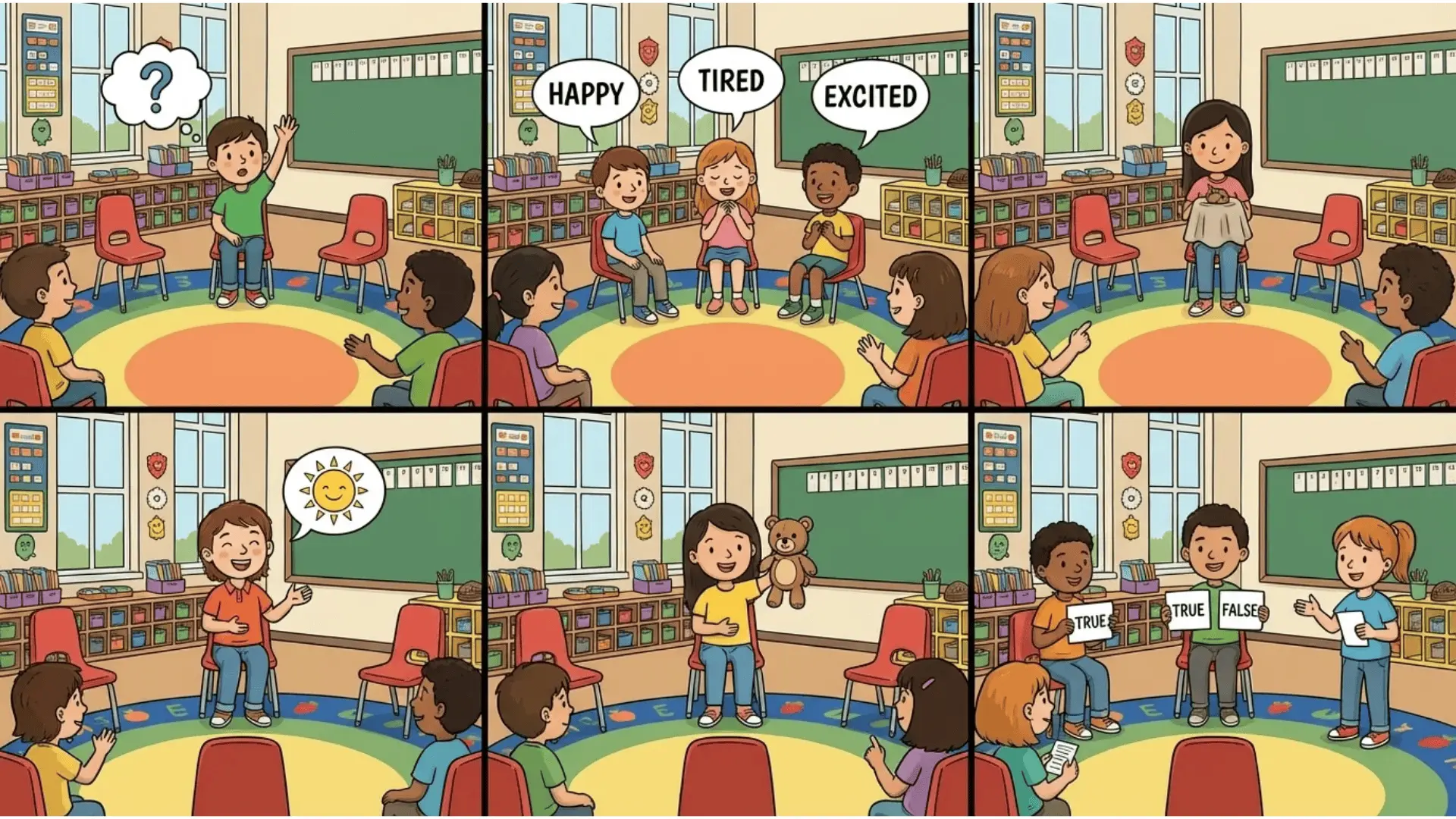
Icebreaker activities help students relax and feel comfortable participating in class discussions. These activities encourage sharing and help classmates learn more about each other.
7. Would You Rather
The teacher asks a fun question, such as “Would you rather read a book or play outside?” Students choose an answer and briefly explain their choice.
This activity encourages conversation and helps students practice sharing their opinions with classmates.
8. One-Word Check-In
Students describe how they feel using one word, such as happy, excited, or tired. Each student shares their word during the meeting. This activity helps teachers understand student emotions and encourages students to express their feelings.
9. Guess the Object
The teacher describes an object by giving clues about its shape, use, or location. Students listen carefully and guess the object. This activity encourages critical thinking and helps students practice listening skills during group discussions.
10. Share Something Good
Students take turns sharing a positive moment from their day or week. It could be a success in school, time with family, or an enjoyable activity. This routine encourages positive thinking and helps students celebrate small achievements.
11. Favorite Things Share
Students share one of their favorite things, such as a food, hobby, or activity. This activity allows classmates to learn more about each other’s interests and helps build conversation skills within the classroom.
12. Two Truths and a Fun Fact
Students share two true statements and one interesting fact about themselves. Classmates guess which one is the fun fact. This activity encourages listening, curiosity, and classroom discussion.
Movement Activities
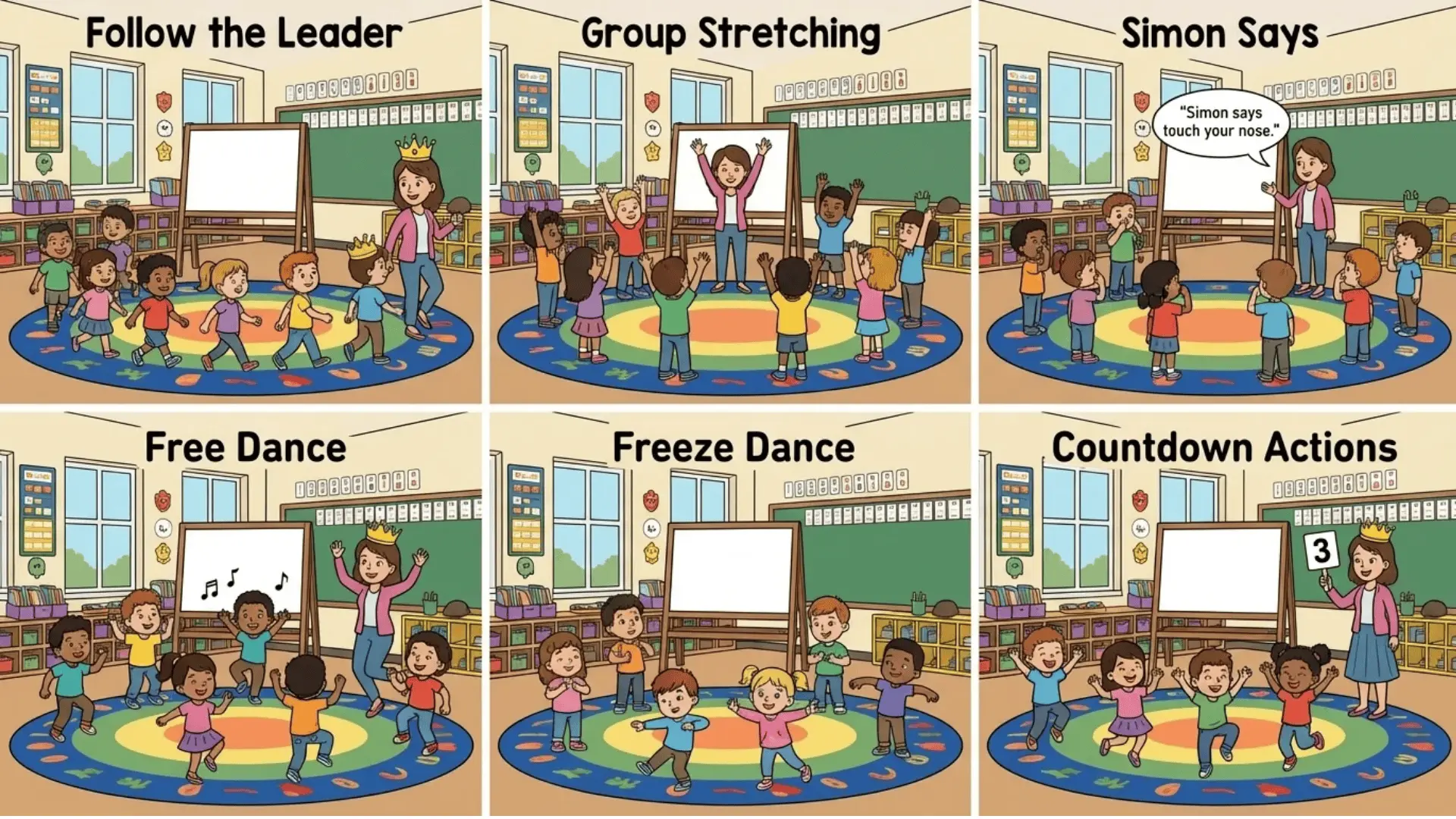
Movement activities give students a short physical break before lessons begin. These activities help students release energy and improve focus for the rest of the school day.
13. Follow the Leader
One student acts as the leader and performs simple movements such as jumping, stretching, or clapping. The rest of the class copies the movements.
This activity encourages participation and gives students a quick physical warm-up.
14. Quick Stretch Break
Students perform a short series of simple stretches together. The teacher guides the class through movements such as reaching up, touching toes, or rolling shoulders.
This activity helps students relax their bodies and prepare for classroom learning.
15. Simon Says
The teacher or a student gives instructions such as “Simon says touch your head.” Students follow the instructions only when the phrase “Simon says” is included. This activity improves listening skills while adding fun movement.
16. Dance Break
Play music for a short time and allow students to move freely. Students can clap, step side to side, or move their arms. This quick movement activity increases energy and helps students feel refreshed before starting lessons.
17. Freeze Dance
Students dance to the music and freeze when the music stops. Anyone still moving waits until the next round to rejoin. This encourages movement, listening, and quick reactions while keeping the classroom atmosphere lively.
18. Action Countdown
The teacher counts down from five while assigning a movement to each number, such as jumping, clapping, or spinning. Students perform the movements together.
This activity combines listening, counting practice, and physical movement in a short routine.
Reflection and SEL Activities
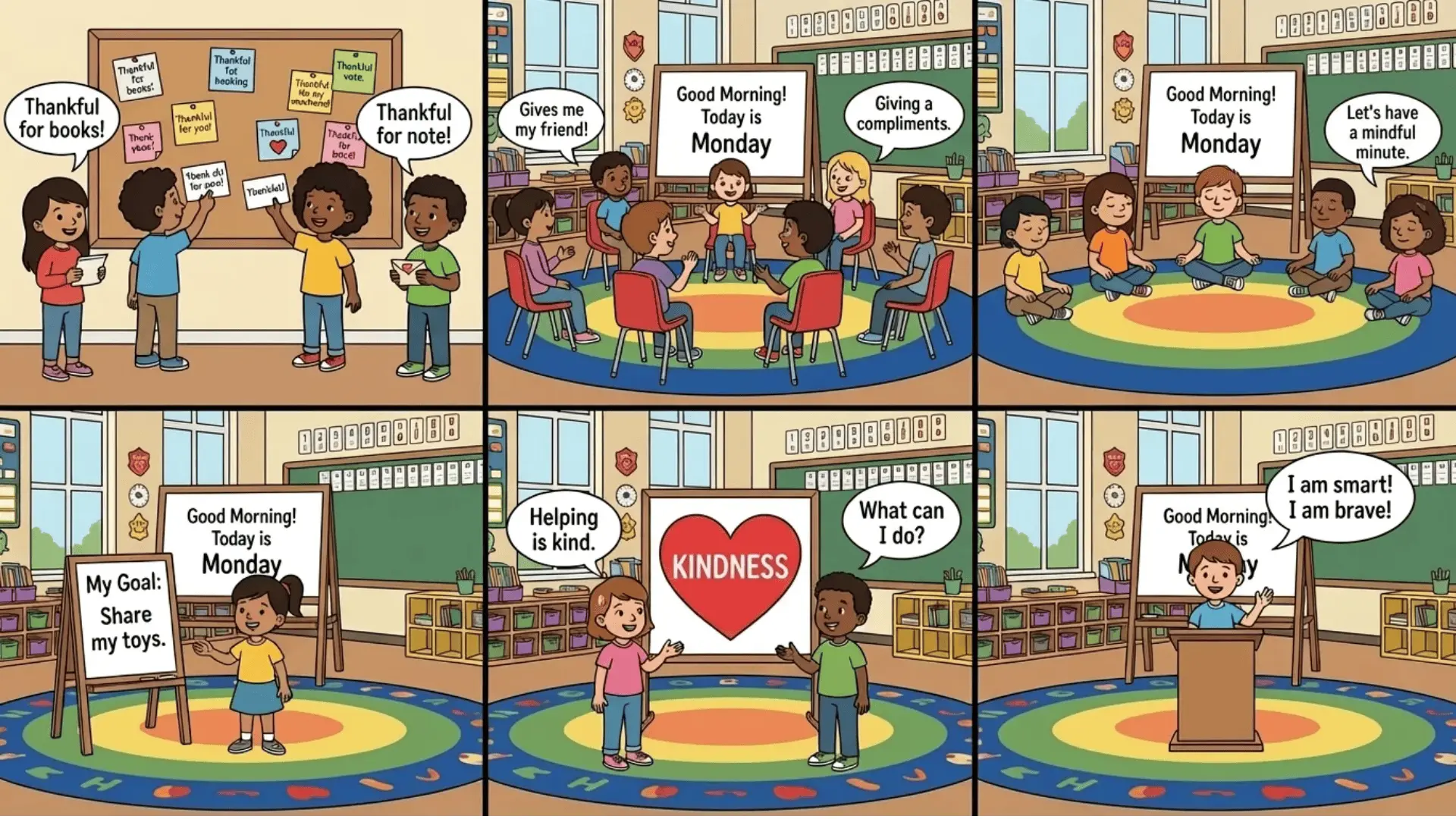
Reflection and social-emotional learning activities help students think about feelings, goals, and positive behavior. These routines encourage empathy, self-awareness, and supportive classroom relationships.
19. Gratitude Sharing
Students take turns sharing something they feel thankful for. It may involve a classmate, a teacher, or a positive experience from the day. This activity encourages appreciation and helps students recognize positive moments in school.
20. Compliment Circle
Students sit in a circle and say something kind about a classmate. The compliment may highlight effort, teamwork, or helpful behavior. This activity promotes respectful communication and helps students feel recognized by their peers.
21. Mindful Minute
Students sit quietly and focus on breathing for one minute. The teacher guides them to breathe slowly and relax their bodies. This short mindfulness activity helps students calm their minds and prepare for the day’s lessons.
22. Daily Goal Share
Students share one goal they want to complete during the school day. The goal may involve finishing work, helping a classmate, or improving effort. This activity encourages responsibility and helps students stay focused on their tasks.
23. Kindness Reflection
Students describe a kind action they noticed or experienced recently. The discussion helps students recognize positive behavior and encourages them to repeat similar actions throughout the day.
24. Positive Affirmation
Students repeat short positive statements such as “I will try my best today” or “I can help others.” This activity encourages confidence and promotes a supportive classroom mindset.
25. Reflection Question
The teacher asks a simple question, such as “What helps you stay focused in class?” Students briefly share their ideas. This activity encourages thoughtful discussion and helps students reflect on their learning habits.
Tips for Running Effective Morning Meetings
Morning meetings stay effective when you keep a few simple strategies in mind.
- Keep Activities Short: Plan activities that last five to ten minutes so students stay focused, avoid restlessness, and still have enough time to smoothly transition into daily lessons
- Rotate Activities Regularly: Change greetings, icebreakers, and reflection tasks throughout the week to keep students interested and prevent the routine from feeling repetitive or predictable
- Encourage Student Participation: Let students lead or choose activities at times to build confidence, improve communication skills, and create a stronger sense of ownership in the classroom
Using these simple strategies can help you run morning meetings that feel fresh, engaging, and easy to manage every day.
Sample Morning Meeting Routine
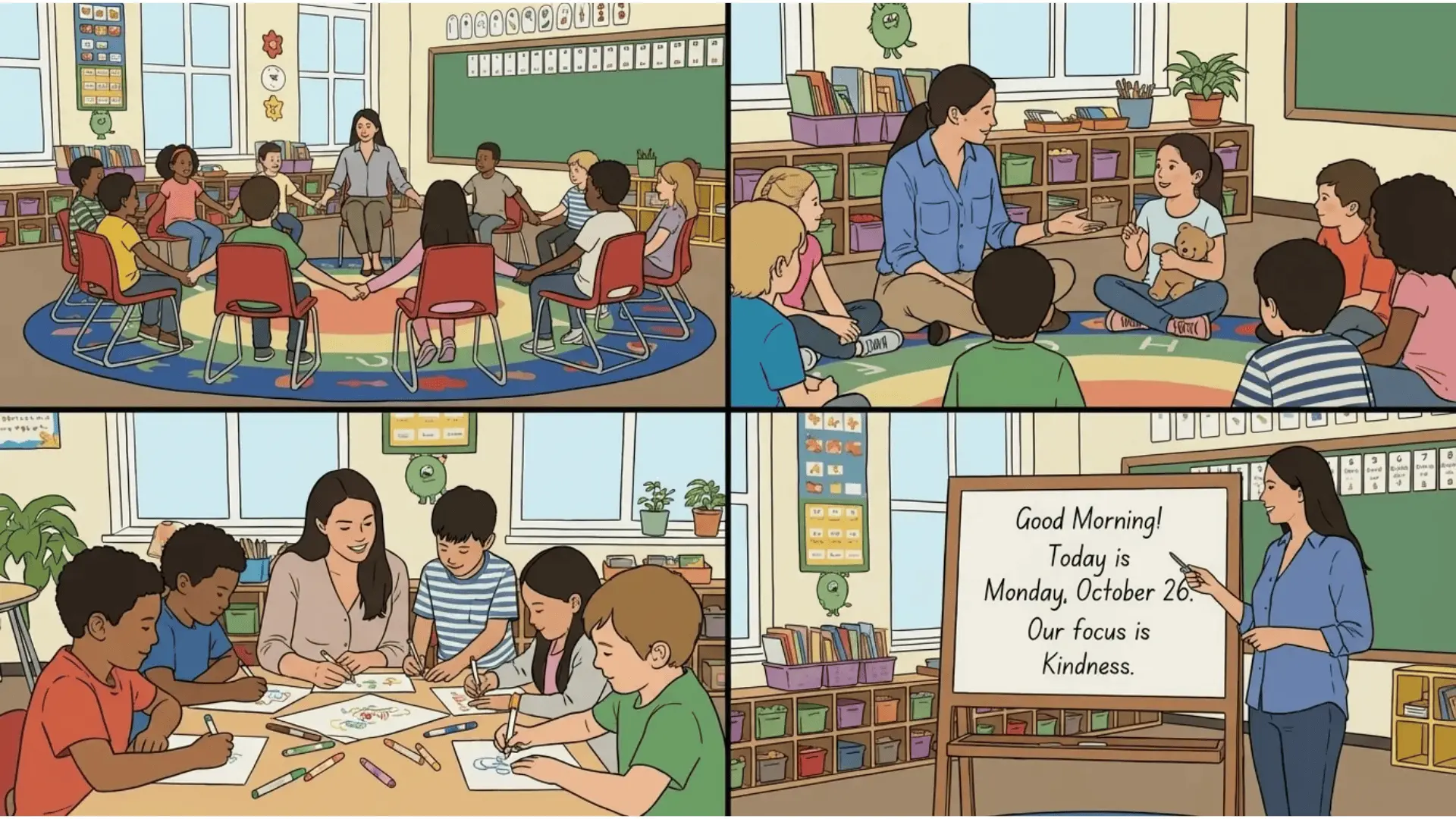
| Step | Description |
|---|---|
| Greeting | Students greet each other by name using a simple activity, helping build connections and create a welcoming classroom environment. |
| Sharing | Students share thoughts, ideas, or short experiences, encouraging communication and helping classmates learn more about each other. |
| Activity | The class joins a short group task such as a game, movement activity, or discussion to stay engaged and focused. |
| Morning Message | The teacher shares a brief message about the day’s plan, reminders, or goals to help students know what to expect. |
This simple structure helps create a smooth and positive start to the school day.
Conclusion
As I’ve seen in many classrooms, consistency in small routines can lead to noticeable changes in student behavior and engagement.
Morning meeting activities are not just about starting the day. They help shape how students participate, communicate, and stay focused throughout lessons.
When used regularly, they create a steady rhythm that students begin to rely on. The goal is not to do everything at once, but to start simple and build gradually.
Try adding one or two activities from this list into your routine today and see how your classroom energy begins to shift.