If you’re teaching early learners, you already know that starting with simple sentences for kindergarten is the best way to build strong language skills.
In this list, you’ll find simple sentence examples you can use for reading practice, writing exercises, or classroom activities.
These are perfect for helping kids recognize patterns, improve vocabulary, and start forming their own sentences.
What are Simple Sentences for Kindergarten?
Simple sentences for kindergarten are short, clear, and easy to understand, helping young learners grasp the basics of language.
They usually follow a simple structure, such as subject + verb, and use familiar, everyday words.
These sentences are designed to build confidence, improve vocabulary, and help kids understand how words come together to form meaning without feeling overwhelmed.
How to Teach Sentences for Kindergarteners
Teaching simple sentences doesn’t have to be complicated; you need the right approach. Focus on repetition, visuals, and interactive activities to make learning stick.
- Start with Familiar Words: Use words kids already know so they can focus on sentence structure rather than learning new vocabulary.
- Use Visual Aids: Pictures and flashcards help children quickly connect words to their meaning and make learning more engaging.
- Practice Through Repetition: Repeating similar sentence patterns helps kids recognize structure and builds confidence over time.
- Encourage Speaking and Writing: Let kids say sentences out loud, then write them to improve understanding and retention.
Simple Sentences for Kindergarten
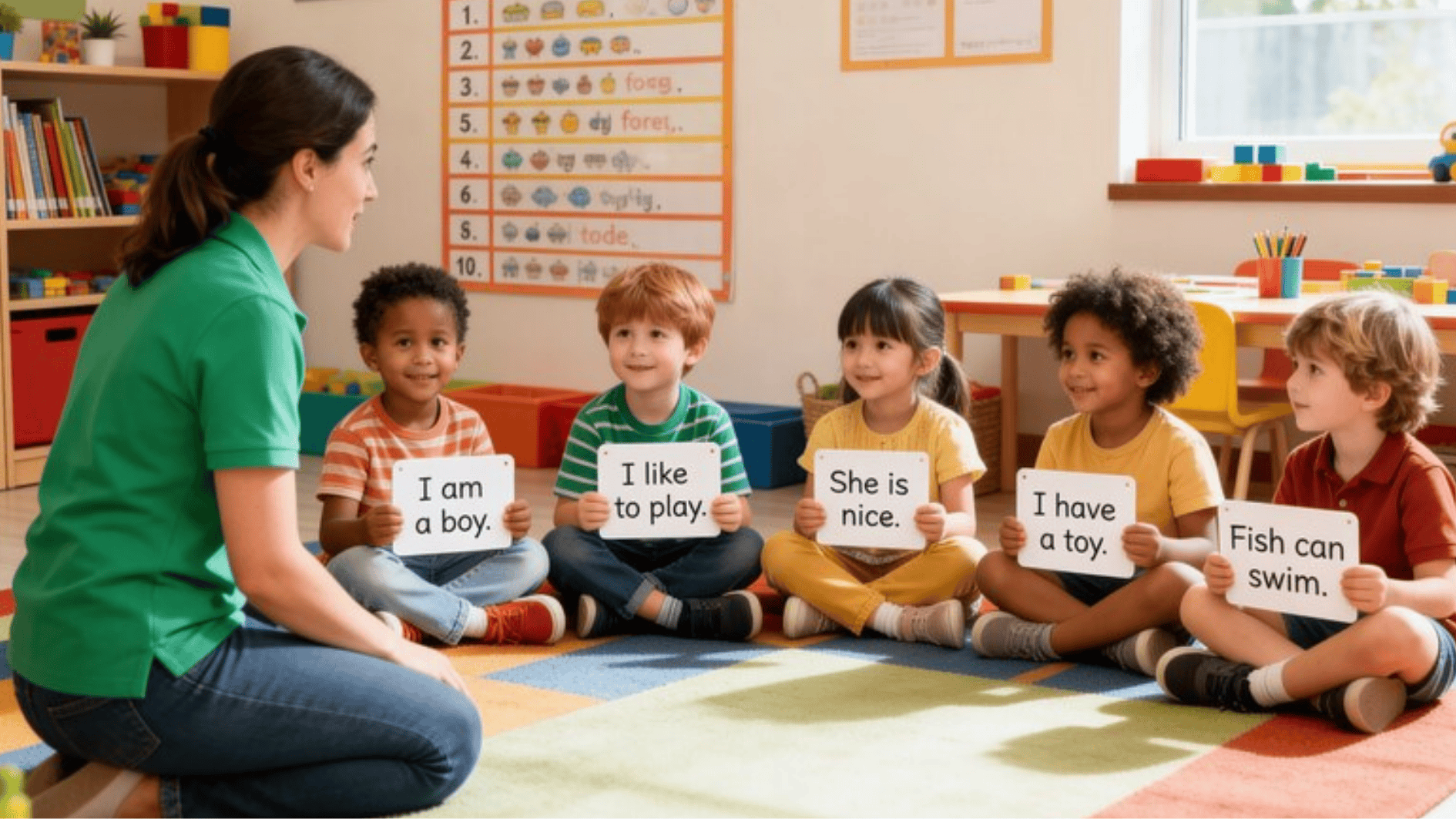
These simple sentences are perfect for early learners who are just starting to read and write. You can use them for reading practice, speaking exercises, or sentence-building activities in class or at home.
1. I see a cat.
This is a great beginner sentence using very familiar words. It helps kids connect reading to real-life objects they see every day. You can pair it with pictures or flashcards for better understanding.
2. The dog runs.
A short and clear action sentence that introduces verbs. Kids can act it out to make learning more fun. It also helps them understand how actions work in sentences.
3. I like milk.
This sentence helps children express their likes and preferences. It’s easy to relate to and repeat with other items.
You can ask kids to replace “milk” with their favorite food.
4. The sun is hot.
A simple descriptive sentence connected to everyday experiences. It introduces adjectives naturally. It’s also useful for teaching weather-related vocabulary.
5. She has a ball.
This helps kids understand possession using common objects. It also introduces pronouns like “she.” You can swap “ball” with other objects for practice.
6. I can jump.
A fun, action-based sentence that encourages movement. Kids can physically jump while saying it. It also introduces the idea of ability using “can.”
7. The bird flies.
This connects animals with their natural actions. It helps kids understand meaning through real-life examples. You can show pictures of birds to reinforce learning.
8. We play outside.
A relatable sentence showing group activity. It helps kids understand how to do things together. It also connects to their daily routine.
9. The cat is small.
This introduces describing words like size. It helps children learn how to add detail to sentences. You can compare with “big” for a better understanding.
10. I eat an apple.
A simple sentence linked to daily habits like eating. It helps build food-related vocabulary. You can use real objects or pictures for teaching.
11. He is my friend.
This builds emotional and social vocabulary. It helps kids understand relationships. You can use it to start conversations about friendship.
12. The car is red.
This teaches colors in a simple and clear format. It reinforces both object and color recognition. You can change colors for more practice.
13. I see the moon.
A basic observation sentence connected to nature. It encourages kids to notice their surroundings. It’s also great for storytelling activities.
14. The boy runs fast.
This expands a basic sentence by adding a descriptive word. It helps kids learn how to add more detail. You can compare “fast” and “slow” for clarity.
15. I have a toy.
A simple and common sentence pattern kids can easily reuse. It builds confidence in speaking. They can replace “toy” with other objects they own.
16. The fish swims.
This reinforces action words using familiar animals. It helps kids connect verbs with movement. You can use videos or pictures for better understanding.
17. She can sing.
This introduces the ability again using “can.” It helps expand vocabulary with different actions. You can ask kids what they can do.
18. The tree is tall.
A nature-based sentence introducing height. It’s easy for kids to visualize. You can compare with “short” to build understanding.
19. I like my book.
Encourages reading habits and builds a positive connection with books. It’s simple and personal. Kids can talk about their favorite books.
20. The baby sleeps.
A calm, familiar action that kids can easily understand. It helps reinforce simple verbs. You can act it out for fun learning.
21. We eat lunch.
A routine-based sentence connected to daily life. It helps kids relate language to their experiences. You can discuss what they eat at lunch.
22. The sky is blue.
A simple descriptive sentence using nature and color. It’s easy to remember and visualize. You can use outdoor observation for teaching.
23. I see a star.
A short and clear sentence for observation practice. It also sparks imagination. You can connect it with nighttime stories.
24. The ball is big.
Introduces size comparison. It’s great for visual learning. You can compare with “small” objects.
25. I can read.
A positive and confidence-boosting sentence. It encourages kids as they learn new skills. It also helps build motivation and self-belief.
Activities to Practice Simple Sentences for Kindergarten
These activities make learning simple sentences fun and interactive while helping kids practice reading, speaking, and writing naturally.
-
Sentence-Matching Games: Give kids picture cards and matching sentence strips, such as “The dog runs.” They match the correct sentence with the image.
This helps build comprehension and strengthens word-to-meaning connections. -
Fill-in-the-Blank Exercises: Use prompts like “I see a ___” or “The ___ is big.” Kids fill in the missing word.
It encourages creativity while reinforcing sentence structure. -
Cut and Arrange Words: Provide word cards (I / see / a / cat) and let kids arrange them into correct sentences.
This hands-on activity helps them understand word order and sentence formation. -
Draw and Write Activity: Ask kids to draw something (like a cat or sun) and write a simple sentence about it.
This connects creativity with writing and improves retention.
Tools & Resources for Simple Sentences for Kindergarten
Using the right tools can save you time and make teaching more effective. Here are some popular free and paid resources you can explore:
| Tool/Resource | What It Offers |
|---|---|
| Twinkl | Printable worksheets, sentence-building activities, and lesson plans for kindergarten |
| Education.com | Interactive games, worksheets, and guided lessons for simple sentence practice |
| ABCmouse | Structured learning program with reading and sentence-building activities for young kids |
| K5 Learning | Printable worksheets focused on early reading and sentence formation |
| SplashLearn | Gamified learning platform with sentence practice and reading exercises |
| Scholastic Teachables | Premium printable resources and lesson plans for early literacy |
| Reading Eggs | An interactive reading program that includes simple sentence building and comprehension |
Conclusion
Learning simple sentences for kindergarten is one of the most important first steps in building strong reading and writing skills.
When you keep sentences short, clear, and relatable, kids feel more confident and motivated to learn. Start with easy examples, use fun activities, and gradually build complexity as children improve.
With the right approach and tools, teaching simple sentences for kindergarten can become an engaging and rewarding experience for both you and your students.