You are staring at your baby’s head, noticing some flaky, crusty, or scaly patches, and naturally, your brain jumps straight to panic mode. Totally understandable.
But before you spiral into a Google rabbit hole at midnight, here is something worth knowing: not every flaky scalp situation is the same.
Two of the most common culprits are cradle cap and dry scalp, and while they might look pretty similar at first glance, they are actually quite different.
Knowing which one your baby is dealing with makes all the difference in how you handle it. So let’s clear up the confusion and get that little head sorted out!
Cradle Cap and Dry Scalp: What is it?
Cradle cap is a common scalp condition seen in many newborns and infants. It appears as thick, yellow, or white patches on the scalp. These flakes often feel greasy or waxy to the touch.
It may look concerning, but it is usually harmless. Cradle cap is not caused by poor hygiene and does not hurt your baby. In some cases, it can spread slightly to areas such as the eyebrows or the back of the ears.
Dry scalp in babies happens when the skin lacks enough moisture. It shows up as small, white flakes that fall off easily. The scalp may look rough or feel dry instead of oily.
Unlike cradle cap, the flakes are lighter and not sticky. It can sometimes be caused by weather, frequent washing, or sensitive skin. A dry scalp may also make your baby feel slightly uncomfortable.
Quick Comparision
Understanding the differences helps you treat each condition the right way.
| Feature | Cradle Cap | Dry Scalp |
|---|---|---|
| Age Group | Common in newborns and young infants | Can occur at any age, depending on the skin condition |
| Spread | May extend to eyebrows or behind the ears | Usually limited to the scalp |
| Response To Washing | Does not clear easily with regular washing | Often improves with gentle washing and moisturizing |
| Care Approach | Needs gentle loosening and oil-based care | Needs hydration and moisture-based care |
| Healing Time | May take longer to clear gradually | Usually improves quickly with proper care |
Understanding Causes, Signs, and Treatment
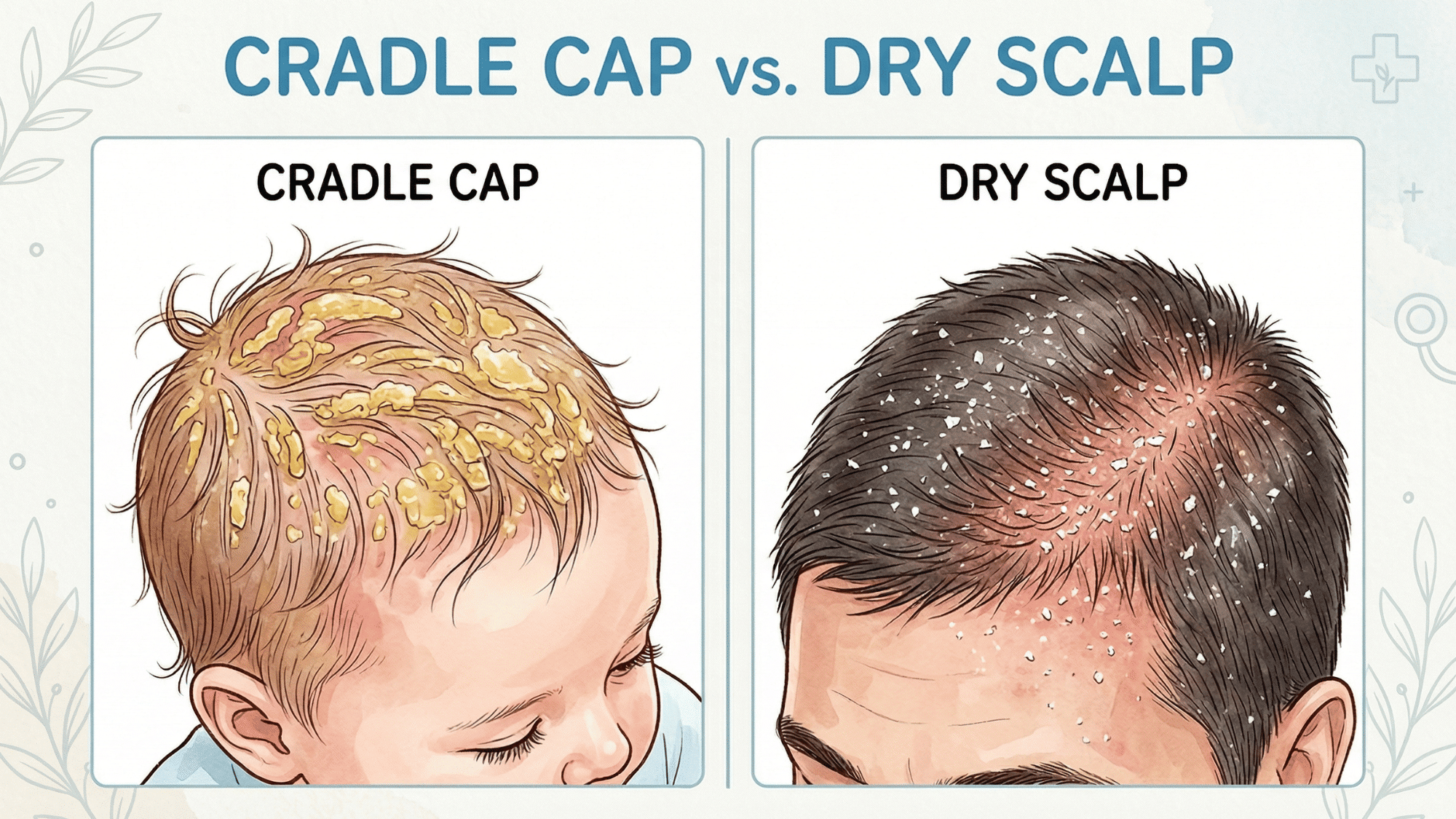
Understanding the causes, signs, and treatment helps you identify the condition early and care for your baby’s scalp in the right way.
Cradle cap
1. Causes
Cradle cap is mainly caused by overactive oil glands in a baby’s scalp. These glands produce excess oil, which mixes with dead skin cells, forming thick flakes.
Hormones passed from the mother before birth may also play a role in this process. It is not caused by poor hygiene or allergies. The buildup of oil and skin leads to the characteristic patches seen in cradle cap.
2. Symptoms
- Thick yellow or white scaly patches
- Greasy or waxy texture on the scalp
- Flakes that stick to the skin
- Patches that may spread to the eyebrows or behind the ears
- Usually no itching or discomfort
3. Treatment
Cradle cap can be treated with gentle and consistent care. Wash your baby’s scalp regularly with a mild shampoo to help loosen the flakes. You can apply a small amount of baby oil before washing to soften the patches.
Use a soft brush to gently remove loosened flakes without scrubbing. Avoid picking at the scalp, as it may cause irritation. With time and care, cradle cap usually clears on its own.
Dry Scalp
1. Causes
Dry scalp in babies usually happens when the skin loses moisture. This can be due to dry weather, especially in colder months, or frequent washing that removes natural oils.
Using harsh or scented products can also make the scalp dry. Some babies naturally have more sensitive skin, which makes them prone to dryness.
Lack of hydration in the skin leads to flaking and roughness over time.
2. Symptoms
- Small, fine white flakes on the scalp
- Dry, rough, or slightly tight skin
- Flakes that fall off easily
- Mild irritation or slight itching
- The scalp looks dull rather than oily
3. Treatment
Dry scalp can be managed by keeping the scalp well moisturized. Use a gentle, baby-safe shampoo that does not strip natural oils. Applying a small amount of baby oil or moisturizer can help restore hydration.
Avoid washing the hair too often, as it can worsen dryness. Keeping the environment humid and using soft products can also improve the condition over time.
When Should You See a Doctor?
If your baby’s scalp condition shows unusual signs or doesn’t improve, it’s important to know when to seek medical advice.
- No Improvement Over Time: The condition does not get better after a few weeks of gentle care.
- Redness Or Swelling: The scalp looks inflamed, irritated, or tender.
- Spreading to Other Areas: Flakes appear on the face, body, or beyond common areas.
- Signs Of Infection: Oozing, bleeding, or an unusual smell.
- Severe Itching or Discomfort: Your baby seems irritated or keeps scratching the scalp.
- Worsening Condition: The flakes become thicker or more noticeable over time.
- Parental Concern: If something feels unusual or worrying, it’s best to get medical advice.
Expert Advice for Cradle Cap and Baby Scalp Care
Experts recommend simple, gentle care and early attention to keep your baby’s scalp healthy and prevent further issues.
Gently wash your baby’s scalp daily with a mild shampoo and use a soft brush to loosen flakes safely. – Mayo Clinic
Wash regularly with a gentle shampoo and use baby oil to soften scales before removing them carefully. – American Academy of Dermatology
Apply a gentle moisturizer or oil to the scalp, then brush softly and wash to help remove scales without irritation. – NHS
Talk to your pediatrician if you notice spreading, swelling, or signs of infection, as medical guidance may be needed. – Healthy Children
Common Mistakes to Avoid
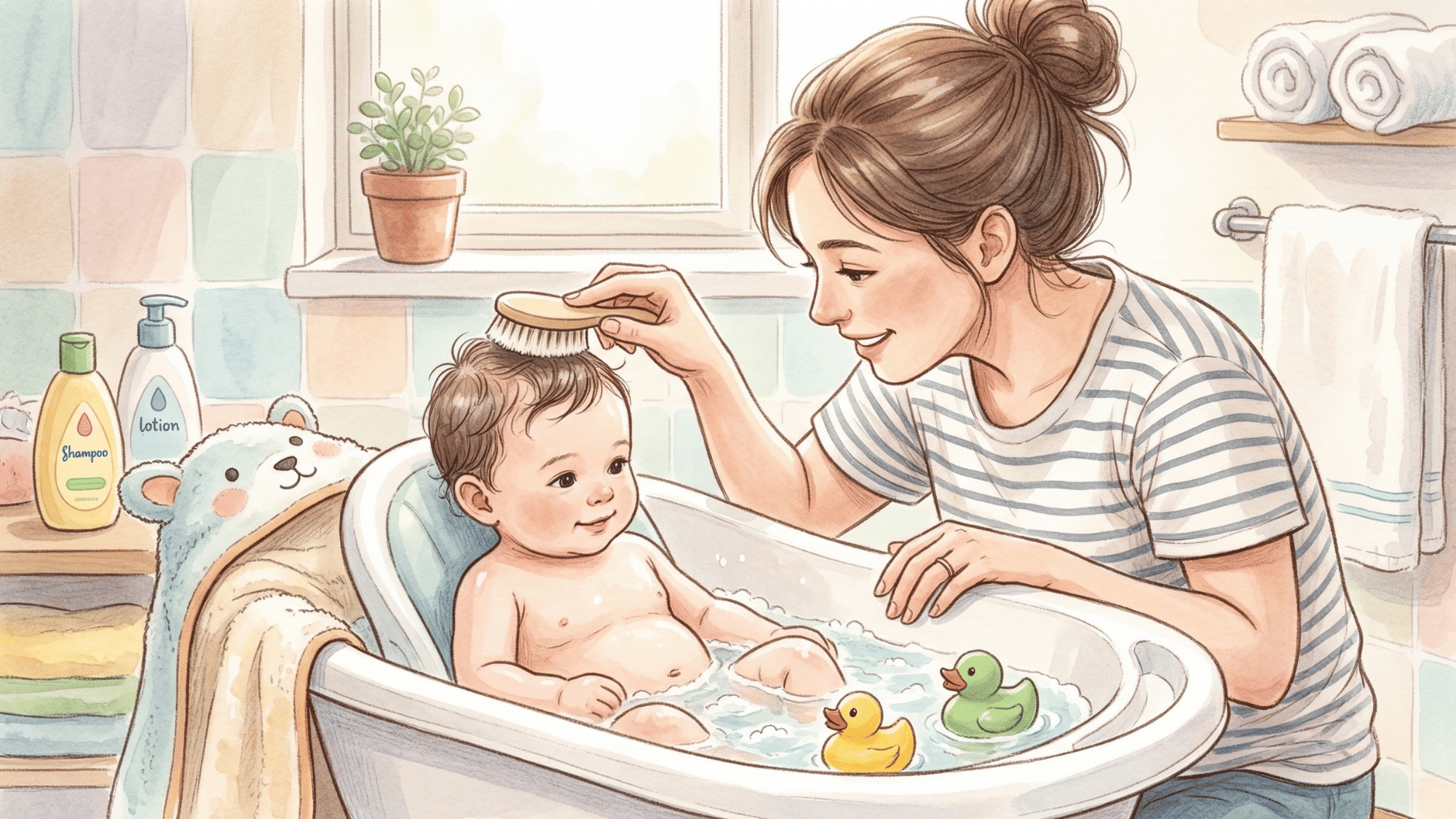
Avoiding a few common mistakes can help protect your baby’s scalp and make treatment more effective.
- Scrubbing too hard can irritate your baby’s scalp.
- Picking flakes can cause redness or infection.
- Using harsh products can damage delicate skin.
- Washing too often can make dryness worse.
- Ignoring the condition can delay healing.
- Using the wrong treatment can slow improvement.
- Applying too much oil can build up on the scalp.
Wrapping It Up
At the end of the day, both cradle cap and dry scalp are incredibly common, and neither one makes you a bad parent.
Babies are delicate little humans still figuring out how to exist in the world, and their skin is doing the same. Now that you know the difference, you are already ahead of the game.
A little gentle care, the right approach, and some patience go a long way. And if things ever look worse or just feel off, your pediatrician is always your best friend. That flaky phase?
It never lasts forever. Smoother, softer baby skin is just around the corner!