
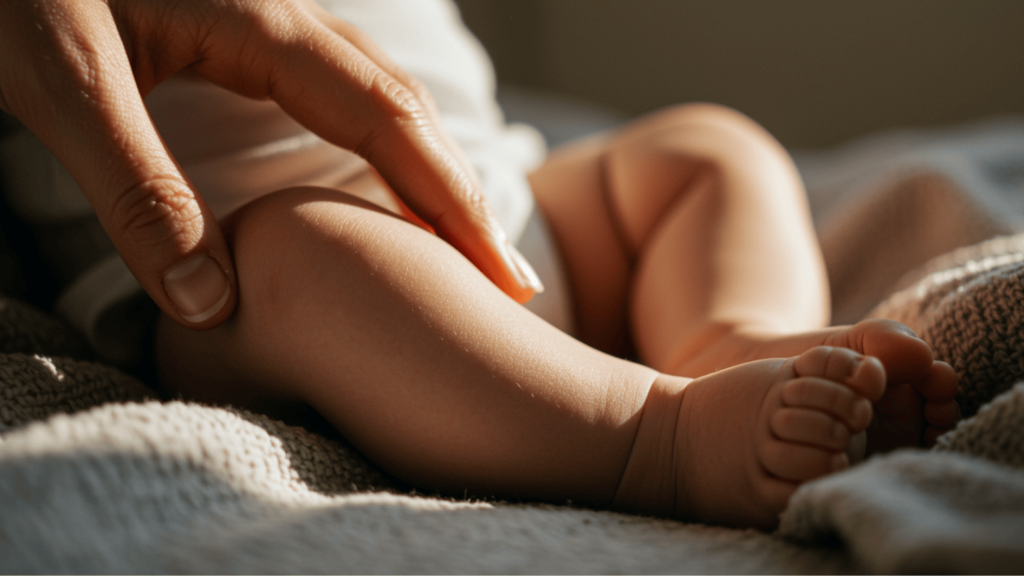
You may have noticed how soft your baby’s knees feel when you touch them.
This often leads to a common question: Do babies actually have kneecaps? It can feel confusing, especially when their knees don’t feel like yours.
The answer is simple but surprising. Your baby does have kneecaps, but they are not fully developed yet. This guide explains how kneecaps form, why they feel soft, and what changes you can expect as your baby grows.
Do Babies Have Kneecaps at Birth?
You might expect babies to have hard kneecaps just like adults. In reality, their knees are structured differently in the early stages.
Babies are born with kneecaps, but they are made of soft cartilage, not bone. This is why you can’t feel a hard structure in their knees.
This soft structure is completely normal and plays an important role in early development.
Why are Kneecaps Not Fully Developed Yet?
- Natural Early Development: Babies are born with soft kneecaps because their bodies are still growing and developing.
- Made of Cartilage: Instead of hard bone, kneecaps start as cartilage, which is softer and more flexible.
- Supports Movement: This softness allows babies to bend, kick, and move comfortably without strain.
- Adapts to Growth: Flexible kneecaps help the body adjust to movement outside the womb.
- Prepares for Walking: Over time, cartilage gradually hardens into bone, supporting future activities like crawling and walking.
When Do Babies Develop Kneecaps?
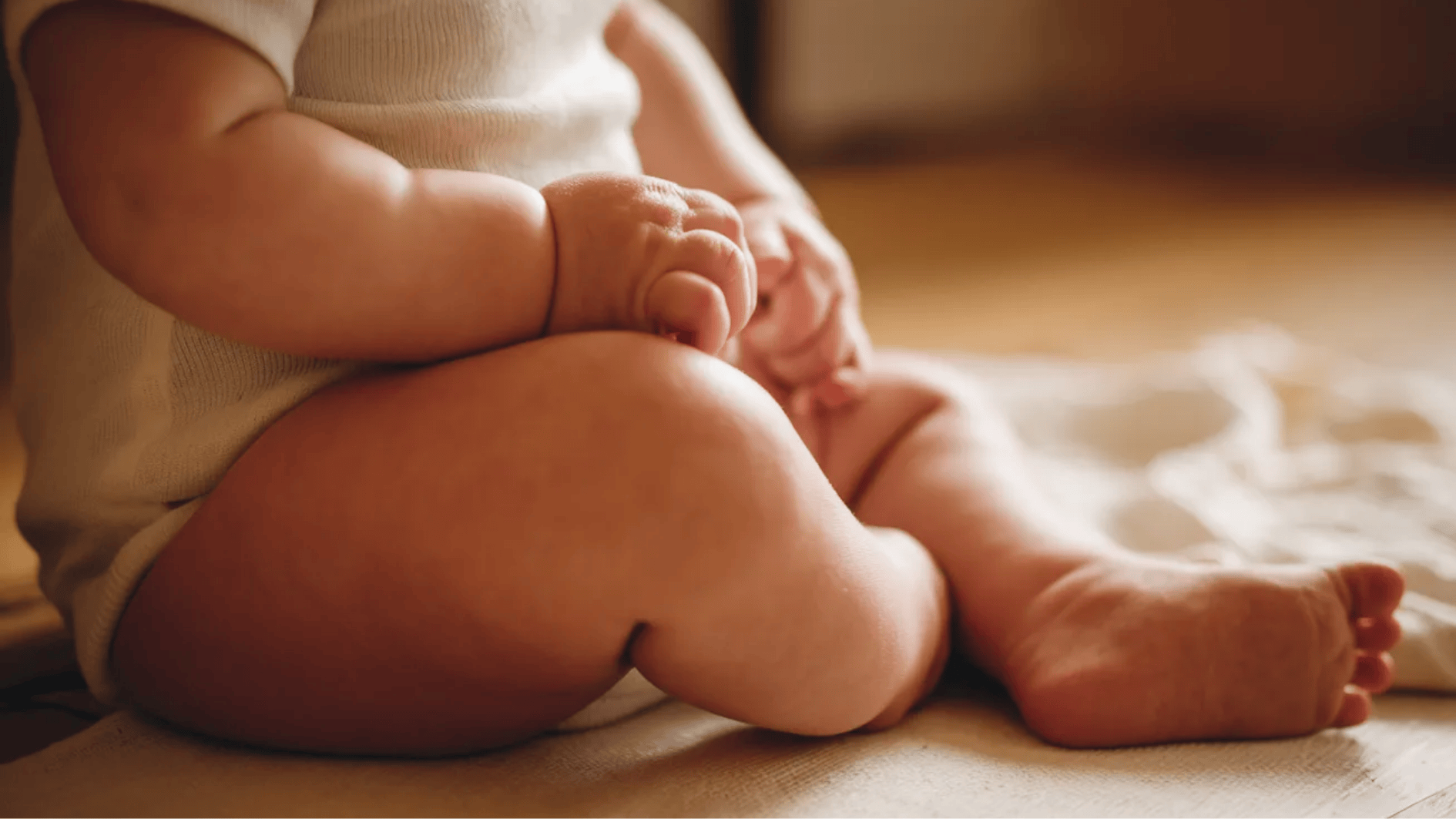
Your baby’s kneecaps may feel soft in the early months, but they don’t stay that way forever. As your child grows, these soft cartilage structures gradually change and become stronger.
Kneecap development happens gradually over several years, not all at once. Your baby’s soft cartilage slowly turns into stronger bone as they grow and become more active.
This step-by-step process helps build strength and stability in the knee, supporting movements like crawling, walking, and eventually running.
| Age Range | What Happens to Kneecaps | What It Means for Your Baby |
|---|---|---|
| Birth | Kneecaps are made of soft cartilage | Knees feel soft and flexible |
| 2–6 Years | Cartilage begins turning into bone | Knees start becoming stronger |
| 6–10 Years | Bone structure continues to develop | Better support for active movement |
| 10–12 Years | Kneecaps are mostly fully developed | Knees function like adult joints |
This slow process allows the knee joint to grow safely and adapt to movement.
Why are Baby Knees So Soft?
If your baby’s knees feel soft or even seem like something is missing, it can feel surprising at first. In reality, this softness is completely normal and is due to the presence of cartilage instead of hard bone.
Cartilage is flexible and gentle on your baby’s body, which makes it ideal during the early stages of growth. It allows your baby to bend, kick, and move freely without stressing developing joints.
Another important reason is growth. Cartilage can expand and shape itself more easily than bone, which supports proper joint development over time.
As your baby grows stronger and starts putting more weight on their legs, the cartilage slowly begins to harden into bone.
Role of Cartilage in Early Growth:
Cartilage acts like a cushion in your baby’s body. It supports movement while keeping joints flexible.
- It allows smooth bending and stretching
- Helps absorb impact during movement
- Supports activities like crawling and early standing
- This flexibility is especially helpful as your baby learns new movements
How Kneecaps Change as Your Baby Grows
You won’t notice sudden changes in your baby’s knees, but development is happening step by step.
As your child grows, cartilage slowly hardens into bone. This process is known as ossification.
The kneecap becomes stronger and more structured over time. This helps support more advanced movements, such as walking, running, and jumping.
As the kneecap develops, your child’s movement becomes more stable. You may notice better balance, stronger leg support, and more confidence while walking.
These changes happen gradually as the knee joint becomes stronger.
Common Myths About Baby Kneecaps
There are several misunderstandings about baby knees, and it’s easy to see why. Since your baby’s knees feel soft and look different from yours, it can raise questions or even concern.
- Babies are Born without Kneecaps. This is one of the most common myths. In reality, babies do have kneecaps at birth, but they are made of soft cartilage instead of hard bone. That’s why they’re hard to feel.
- Soft Knees Mean Something is Wrong. Softness in your baby’s knees is completely normal. It’s a natural part of development that allows safe and flexible movement while the joints are still forming.
- Kneecaps Should Harden Quickly After Birth. Many people think kneecaps develop soon after birth, but the process actually takes years. Cartilage slowly turns into bone, usually starting between the ages of 2 – 6.
- Crawling Can Harm Baby Knees. Some parents worry that crawling may damage soft knees. In reality, crawling supports healthy development by strengthening muscles and joints.
- Soft Knees Mean Weak Legs. Soft knees do not mean your baby has weak legs. Strength develops gradually as your baby grows and becomes more active.
Understanding these facts can help you avoid unnecessary worry and focus on your baby’s natural growth process.
How to Support Healthy Knee Development

You can support your baby’s knee development with simple, everyday habits. There’s no need for special equipment – what matters most is giving your baby the freedom and space to move naturally.
These early movements help build strength, improve coordination, and support healthy joint growth over time.
1. Encourage Natural Movement
Your baby learns best through movement. Activities like kicking, rolling, crawling, and early standing help strengthen the muscles around the knees. These movements also support joint flexibility and balance.
Try to give your baby plenty of time on the floor so they can move freely. Limiting time in swings, walkers, or seats allows their bodies to develop naturally. The more your baby moves on their own, the stronger and more stable their knees will become.
2. Provide a Safe Play Area
A safe and comfortable environment encourages your baby to stay active and try new movements without fear. When your baby feels secure, they are more likely to practice crawling, pulling up, and eventually walking.
- Use soft mats, rugs, or carpets to cushion movement
- Keep the area free from sharp or hard objects
- Make sure there is enough open space to move around
Creating a safe space helps your baby move confidently while reducing the risk of injury, supporting healthy knee development in the process.
When Should You Be Concerned?
In most cases, soft knees are a normal part of your baby’s development and nothing to worry about. However, it’s still important to stay aware of any unusual signs or changes. Knowing what to look for can help you feel more confident and take action if needed.
Signs to Watch For:
- Swelling or redness around the knee
- Signs of pain when moving the legs
- Limited or uneven movement
These signs are uncommon, but they may require attention. If something feels off, it’s always okay to ask for guidance.
You may want to speak with a pediatrician if your baby avoids using one leg, shows discomfort, or has ongoing concerns about movement.
Conclusion
Babies are born with kneecaps, but they are made of soft cartilage instead of hard bone. This is a normal part of development and helps support safe movement during early growth.
Over time, this cartilage slowly turns into bone, usually starting between ages 2 and 6, with full development continuing for several years.
This gradual process helps the knee joint grow strong and stable. Understanding how this works can help you feel more confident about your baby’s development.
If you notice any unusual signs, such as swelling or discomfort, it’s best to speak with a doctor. Otherwise, soft knees are simply part of healthy growth.