Rhyming words play a crucial role in early language development for young learners. They help children build phonemic awareness, expand their vocabulary, and improve their reading and writing skills.
For kindergarten students, rhyming can be a fun and interactive way to learn the world of sounds.
In this blog, you’ll learn why rhyming is important for young learners and provide a list of simple, easy-to-understand rhyming words that are perfect for kindergarten kids.
What are Rhyming Words?
Rhyming words are words that have the same ending sounds.
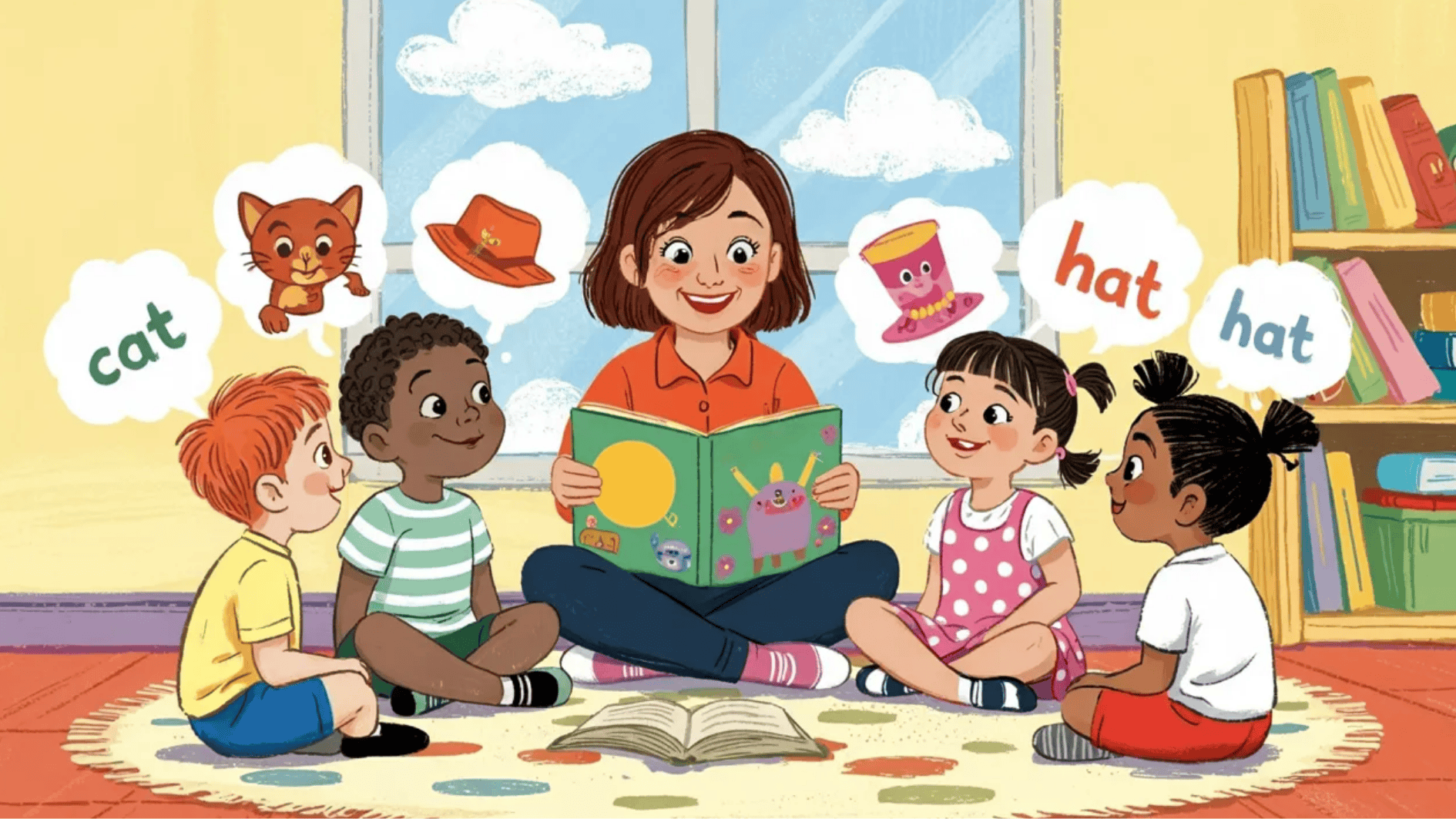
They often share a common pattern of sounds or letters at the end of the word. For example, “cat” and “hat” rhyme because both words end with the same “-at” sound.
Recognizing rhymes also encourages creativity, as children begin to experiment with different words that sound alike.
Why Rhyming Words are Important for Kindergarten Kids
Rhyming words help children identify patterns in language, making it easier for them to understand how words are formed and pronounced.
Improves Vocabulary
- Rhyming words introduce young learners to new vocabulary.
- Helps children understand the relationship between sounds and letters.
- Builds confidence in language skills by recognizing and producing rhyming words.
- Example: “Cat” and “hat” are simple, yet they help children remember word sounds, improving vocabulary.
Phonemic Awareness
- Phonemic awareness is the ability to hear, identify, and manipulate individual sounds in spoken words.
- Rhyming words support phonemic awareness by helping children identify word families with similar sounds.
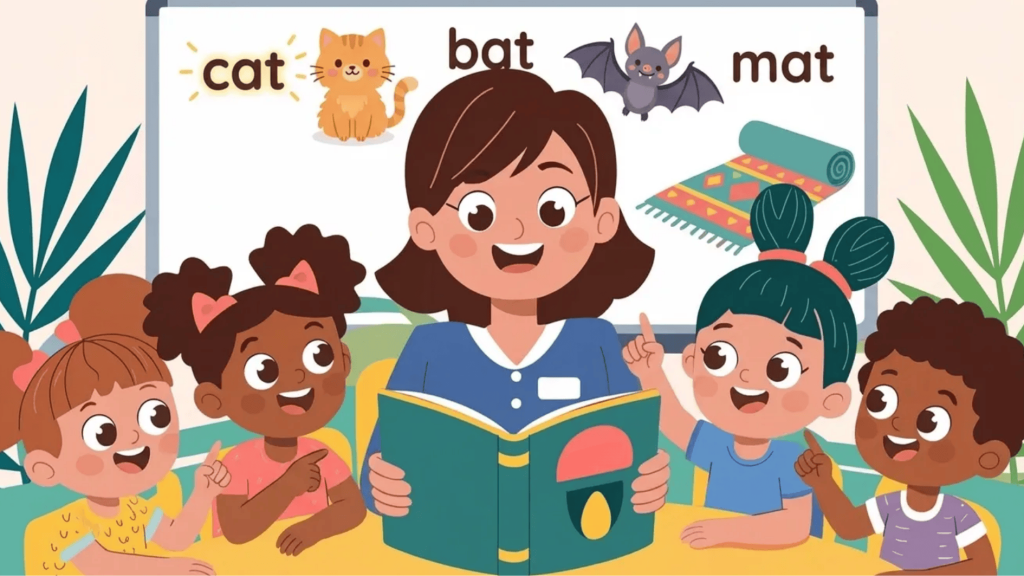
- Example: In words like “bat,” “hat,” and “rat,” kids focus on the common “-at” sound, making it easier to recognize and create new words with similar rhymes.
List of Fun Rhyming Words for Kindergarten Kids
Here’s a collection of simple and fun rhyming words that are perfect for kindergarten students. These words are easy to understand and great for helping kids practice and recognize sound patterns.
Simple CVC (Consonant-Vowel-Consonant) Rhyming Words
These are basic, three-letter words that are great for introducing young learners to rhyming sounds.
- Cat – Hat
- Dog – Log
- Man – Pan
- Pin – Bin
- Cap – Nap
- Bat – Rat
- Fan – Can
- Mud – Bud
- Sit – Hit
- Pen – Ten
- Pot – Lot
- Cup – Up
- Mud – Stud
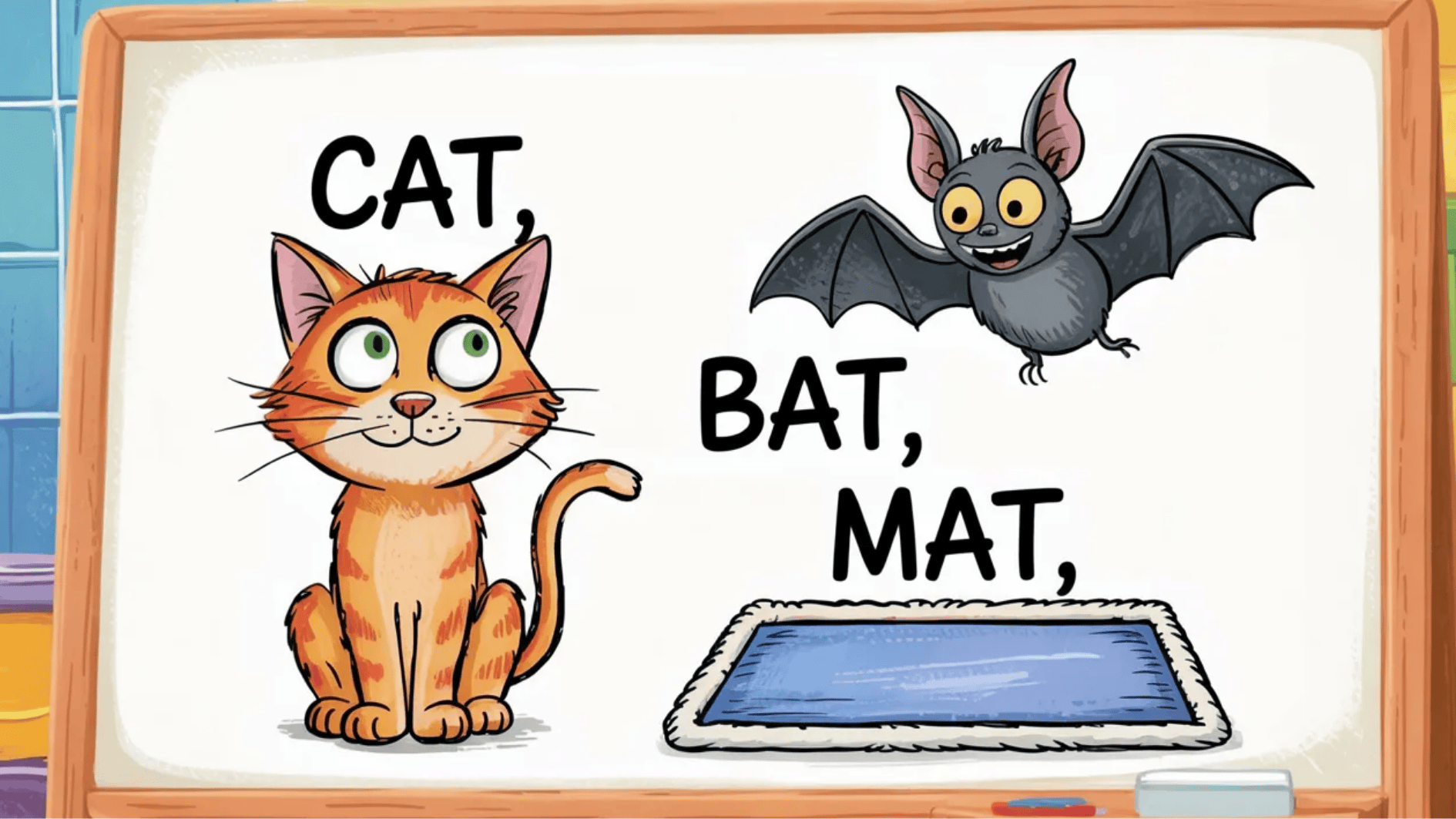
- Pat – Mat
- Tag – Bag
Common Word Pairings with Short Vowels
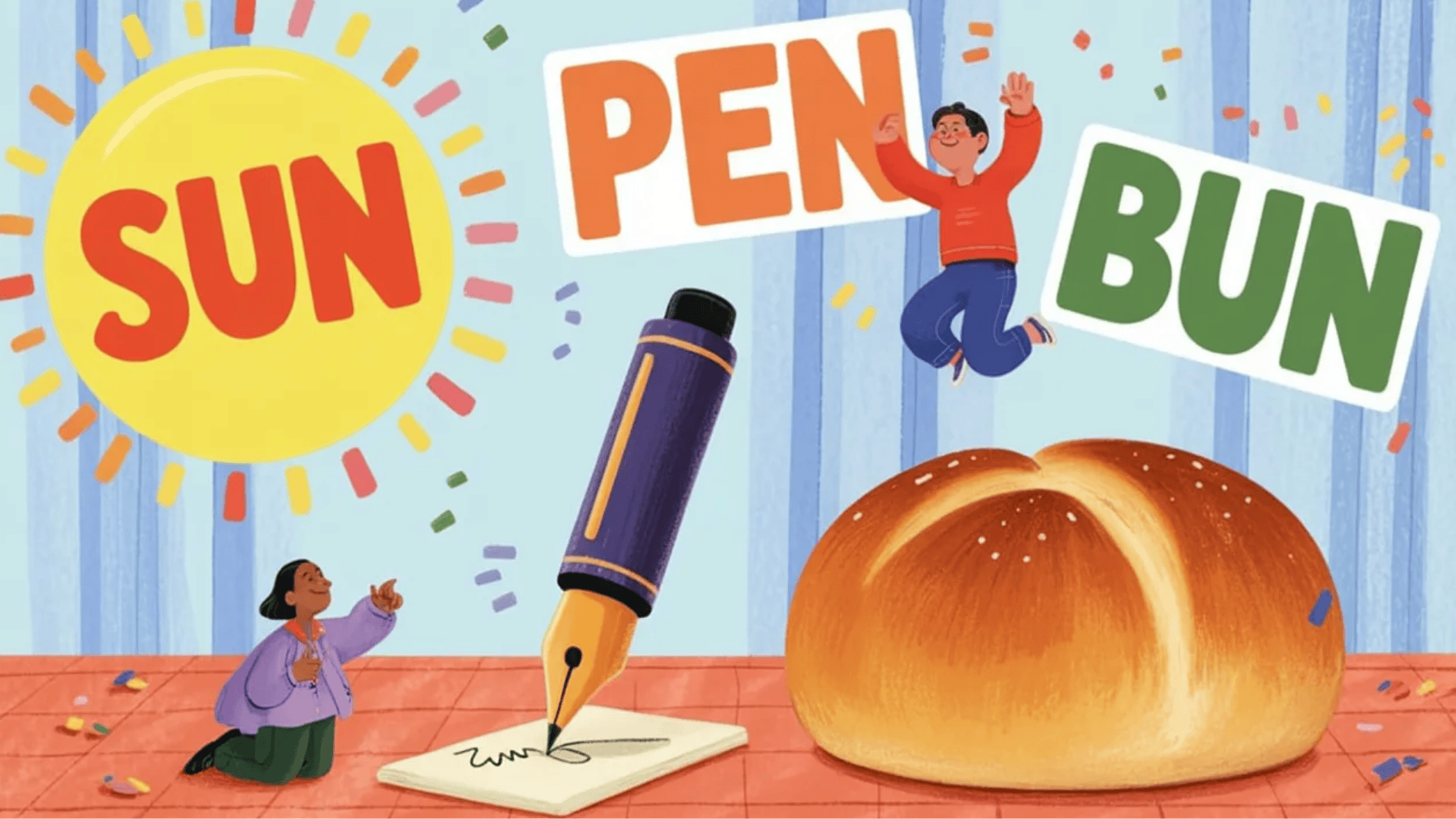
Here are some simple, everyday words that share short vowel sounds, perfect for helping kids recognize common sound patterns.
- Bat – Rat
- Pen – Ten
- Pot – Lot
- Sun – Fun
- Kit – Sit
- Log – Frog
- Pin – Win
- Nap – Cap
- Hat – Mat
- Cat – Bat
- Duck – Luck
- Bed – Red
- Tap – Map
- Tag – Rag
- Pig – Wig
Rhyming Words from Everyday Life
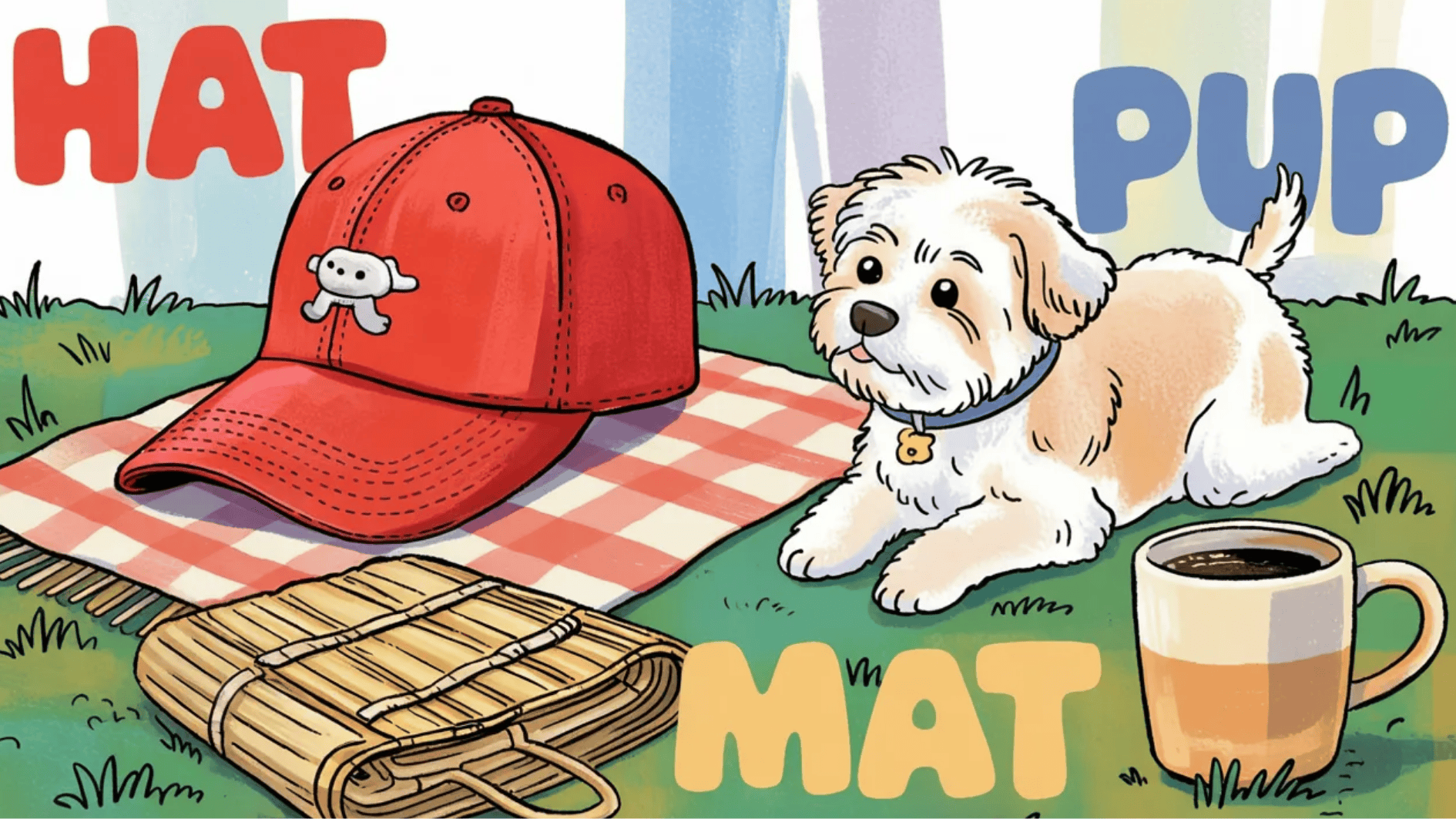
These rhyming words are familiar and fun, making them easy for kids to relate to their daily experiences.
- Sun – Fun
- Car – Star
- Tree – Bee
- Dog – Log
- House – Mouse
- Fan – Can
- Cup – Up
- Chair – Bear
- Rain – Train
- Snow – Go
- Bed – Head
- Light – Night
- Shirt – Dirt
- Book – Look
- Ball – Fall
Fun Animal Rhymes for Kids
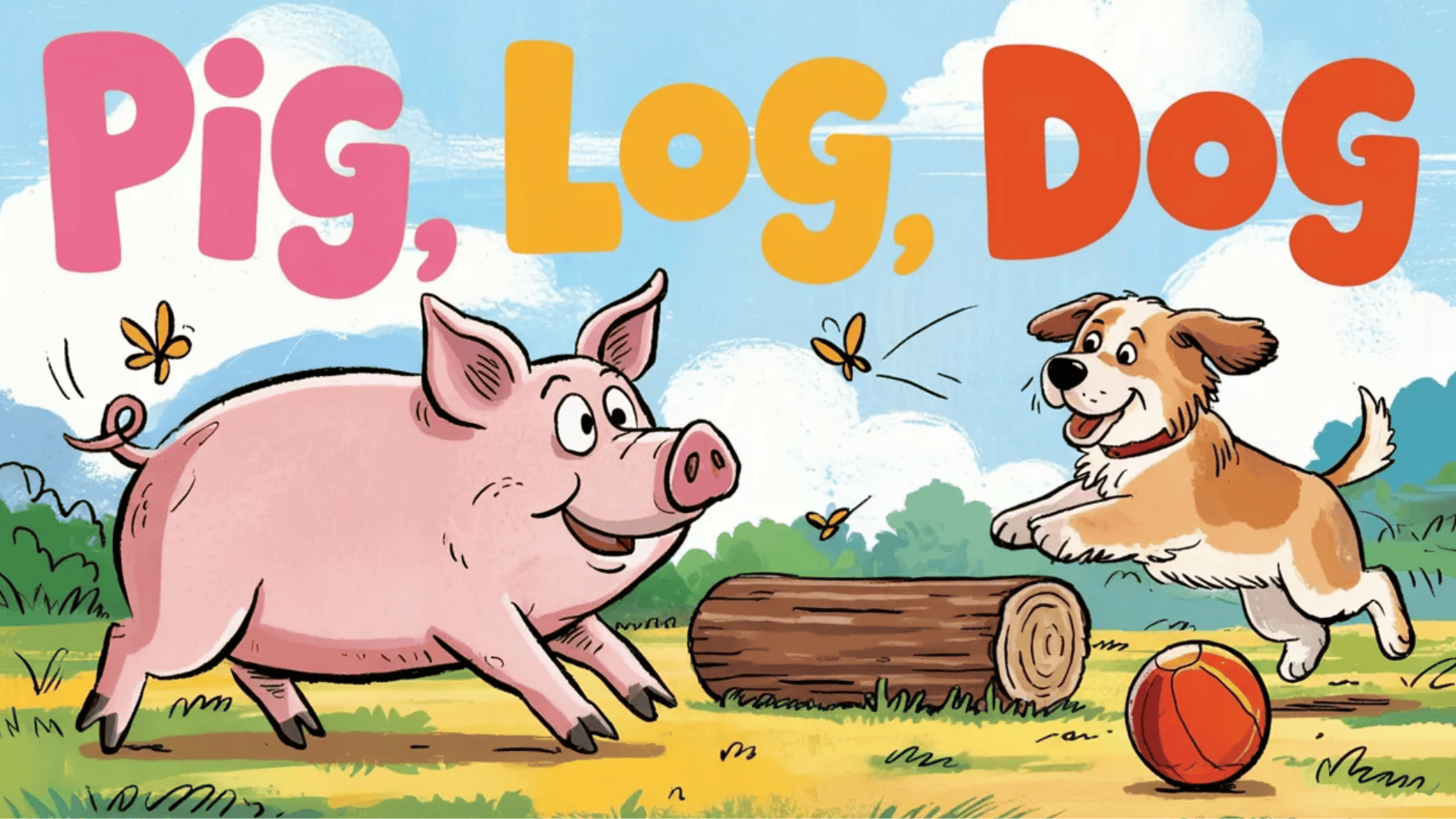
Animal-related rhyming words make learning fun and introduce kids to both language and animals at the same time.
- Dog – Frog
- Cat – Hat
- Bear – Hair
- Bat – Hat
- Cow – How
- Lion – Cryin’
- Fish – Dish
- Duck – Luck
- Mouse – House
- Seal – Wheel
- Pig – Twig
- Bear – Care
- Bee – Tree
- Fox – Box
- Goat – Boat
Fun Activities to Teach Rhyming Words for Kindergarteners
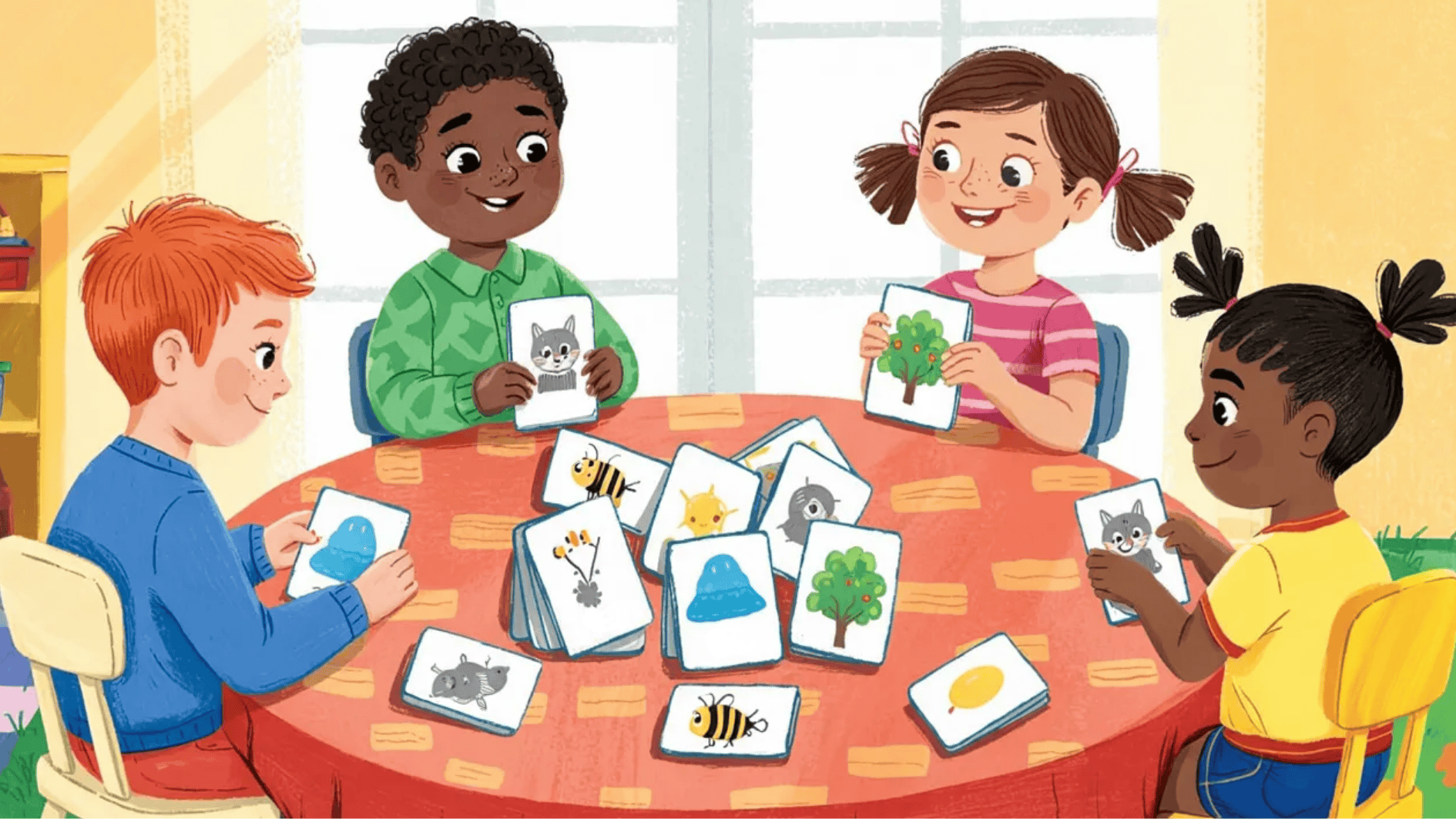
Engaging children in fun activities is a great way to teach them about rhyming words.
These interactive and hands-on activities make learning rhymes enjoyable while helping kids improve their language skills.
| Activity | Description | Benefit |
|---|---|---|
| Rhyming Worksheets | Printable worksheets with activities like matching rhyming words or solving puzzles. | Helps children practice independently, recognize rhyming patterns, and focus on writing. |
| Rhyming Word Pairs Memory Game | Create cards with rhyming pairs, flip them to find matching words. | Enhances visual memory, repetition, and makes learning rhymes interactive. |
| Interactive Rhyming Stories | Read aloud a rhyming story, pausing for kids to fill in the blank rhyming word. | Encourages active listening and helps children recognize rhymes in context. |
| Rhyming Word Online Games | Use online platforms like SplashLearn to practice rhyming words with interactive games that offer instant feedback. | Provides an engaging and interactive way for kids to practice rhyming at their own pace. |
| Rhyming Word Hopscotch | Draw a hopscotch grid and write a word in each square; children must rhyme as they hop. | Combines physical activity with rhyming practice, making it a fun and active learning experience. |
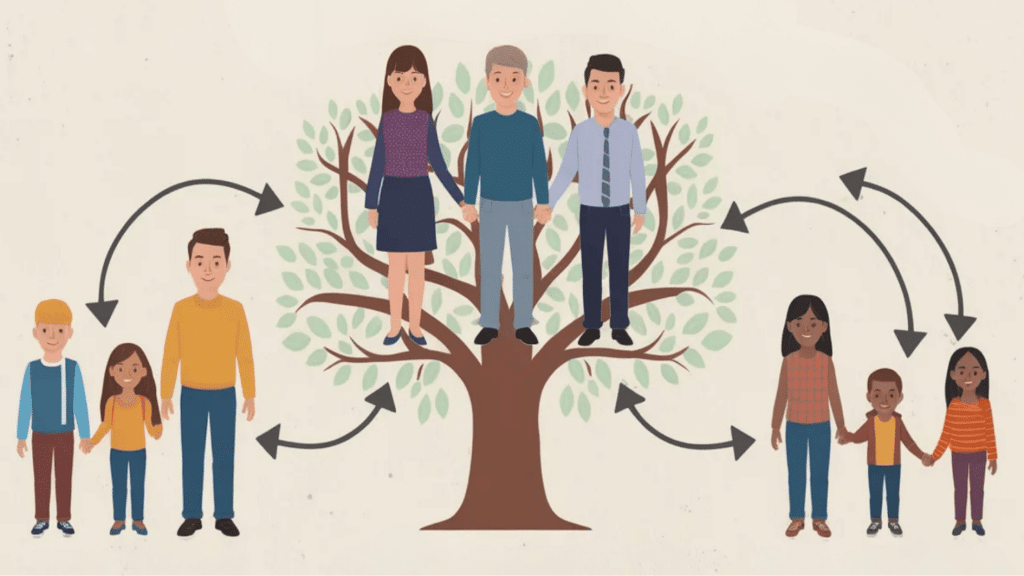
| Rhyming Word Family Trees | Create a “tree” with a word ending (like “-at” or “-an”) on the trunk, and have children write rhyming words on leaves to attach to branches. | Helps children understand word families and recognize patterns in rhyming sounds. |
Tips for Parents and Teachers to Encourage Rhyming
Encouraging rhyming in young children can be both fun and rewarding. Some practical tips for parents and teachers to make learning rhymes engaging and effective are mentioned below.
- Read Aloud Books with Rhymes: Reading rhyming books like Green Eggs and Ham helps children remember simple rhymes, making learning fun and easy.
- Make Rhyming a Daily Practice: Use rhyming in everyday conversations, like “Let’s go and play,” to help children recognize and understand rhyming patterns.
- Celebrate Successes: Praise kids when they identify rhyming words to boost confidence and motivate continued learning.
Best Books for Rhyming Kindergarten Kids
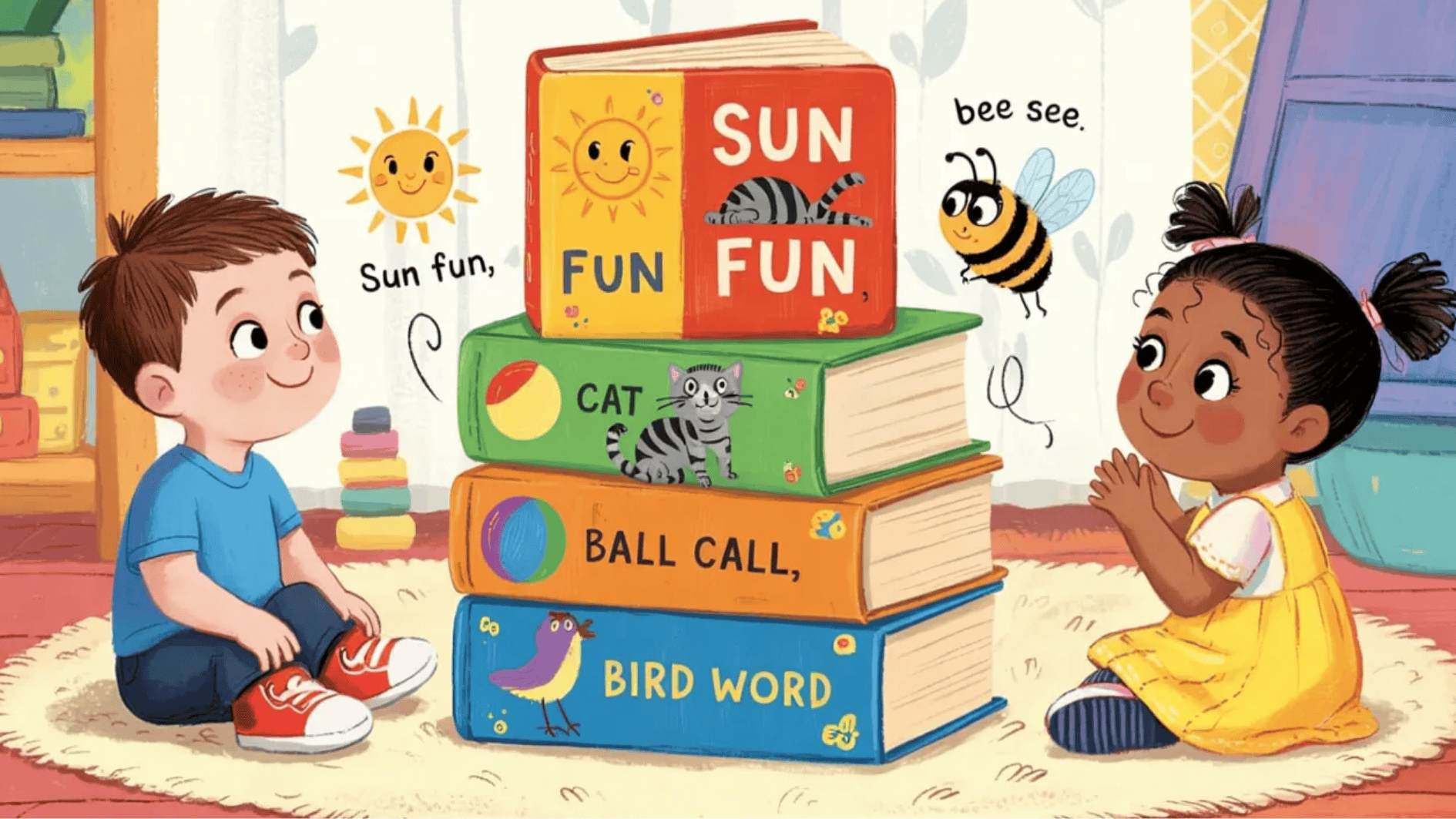
Reading rhyming books is a fun and effective way to help kindergarteners hear language patterns and build early reading skills. These charming books use rhythm and wordplay to make learning rhymes exciting for young readers.
- One Fish, Two Fish, Red Fish, Blue Fish by Dr. Seuss: A beloved classic that uses whimsical rhymes and playful illustrations to introduce a variety of characters and situations, making it a fun and engaging read for young learners.
- Dog on a Frog? by Kes Gray: A quirky and entertaining story where animals take on unexpected roles, using clever rhymes and wordplay to create humor and engage kids in the fun of language.
- The Foot Book by Dr. Seuss: A fun, rhythmic book that uses rhyming text to teach children about opposites, from big and small to fast and slow, in the classic, playful Dr. Seuss style.
- The Fat Cat Sat on the Mat by Nurit Karlin: A charming story that uses simple, repetitive rhymes based on word families, making it an ideal choice for early readers to practice and enjoy rhyming words.
- Each Peach Pear Plum by Janet and Allan Ahlberg: This classic rhyming book combines “I spy” riddles with illustrations to engage young readers in finding hidden characters and objects, offering a fun, interactive experience.
Wrapping it up
Rhyming words are an essential part of early literacy, helping kindergarten students develop their vocabulary, phonemic awareness, and reading skills.
By introducing kids to fun, simple rhyming words through games, books, and activities, parents and teachers can make learning enjoyable and effective.
Incorporate these rhyming words into everyday conversations, and watch your child begin to recognize and create their own rhyming words.