


Somewhere between bedtime stories and grandma’s kitchen table wisdom lives one of the most charming little poems you will ever come across.
The Sunday’s Child poem has been passed down through generations like a family recipe, quietly telling babies what kind of person they are destined to become based entirely on the day they arrived in the world.
Curious about what it all means and where this delightful little rhyme even came from? You are in exactly the right place!
What is the Sunday’s Child Poem?
The “Sunday’s Child” poem is not usually a separate poem on its own, but a well-known part of the traditional nursery rhyme “Monday’s Child.”
This rhyme links each day of the week to certain personality traits a child may have. The Sunday line appears at the end and is often the part most remembered.
It describes a child born on the Sabbath day as cheerful and kind. Over time, people started referring to this final line as “Sunday’s Child.” The rhyme has been passed down for generations with slight changes in wording.
Its main purpose was to entertain while sharing simple ideas about personality. Today, it is seen more as a cultural rhyme than a real prediction. Still, many readers connect with the positive traits of the Sunday child.
Origin of the Sunday’s Child Poem
The origin of the Sunday’s Child poem comes from an old English nursery rhyme tradition known as “Monday’s Child.” This rhyme dates back to at least the early 1800s.
During that time, people often believed that the day a child was born could shape their personality and future. Each day of the week carried its own symbolic meaning.
As the rhyme spread, it was written down and shared across generations, leading to slightly different versions. Even with these variations, the core idea has remained the same over time.
Key beliefs behind the rhyme:
- Birth timing was thought to influence personality
- Each day of the week had a symbolic meaning
- Traits were assigned based on cultural beliefs
- The rhyme was passed down through oral tradition
- Different versions appeared, but the message stayed consistent
Let’s Unpack Every Line of this Poem
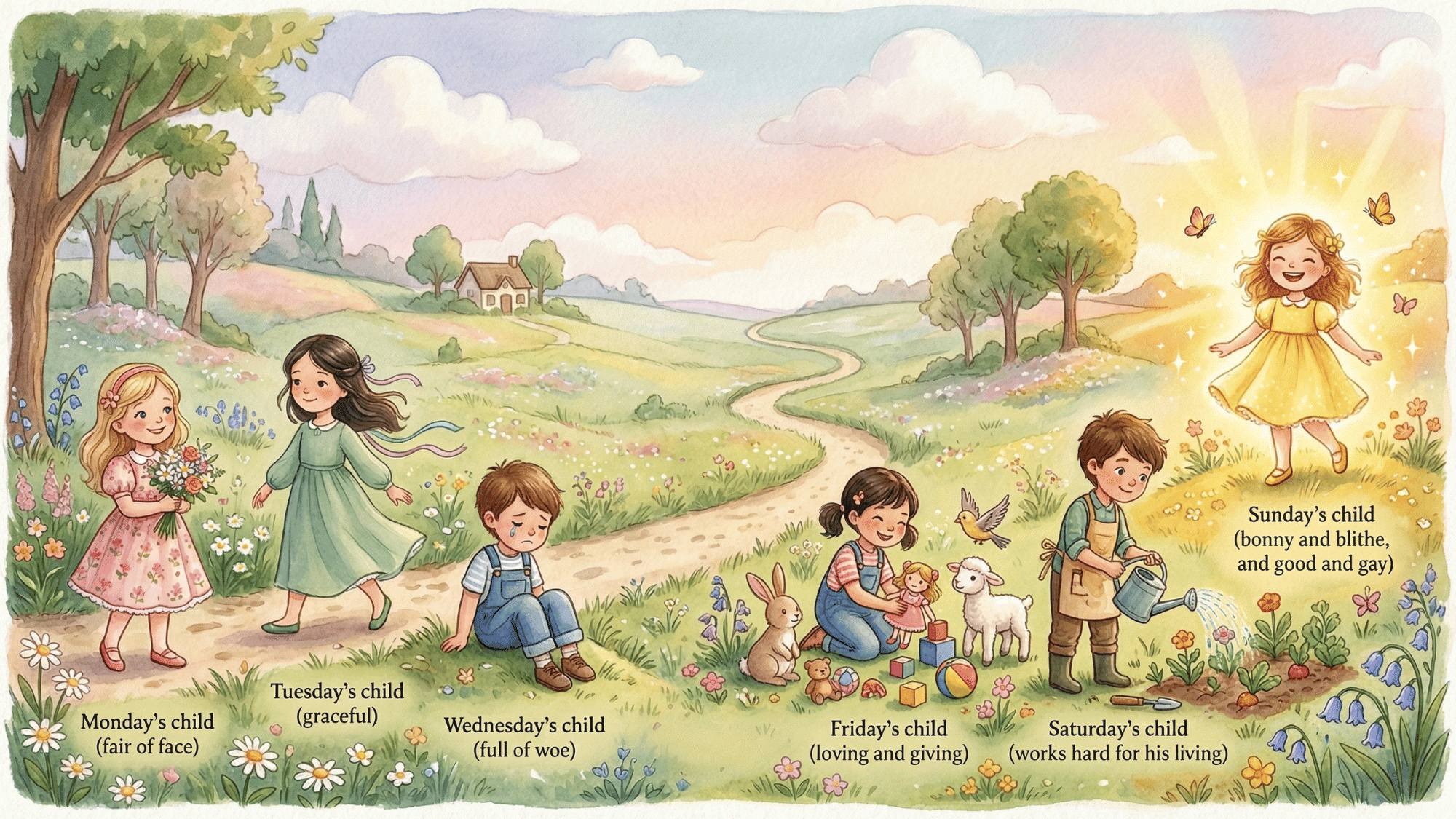
The Sunday’s Child poem may sound simple, but it holds deeper meaning when broken down line by line. It becomes much easier to understand once you take a closer look at each line.
Monday’s Child is Fair of Face
A Monday-born child is believed to be attractive and pleasant-looking, often linked with charm and a soft appearance. This line focuses on outward beauty and a naturally pleasing personality.
Tuesday’s Child is Full of Grace
A Tuesday-born child is seen as polite, kind, and well-mannered. This line highlights inner beauty and calm behavior. It suggests a person who carries themselves with respect and ease.
Wednesday’s Child is Full of Woe
A child born on Wednesday may face challenges or feel more emotionally sensitive. This line points to a sensitive and deep-thinking personality. It suggests someone who feels emotions more strongly than others.
Thursday’s Child Has Far to Go
This suggests a child born on Thursday will have a long journey, full of goals and achievements. It highlights growth, ambition, and future progress.
Friday’s Child is Loving and Giving
A Friday-born child is caring, generous, and kind toward others. This line focuses on emotional warmth and compassion. They are often seen as supportive and thoughtful.
Saturday’s Child Works Hard for a Living
A child born on Saturday is expected to be hardworking and responsible. This line highlights effort, discipline, and dedication. It suggests a life that requires persistence and a strong work ethic.
And the Child That is Born on the Sabbath Day
This refers to a child born on Sunday, a day traditionally seen as peaceful and special. It connects the child to calmness and spiritual meaning.
Is Bonny and Blithe, and Good and Gay
The Sunday child is cheerful, kind, lively, and full of happiness. This line highlights joy and a carefree personality. It suggests someone who spreads positivity.
The Big Themes Behind this Tiny Little Poem
This short rhyme may seem simple at first, but each line carries ideas that reflect beliefs, culture, and personality.
1. Fate and Fortune
The poem connects a child’s birthday to their future traits and life path, showing how people once believed that destiny was shaped by timing and unseen forces. Each day is linked to a different outcome, reflecting old traditions where birth details held meaning.
This idea suggests that life follows certain patterns beyond human control. It also shows how people tried to understand personality through simple beliefs. Overall, it presents fate as something guided by deeper, unseen influences.
2. Innocence and Childhood
This rhyme belongs to nursery traditions, where learning and fun come together in a simple form. Its tone is playful, light, and easy to remember, making it perfect for children.
The rhythm helps it stay in memory and be passed down from one generation to another. It reflects a time when stories and rhymes were used to teach in a gentle way. Overall, it captures the joy and simplicity of childhood.
3. Personality and Identity
Each line assigns a trait to a child based on their birth day, creating a sense of identity. This makes the rhyme feel personal and engaging for readers.
Many people enjoy associating their birthdays with these traits. It adds a fun way to think about personality and character. Overall, it shows how simple ideas can influence how people see themselves.
4. Hope and Positivity
The rhyme ends on a bright note with the Sunday child, leaving a feeling of happiness. This creates a sense of comfort and positivity for the reader.
The cheerful traits stand out and balance the more serious lines earlier in the poem. It gives the rhyme a soft and uplifting ending. Overall, it highlights the importance of joy and optimism.
5. Cultural and Religious Influence
The mention of the “Sabbath day” connects the rhyme to religious and cultural traditions. Sunday has long been seen as a day of rest and peace, which adds meaning to the final line.
This shows how beliefs and traditions shaped storytelling in the past. It reflects how culture influenced even simple rhymes. Overall, it highlights the role of tradition in shaping meaning.
Why the Sunday Child Line Stands Out?
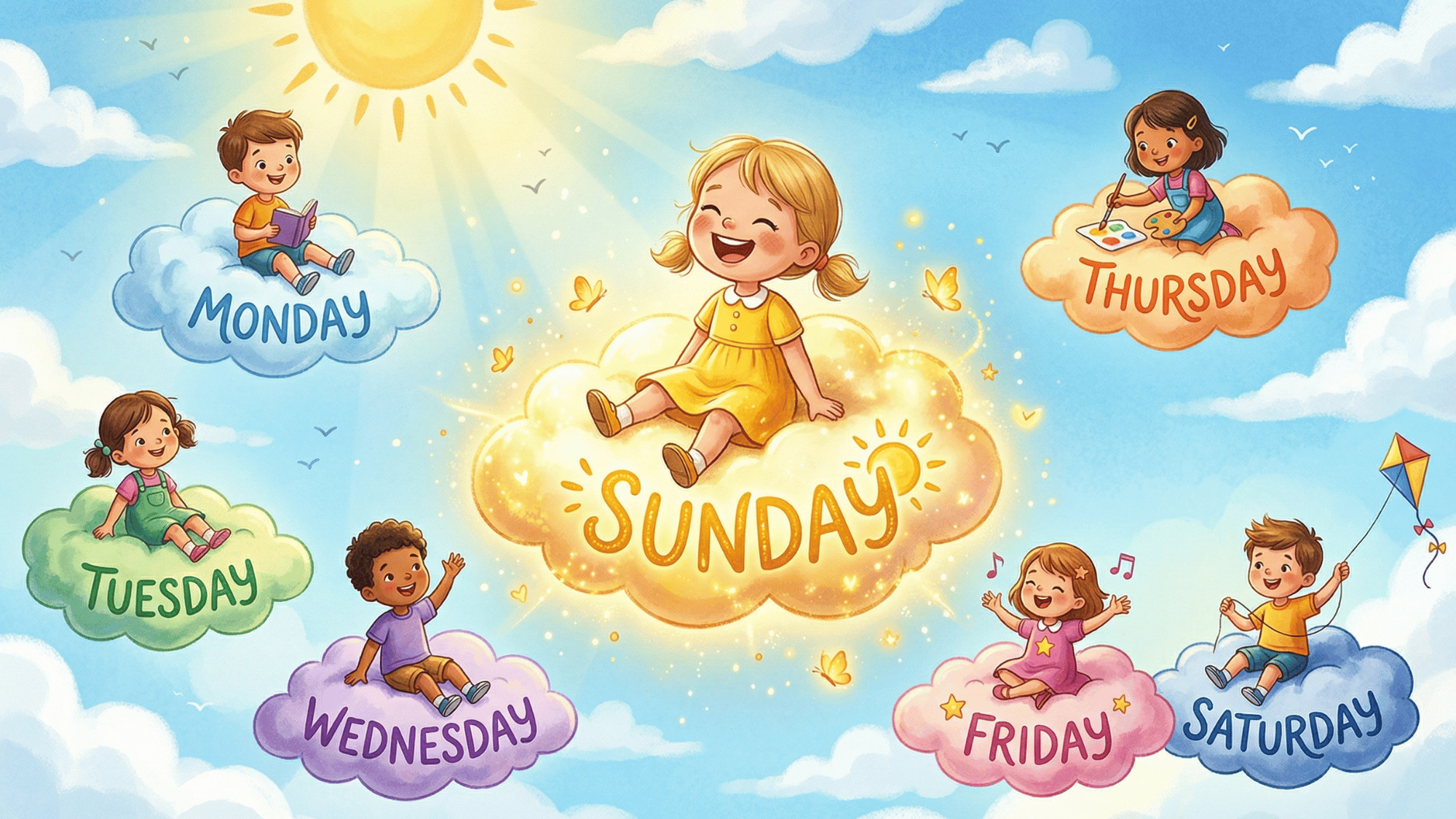
Among all the lines in the rhyme, the Sunday child line feels the most uplifting. The Sunday child line stands out for its positive tone and lasting impression.
- It appears at the end of the rhyme, making it the most memorable line
- It gives the poem a happy and satisfying ending
- The words used are positive and uplifting
- It contrasts with some earlier lines that mention struggle or hard work
- It highlights joy, kindness, and a cheerful personality
- The mention of “Sabbath day” adds a special and meaningful touch
- It feels complete on its own, which is why many people remember it separately
- It leaves readers with a warm and comforting feeling
Wrapping It Up
The Sunday’s Child poem may be short, simple, and centuries old, but it has clearly stood the test of time for a reason.
There is something deeply comforting about the idea that the day you were born already had something special written into it.
If you take it literally, see it as a fun piece of folklore, or just love the way it sounds, this little rhyme continues to bring a smile to the faces of young and old alike.
It is more than just a poem. It is a piece of history, a bedtime tradition, and a tiny reminder that every single day of the week produces something wonderful. And that is a message worth keeping!