


Finding the right words to describe your child isn’t always easy. You know who they are, but putting that into clear, positive words can feel tricky.
Maybe you’re filling out a school form, writing a birthday card, posting a caption, or just trying to explain your child to someone else.
That’s where this guide helps. In this post, you’ll find simple, thoughtful words to describe your child in many ways.
These words are meant to support, not label. They focus on strengths, growth, and real moments – just like your child.
Why the Right Words Matter
The words you use to describe your child matter more than you may think. Children often hear these words and start to believe them.
Positive and clear words can build confidence and help them feel understood. On the other hand, vague or negative labels can stick and affect how they see themselves.
When you choose thoughtful words, you’re not just describing your child – you’re supporting their growth. The right words can highlight effort, kindness, and progress, not just results.
They also help teachers, family members, and others see your child for who they really are.
A–Z List of Words to Describe Your Child
This A–Z list shares positive, meaningful words to describe your child in everyday language. Each word includes a simple meaning you can use for school, writing, or conversations.
A–E Words
| No. | Word | Meaning |
|---|---|---|
| 1 | Adventurous | Enjoys trying new things. |
| 2 | Affectionate | Shows love through words or actions. |
| 3 | Approachable | Easy for others to talk to. |
| 4 | Artistic | Enjoys art, music, or creative activities. |
| 5 | Attentive | Listens carefully and stays focused. |
| 6 | Aware | Notices what is happening around them. |
| 7 | Balanced | Manages emotions well for their age. |
| 8 | Brave | Faces fears with courage. |
| 9 | Bright | Learns quickly and understands ideas. |
| 10 | Calm | Stays relaxed in many situations. |
| 11 | Caring | Shows kindness to others. |
| 12 | Cheerful | Often happy and positive. |
| 13 | Confident | Believes in their abilities. |
| 14 | Considerate | Thinks about others’ feelings. |
| 15 | Cooperative | Works well with others. |
| 16 | Creative | Uses imagination in play or thinking. |
| 17 | Curious | Asks questions and wants to learn. |
| 18 | Dependable | Can be trusted to follow through. |
| 19 | Determined | Keeps trying even when it’s hard. |
| 20 | Disciplined | Follows rules and routines. |
| 21 | Driven | Works toward goals with effort. |
| 22 | Easygoing | Adapts easily to change. |
| 23 | Empathetic | Understands others’ feelings. |
| 24 | Energetic | Has lots of energy. |
| 25 | Engaged | Takes interest in activities. |
| 26 | Enthusiastic | Shows excitement and eagerness. |
| 27 | Expressive | Shares thoughts and feelings clearly. |
F–J Words
| No. | Word | Meaning |
|---|---|---|
| 28 | Fair | Treats others equally. |
| 29 | Faithful | Stays loyal and committed. |
| 30 | Flexible | Adjusts well to change. |
| 31 | Focused | Stays on task. |
| 32 | Friendly | Makes others feel welcome. |
| 33 | Fun-loving | Enjoys play and laughter. |
| 34 | Generous | Likes to share. |
| 35 | Gentle | Acts with care. |
| 36 | Goal-oriented | Enjoys working toward goals. |
| 37 | Helpful | Likes supporting others. |
| 38 | Honest | Tells the truth. |
| 39 | Hopeful | Believes good things will happen. |
| 40 | Imaginative | Creates stories or ideas. |
| 41 | Independent | Works without constant help. |
| 42 | Initiative-taking | Starts tasks on their own. |
| 43 | Inventive | Finds new ways to do things. |
| 44 | Joyful | Shows happiness often. |
| 45 | Just | Tries to do what’s right. |
K–O Words
| No. | Word | Meaning |
|---|---|---|
| 46 | Kind | Shows care toward others. |
| 47 | Knowledge-seeking | Enjoys learning new things. |
| 48 | Leaderly | Naturally guides others. |
| 49 | Level-headed | Stays calm under pressure. |
| 50 | Listener | Pays attention when others speak. |
| 51 | Logical | Thinks clearly. |
| 52 | Loving | Shows warmth and affection. |
| 53 | Mindful | Thinks before acting. |
| 54 | Motivated | Wants to improve. |
| 55 | Mature | Acts thoughtfully for their age. |
| 56 | Nurturing | Cares for others. |
| 57 | Nice-mannered | Uses good manners. |
| 58 | Noticing | Pays attention to details. |
| 59 | Observant | Watches closely and understands. |
| 60 | Open-hearted | Willing to care and connect. |
| 61 | Optimistic | Looks for positive outcomes. |
P–T Words
| No. | Word | Meaning |
|---|---|---|
| 62 | Passionate | Cares deeply about interests. |
| 63 | Perceptive | Understands situations quickly. |
| 64 | Persistent | Keeps going despite challenges. |
| 65 | Playful | Brings fun into moments. |
| 66 | Positive | Focuses on the good. |
| 67 | Prepared | Comes ready to learn. |
| 68 | Proactive | Takes action early. |
| 69 | Reflective | Thinks about actions and feelings. |
| 70 | Reliable | Can be counted on. |
| 71 | Resilient | Bounces back from setbacks. |
| 72 | Respectful | Treats others well. |
| 73 | Responsible | Takes ownership of tasks. |
| 74 | Self-aware | Understands their emotions. |
| 75 | Sincere | Honest and genuine. |
| 76 | Supportive | Encourages others. |
| 77 | Thoughtful | Considers others first. |
| 78 | Trustworthy | Earns trust through actions. |
U–Z Words
| No. | Word | Meaning |
|---|---|---|
| 79 | Understanding | Tries to see others’ views. |
| 80 | Unique | One of a kind. |
| 81 | Upbeat | Cheerful and positive. |
| 82 | Versatile | Adapts to many situations. |
| 83 | Warm | Makes others feel safe. |
| 84 | Well-mannered | Polite in behavior. |
| 85 | Willing | Open to trying. |
| 86 | Wise | Shows good judgment. |
| 87 | Xenial | Friendly and welcoming. |
| 88 | Youthful | Full of energy and curiosity. |
| 89 | Zealous | Shows strong interest. |
| 90 | Zany | Playfully silly in a fun way. |
| 91 | Zippy | Full of lively energy. |
| 92 | Uplifting | Makes others feel happier or encouraged. |
| 93 | Valued | Feels important and appreciated. |
| 94 | Vibrant | Full of life and positive energy. |
| 95 | Watchful | Pays close attention to surroundings. |
| 96 | Welcoming | Makes others feel included and comfortable. |
| 97 | Wholehearted | Gives full effort and care. |
| 98 | Yearning | Shows a strong desire to learn or grow. |
| 99 | Yielding | Willing to listen and compromise. |
| 100 | Zestful | Shows strong energy and excitement. |
| 101 | Zigzag-minded | Thinks in playful, non-linear ways. |
Best Words for Different Scenarios
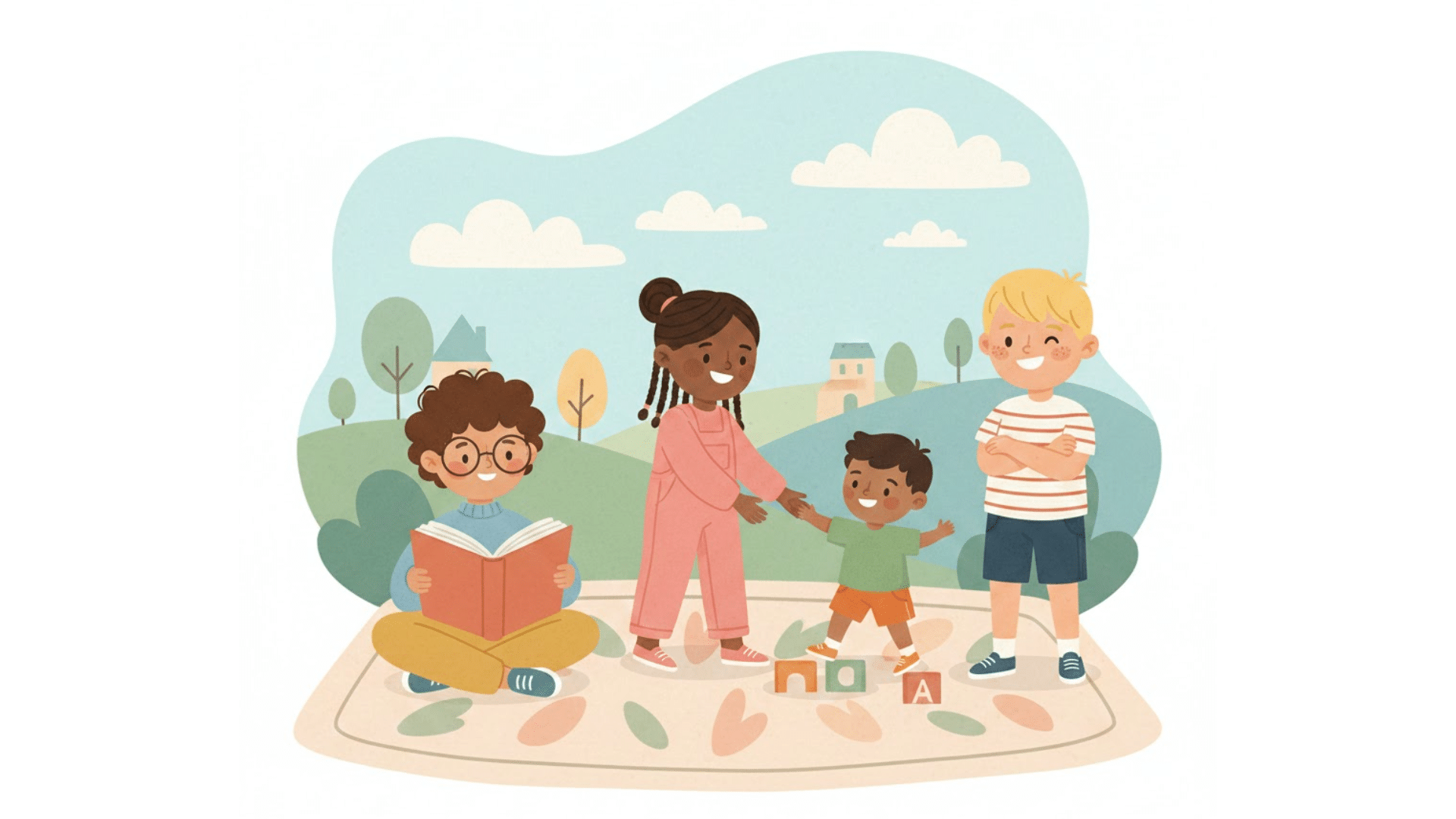
From the list above, some words work better in certain moments than others. Choosing the right word for the right situation helps your message feel clear, kind, and thoughtful.
1. Positive Words to Describe Your Child’s Personality
Every child has a unique personality that shines in small, everyday moments. These positive words help you describe who your child is in a clear and kind way.
- Kind – Shows care and concern for others.
- Caring – Likes to help and look after people or pets.
- Thoughtful – Thinks about how actions affect others.
- Confident – Believes in themselves and tries new things.
- Brave – Faces fears or challenges, even when it’s hard.
- Curious – Loves asking questions and learning new things.
- Creative – Comes up with new ideas or enjoys making things.
- Patient – Can wait calmly without getting upset easily.
- Honest – Tells the truth and owns their actions.
- Gentle – Treats people and things with care.
2. Words to Describe Your Child’s Social Skills
Social skills shape how children connect, share, and work with others every day. These words help describe how your child interacts with people in a clear and positive way.
- Friendly – Makes others feel welcome and at ease.
- Cooperative – Works well with others and follows group rules.
- Respectful – Treats people kindly and listens to boundaries.
- Inclusive – Makes sure no one feels left out.
- Supportive – Encourages and helps others when they need it.
- Polite – Uses good manners in words and actions.
- Approachable – Easy for others to talk to or ask for help.
- Team-minded – Thinks about group success, not just their own.
- Patient with Others – Gives people time without rushing or judging.
- Encouraging – Lifts others up with kind words or actions.
3. Words to Describe Your Child’s Emotions and Feelings
Children feel emotions deeply, even when they don’t always have the words to explain them. These terms help describe your child’s feelings with care and understanding.
- Joyful – Feels happy and full of positive energy.
- Excited – Shows strong interest or happiness about something.
- Content – Feels calm and satisfied in the moment.
- Sensitive – Feels emotions strongly and notices others’ feelings.
- Frustrated – Feels upset when things don’t go as planned.
- Worried – Feels uneasy or unsure about something.
- Overwhelmed – Feels like emotions or tasks are too much at once.
- Hopeful – Believes something good will happen.
- Cautious – Takes time before acting or deciding.
- Reflective – Thinks about feelings and experiences quietly.
4. Words to Describe Your Child’s Creativity and Imagination
Creativity shows up in how children think, play, and solve problems in their own way. These words help describe your child’s imagination and creative strengths clearly.
- Imaginative – Creates stories, ideas, or worlds in their mind.
- Inventive – Comes up with new ways to do things.
- Expressive – Shares thoughts and feelings through art, words, or play.
- Artistic – Enjoys drawing, music, crafts, or creative projects.
- Original – Thinks differently and offers fresh ideas.
- Curious-Minded – Gets ideas beyond the obvious.
- Playful – Uses fun and creativity in everyday moments.
- Visionary – Thinks about what could be, not just what is.
- Storyteller – Enjoys making up or sharing stories.
- Creative Thinker – Finds unique solutions to problems.
5. Words to Describe Your Child’s Energy and Spirit
Every child shows their energy and spirit in different ways. These words help describe how your child moves through the world and expresses their inner drive.
- Energetic – Has a lot of physical or mental energy.
- Lively – Brings movement and excitement into a space.
- Enthusiastic – Shows strong interest and eagerness.
- Spirited – Full of life, emotion, and personality.
- Adventurous – Enjoys trying new things.
- Determined – Keeps going even when something feels hard.
- Motivated – Wants to try and improve without being pushed.
- Passionate – Cares deeply about interests or activities.
- Resilient – Bounces back after setbacks or challenges.
- Driven – Works toward goals with focus and effort.
With these options, you can describe your child in a way that feels natural, positive, and true to who they are.
Conclusion
Finding the right words to describe your child can feel small, but it makes a big difference.
The words you choose help shape how others see your child – and how your child sees themselves. Using clear, kind, and thoughtful language allows you to highlight strengths, effort, and growth, not just outcomes.
This A–Z list is here to make that easier. Whether you’re filling out a school form, writing a card, or simply talking about your child, you now have words that fit real moments.
Bookmark this guide, share it with other parents, and come back whenever you need the right words to celebrate your child just as they are.





One Response
Test