

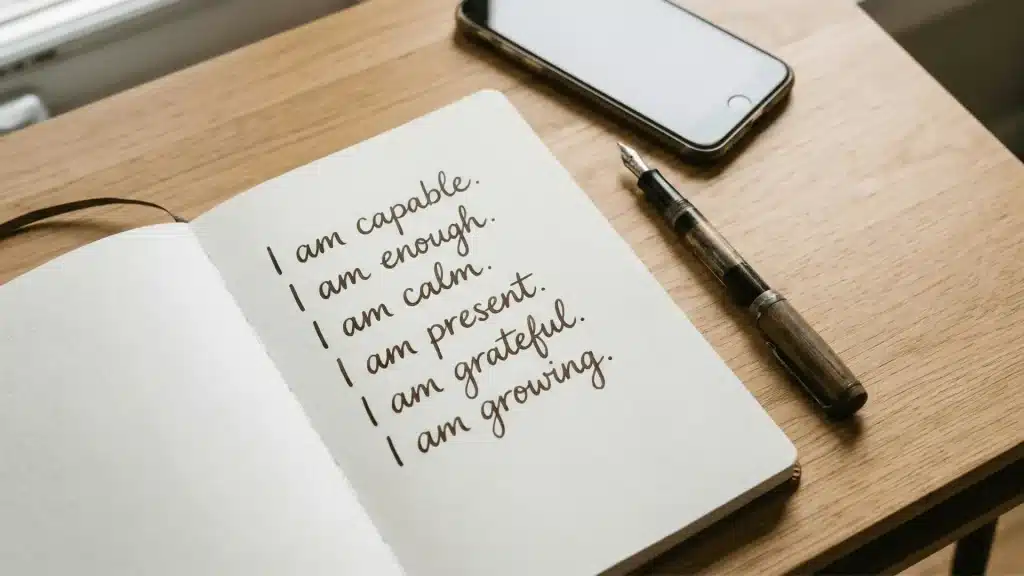
Teen years can feel overwhelming at times. One small habit can make a real difference in how you think and feel each day.
Positive affirmations for teens are simple statements that help shift your mindset and build confidence over time. When used regularly, they can change how you talk to yourself and handle challenges.
Here, you’ll find practical ways to use affirmations, along with a wide range of examples you can start using right away.
The goal is to help you build stronger, healthier thoughts that support you in everyday situations.
How to Use Positive Affirmations for Teens
Using affirmations the right way matters more than just reading them. Follow these steps to make them actually work in real life.
Step 1: Choose Affirmations that Match Real Struggles
Pick affirmations that connect to what you’re actually dealing with. If the statement doesn’t feel relevant, your mind won’t accept it.
For example, use confidence-based lines for self-doubt or calming ones for stress. Random affirmations with no connection usually have little effect.
Step 2: Say Them in Present Tense (“I Am” Format)
Always frame affirmations as if they are already true.
Your brain responds more strongly to identity-based statements like “I am confident” instead of future ones like “I will be confident.” This helps shift how you see yourself right now.
Step 3: Repeat Daily with Consistency
Affirmations only work through repetition. Saying them once won’t change anything.
When you repeat them every day, your brain starts forming new thought patterns, which slowly influence your beliefs and behavior.
Step 4: Pair Affirmations with Emotion or Action
Don’t say them passively. Say them with intention or connect them to real moments, like before a test or when you feel nervous.
Emotion helps your brain take the message seriously, making it stick faster.
Step 5: Use Visual or Environmental Triggers
Keep affirmations where you can see them often, like on your phone, mirror, or notebook. Regular exposure reinforces the message without effort.
If you hide them away, you’ll forget to use them and lose consistency.
Positive Affirmations for Teens
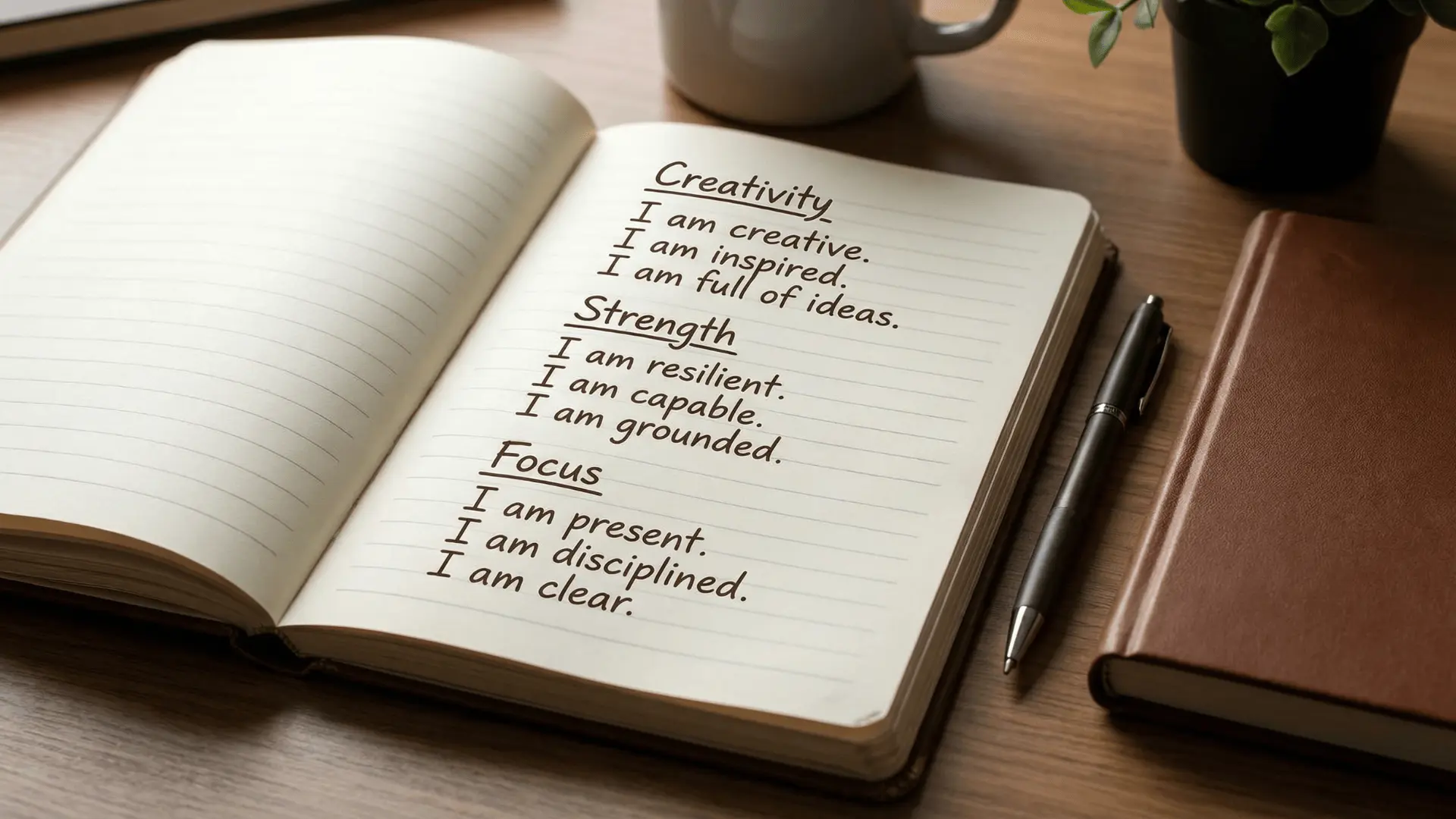
These affirmations are grouped by real-life situations teens face. Each one is written in a simple, present-tense style so it’s easy to use daily.
Confidence and Self-Worth
These help build a strong sense of self and reduce negative self-talk.
- I am enough just as I am
- I believe in my abilities
- I deserve respect from myself and others
- I trust my decisions
- I am proud of who I am becoming
- I value my thoughts and opinions
- I am comfortable being myself
- I accept myself fully
- I am worthy of love and kindness
- I speak to myself with respect
- I stand tall in my confidence
- I am learning to trust myself more
- I am confident in my voice
- I deserve to take up space
- I honor my feelings
- I am growing into my best self
- I recognize my strengths
- I feel good about who I am
- I respect my journey
- I am proud of my progress
Stress and Anxiety
These affirmations help calm the mind and bring focus back to the present.
- I am calm and steady
- I can handle this moment
- I breathe in peace and breathe out stress
- I am safe right now
- I let go of what I cannot control
- I choose calm over worry
- I take things one step at a time
- I am stronger than my stress
- I allow myself to relax
- I trust things will work out
- I focus on what I can do
- I release tension from my body
- I am in control of my reactions
- I handle challenges with a clear mind
- I allow myself to pause
- I respond with calm energy
- I feel grounded and stable
- I choose peace in this moment
- I manage my thoughts with care
- I give myself time to reset
Motivation and Growth
These affirmations support effort, learning, and staying consistent.
- I am capable of learning anything
- I improve every day
- I keep moving forward
- I stay focused on my goals
- I give my best effort
- I grow through challenges
- I learn from every mistake
- I stay committed to my progress
- I build strong habits
- I take action even when it’s hard
- I believe in my potential
- I stay disciplined and consistent
- I keep showing up for myself
- I am dedicated to my goals
- I push through obstacles
- I keep improving step by step
- I take responsibility for my growth
- I stay motivated to succeed
- I finish what I start
- I trust my hard work
Friendships and Social Life
These help teens feel secure in relationships and reduce comparison.
- I choose healthy friendships
- I attract supportive people
- I am a good friend
- I respect others and myself
- I communicate clearly
- I listen with care
- I build positive connections
- I deserve honest friendships
- I feel confident in social situations
- I stay true to myself around others
- I respect my boundaries
- I express my thoughts calmly
- I am valued in my friendships
- I choose people who uplift me
- I let go of toxic connections
- I trust my instincts with people
- I feel comfortable meeting new people
- I build strong relationships
- I support others while respecting myself
- I enjoy meaningful conversations
Body Image and Self-Acceptance
These affirmations help shift focus away from comparison and toward acceptance.
- I accept my body as it is
- My body deserves care
- I treat my body with respect
- I am more than my appearance
- I appreciate what my body does
- I feel comfortable in my skin
- I release comparison
- I respect my physical self
- I focus on health over looks
- I honor my body daily
- I am comfortable in my own skin
- I speak kindly about my body
- I accept my natural self
- I value myself beyond appearance
- I feel strong and capable
- I care for my body with intention
- I let go of unrealistic standards
- I appreciate my uniqueness
- I treat my body with patience
- I feel at peace with myself
Resilience and Challenges
These affirmations help teens bounce back from setbacks.
- I am resilient
- I rise after every fall
- I learn from tough moments
- I handle setbacks with strength
- I keep going even when it’s hard
- I face challenges with courage
- I adapt and move forward
- I grow through difficult times
- I do not give up on myself
- I overcome obstacles
- I stay strong in tough situations
- I trust my ability to recover
- I handle pressure with strength
- I stay steady through change
- I learn and move forward
- I am stronger than my struggles
- I keep pushing forward
- I face problems with confidence
- I turn challenges into lessons
- I stay determined
School and Academic Confidence
These affirmations support focus, learning, and performance.
- I am capable of understanding new topics
- I stay focused in my studies
- I manage my time well
- I complete my tasks on time
- I learn at my own pace
- I improve with practice
- I stay organized
- I ask for help when needed
- I stay calm during exams
- I trust my preparation
- I stay attentive in class
- I absorb information easily
- I stay disciplined in my studies
- I build strong study habits
- I stay committed to learning
- I improve my skills daily
- I stay confident in tests
- I learn from feedback
- I stay consistent with my work
- I believe in my academic ability
Positivity and Mindset
These affirmations help create a more balanced and positive outlook.
- I choose positive thoughts
- I focus on what is good
- I see opportunities around me
- I stay hopeful
- I look for solutions
- I keep a balanced mindset
- I stay open to growth
- I focus on progress, not perfection
- I stay present in the moment
- I choose a healthy mindset
- I respond with positivity
- I stay mentally strong
- I focus on what matters
- I keep my thoughts clear
- I choose helpful thoughts
- I stay mentally balanced
- I guide my thoughts with care
- I focus on what I can control
- I stay steady in my thinking
- I build a strong mindset
Independence and Identity
These affirmations help teens build a clear sense of self.
- I am in charge of my life
- I make my own choices
- I trust my path
- I stand by my values
- I define who I am
- I follow my own direction
- I stay true to myself
- I build my own identity
- I make decisions with confidence
- I grow into the person I want to be
Why Positive Affirmations Work for Teens
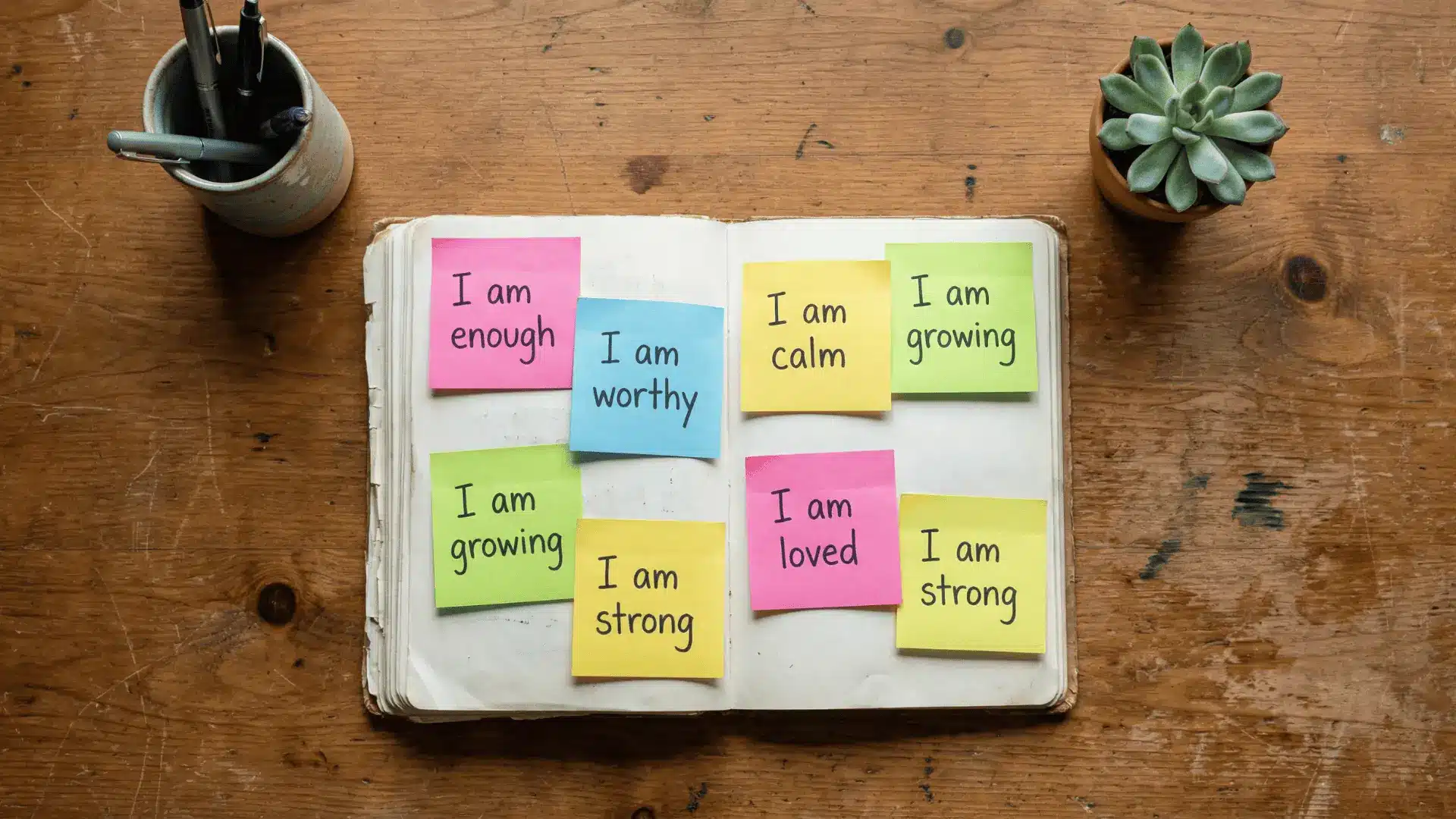
Affirmations work because they slowly change how you think about yourself. Since teens are still shaping their identity, repeated thoughts can strongly influence beliefs and behavior.
The Self-Talk Loop
Your thoughts directly affect how you feel, and those feelings guide what you do. Over time, your actions reinforce those same thoughts, creating a loop.
If your self-talk is negative, the loop strengthens self-doubt. Affirmations interrupt this pattern by replacing negative thoughts with supportive ones, which leads to calmer emotions and better actions.
Identity-Based Thinking
Your brain pays close attention to statements that start with “I am” because they define who you believe you are.
When you repeat these statements daily, your mind starts aligning your behavior with that identity.
This works especially well for teens because your sense of self is still developing, making it easier to reshape how you see yourself.
Over time, these repeated thoughts shape a stronger and more positive sense of self.
When Affirmations Don’t Work (and How to Fix it)
Affirmations only work when used the right way. These quick fixes help you spot what’s going wrong and correct it fast.
| Problem | Fix (Quick Action) | Example |
|---|---|---|
| Feels Fake | Use a softer, believable version | “I am learning to be confident” |
| No Consistency | Attach to a daily habit | Morning routine / before bed |
| No Emotion | Say it with focus or visualize | Before a test or stressful moment |
| Expecting Fast Results | Stay consistent over time | Treat it like daily practice |
Fixing these small mistakes can make your affirmations much more effective. Keep it simple and stay consistent.
Conclusion
Building a better mindset doesn’t happen overnight, but small daily actions can lead to real change.
Positive affirmations for teens give you a simple way to improve how you think, respond, and grow through challenges.
When you stay consistent and use them in a way that feels real, they can slowly reshape your confidence and outlook.
Start with a few that connect with you and make them part of your daily routine. Try a few today and stick with them. Your future self will thank you.
Frequently Asked Questions
How Many Affirmations Should Teens Say Daily?
Teens should aim to repeat around 5 to 10 affirmations daily, because consistency matters more than quantity, and repeating a smaller set regularly helps the brain absorb and reinforce those thoughts effectively.
How Long Does It Take for Affirmations to Work?
Affirmations can start showing small mental shifts within a few weeks, but real and lasting changes usually take consistent daily practice, as the brain needs time to form new thought patterns and beliefs.
Can Affirmations Help with Anxiety or Low Confidence?
Yes, affirmations can help reduce negative self-talk and improve emotional control, but they work best when combined with other healthy habits like proper sleep, supportive routines, and managing stress in daily life.


