


Your baby’s first tooth is an exciting milestone, but keeping track of what comes next can feel confusing.
A baby teeth chart makes it easier to understand when teeth usually appear, how many teeth your child may have at different ages, and which ones come in first.
From the first tiny tooth to the toddler teeth stage, the timeline below shows what parents can expect as baby teeth grow, develop, and eventually fall out.
Why Does Baby Teeth Development Timing Matter?
Baby teeth do more than help your child chew. They support speech development, proper nutrition, and jaw growth, while also holding space for permanent teeth that come in later.
Because of this, many parents naturally wonder if their child is “on track.” The truth is, tooth eruption timing varies widely from one child to another, and a difference of a few months is rarely a cause for concern.
A typical baby teeth timeline can still help parents understand the usual order in which teeth appear, when children often complete their set of 20 primary teeth, and when those teeth may begin falling out.
Genetics, birth weight, and other individual factors can all influence when teeth appear.
Premature babies, for instance, may get their first tooth a few months later than full-term peers, which is completely expected and not a sign of a developmental problem.
Rather than treating a baby teeth chart as a strict deadline, use it as a general idea – a way to understand typical patterns while letting your child grow at their own pace.
Baby Teeth Chart by Age and Tooth Order
A baby teeth chart helps parents understand when teeth usually appear and what changes to expect during early childhood. While every child grows at a different pace, most babies follow a similar pattern as their first teeth come in.
This timeline shows which teeth typically appear first, how many teeth toddlers may have at different ages, and when they can expect to have a complete set of 20 baby teeth.
|
Age |
Teeth Usually Appearing | Total Baby Teeth |
|---|---|---|
|
Birth to 6 months |
No teeth for most babies | 0 |
|
6 to 10 months |
Lower front teeth (central incisors) | 2 |
|
8 to 12 months |
Upper front teeth (central incisors) | 4 |
|
9 to 16 months |
Side front teeth (lateral incisors) | 8 |
|
13 to 19 months |
First molars | 12 |
|
16 to 23 months |
Canines | 16 |
|
23 to 33 months |
Second molars | 20 |
By around age 3, most toddlers have all 20 baby teeth.
Small changes in timing are common, but this baby teeth chart can help you understand your child’s tooth development and track each stage as it happens.
Baby Teeth Eruption Order and Timeline
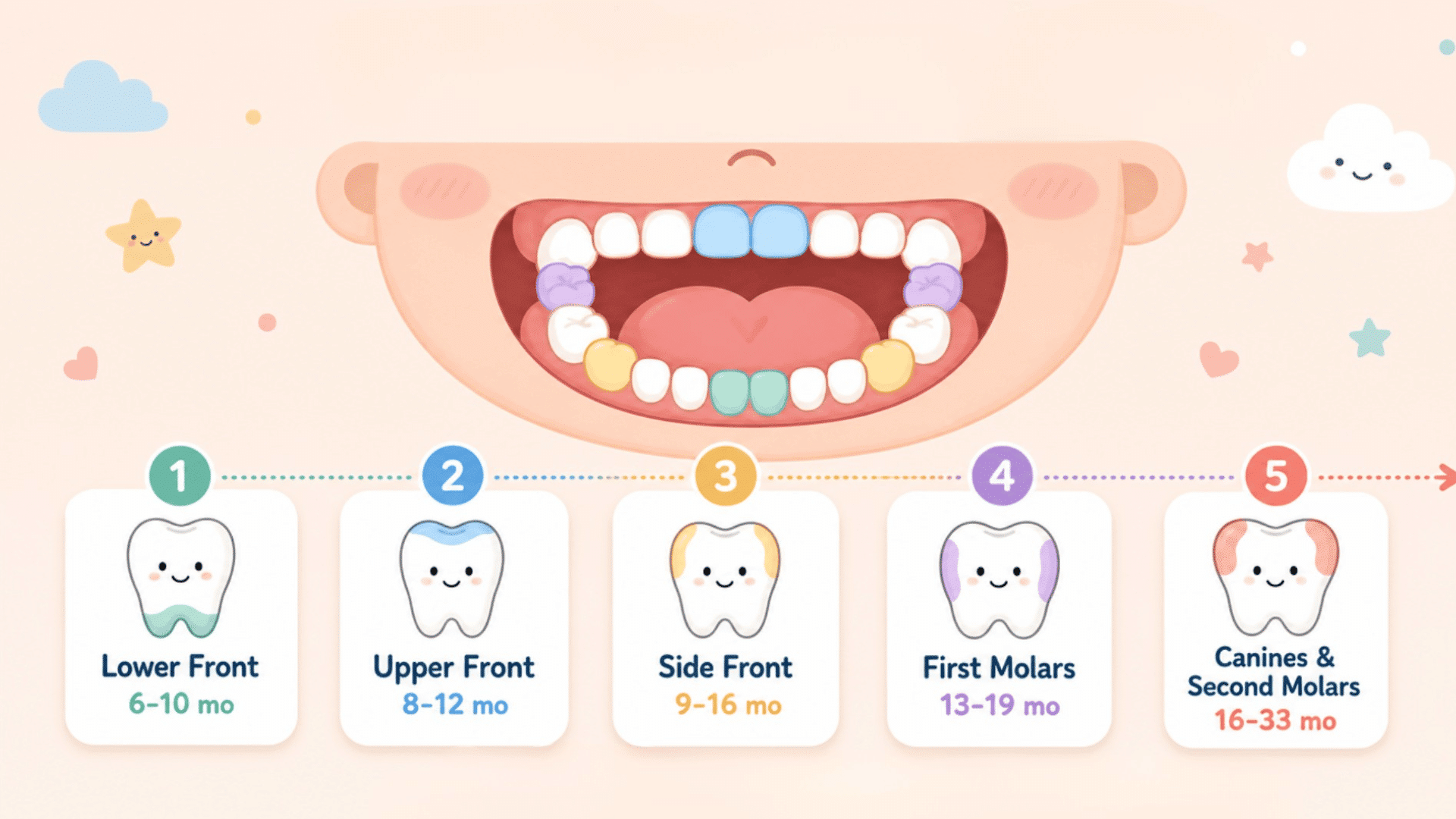

A baby teeth eruption process usually follows a simple pattern, with certain teeth appearing before others. Parents often want to know which teeth come first, how many teeth their child should have at each age, and what changes are normal during teething.
While the timing can vary, this sequence shows the typical order of toddler tooth development, from the first tiny tooth to a complete set of 20 baby teeth.
1. Lower Front Teeth Usually Come First
For most babies, the teething journey begins with the two lower central incisors, marking the first sign of the eruption pattern to come.
However, a different teething order, such as the upper teeth appearing first, is often a normal variation when the child is otherwise growing and developing well.
- Lower central incisors often erupt between 6 and 10 months
- These are usually the first teeth parents notice
- Babies may show signs like drooling, chewing, or gum rubbing
- These teeth help babies begin biting soft foods
- They mark the start of the baby teeth eruption process
There’s a reason the lower teeth lead: the lower jaw (mandible) develops slightly ahead of the upper jaw in the womb, which means those bottom gum pads are the first to be ready.
2. Upper Front Teeth Follow Soon After
Following the lower incisors, the upper central incisors typically emerge next, coming in as a pair that completes the baby’s first noticeable smile.
- Upper central incisors often come in between 8 and 12 months
- They usually appear as a pair above the lower front teeth
- These teeth help babies bite food more easily
- Some babies may become more fussy during this stage
- Together with the lower incisors, they create the first noticeable smile
3. Side Front Teeth Add More Teeth
After the main front teeth appear, the lateral incisors move in to fill the gaps on either side, rounding out baby’s growing smile.
- Lateral incisors usually erupt between 9 and 16 months
- Most children have around eight teeth after this stage
- These teeth help with biting and handling different foods
- Parents may notice more chewing as new teeth come in
- Small spaces between baby teeth are common and usually normal
4. First Molars Help Toddlers Chew
Arriving farther back in the mouth, the first molars give toddlers the chewing power they need to handle thicker, more textured foods.
Toddler molar eruption usually begins between 13 and 19 months, although the exact timing and the order of the upper and lower molars can vary.
- First molars usually appear between 13 and 19 months
- These teeth help toddlers break down thicker foods
- Teething discomfort may return during this stage
- Toddlers may chew on objects more often
- These teeth are important as children move toward a wider diet
5. Canines And Second Molars Complete The Set
Rounding out the full set, the canines and second molars typically arrive during the later toddler years, completing all 20 baby teeth by around age 3.
- Canines often erupt between 16 and 23 months
- Second molars usually come in between 23 and 33 months
- Most toddlers have all 20 baby teeth by around age 3
- These teeth support chewing, speech, and jaw development
- Baby teeth remain important until permanent teeth begin replacing them
Keeping track of this order can help you compare your child’s progress with common tooth development patterns and prepare for the next stages of their dental growth.
What to Expect During the Teething Process

The teething process involves more than a tooth simply breaking through the gums. Before a tooth appears, your baby’s gums may feel firm, swollen, or sensitive as the tooth moves closer to the surface.
During this time, many babies have an increased need to chew because gentle pressure can help soothe their gums. Some children may become fussier, sleep differently, or need extra comfort as each tooth comes in.
Teething can also cause short-term changes in feeding habits and mood. Once a tooth appears, regular care becomes important, including brushing with a small amount of fluoride toothpaste.
While some babies get their first teeth earlier and others later, small differences in timing are usually normal and part of each child’s development.
Common Baby Teething Signs to Watch For
Teething can bring small changes as new teeth begin to appear. Knowing the common signs can help you understand your baby’s comfort and behavior during this stage.
| Teething Sign | What You May Notice | Why It Happens |
|---|---|---|
| More drooling than usual | Wet clothes or mild skin irritation around the mouth | Extra saliva is common when teeth begin coming in. |
| Chewing on fingers or toys | Frequent biting or gnawing on objects | Pressure may help soothe sore gums. |
| Tender or swollen gums | Red, sensitive, or slightly raised gum areas | A new tooth may be moving through the gums. |
| Changes in mood | Fussiness, crying, or needing more comfort | Gum discomfort can make babies feel unsettled. |
| Changes in eating habits | Less interest in certain foods | Chewing or sucking may feel uncomfortable. |
| Sleep changes | Trouble settling or waking more often | Gum soreness may disturb normal sleep patterns. |
Symptoms such as high fever, persistent diarrhea, or unusual fatigue are not usually associated with teething and may require advice from a pediatrician.
How to Soothe a Teething Baby and Protect New Teeth?
Teething can make babies fussy, but simple comfort measures can ease sore gums while helping parents start healthy oral care habits early. Once the first tooth appears, daily care becomes an important part of protecting your baby’s smile.
- Use chilled teething toys: A cold (not frozen) silicone teether can help reduce gum discomfort. Avoid frozen objects, as they may hurt sensitive gum tissue.
- Massage the gums gently: Rub your baby’s gums with a clean finger to provide gentle pressure that may calm irritation.
- Offer cool, soft foods: For babies who have started solids, chilled unsweetened applesauce or mashed banana can provide comfort while soothing sore gums.
- Provide extra comfort: Holding, cuddling, and offering reassurance can help babies cope with the discomfort that comes with teething.
- Start brushing the first tooth: Use a soft, baby-sized toothbrush twice a day as soon as the first tooth appears to remove plaque and bacteria.
- Use fluoride toothpaste correctly: A rice-grain-sized amount of fluoride toothpaste is enough for babies and toddlers to help protect developing enamel.
- Schedule the first dental visit: Plan a dental checkup by your child’s first birthday or when the first tooth appears to monitor growth and development.
- Build healthy eating habits: Limit sugary drinks and frequent snacking, avoid putting babies to bed with bottles of milk or juice, and offer water between meals.
Avoid amber teething necklaces because of choking and strangulation risks, and do not use benzocaine numbing gels for children under 2, as the FDA warns they can cause serious side effects.
When Baby Teeth Fall Out, and Permanent Teeth Come In
Toddler teeth go through many changes, from filling in the gaps after the first baby teeth appear to slowly making room for permanent teeth later on.
Understanding this process can help parents know what to expect as children move through teething, complete their set of 20 baby teeth, and begin losing them around school age.
Most children have all 20 baby teeth by around age 3. These teeth help with chewing, speech, and holding space for adult teeth.
Around age 6, baby teeth usually start to loosen and fall out, beginning with the lower front teeth. The process continues gradually until most permanent teeth replace baby teeth during childhood.
When to Call a Dentist About Baby Teeth?
Most baby teeth follow a predictable pattern, but some changes need a dentist’s attention. Regular dental visits help track development, catch concerns early, and support healthy habits as your child grows.
- No teeth appearing: Talk to a dentist if your child has no signs of teeth coming in around 18 months, as most babies get their first tooth between six and twelve months.
- Ongoing pain or swelling: Get advice if your child has lasting discomfort, swollen gums, or signs of infection.
- Tooth color changes: A dentist should check unusual spots, including white, brown, or dark marks that may point to early decay or other concerns.
- Early tooth loss: Ask for guidance if a baby tooth falls out earlier than expected, since baby teeth help guide permanent teeth into position.
- Unusual tooth order or spacing issues: Dental visits can help monitor teeth appearing in an unexpected order, crowding, or spacing concerns.
- Signs of decay: Schedule a visit if you notice pitting, cavities, or ongoing bad breath.
Routine checkups allow dentists to watch how baby and permanent teeth develop together and address problems before they become more serious.
Final Thoughts
Watching your child grow from the first tiny tooth to a full smile is a memorable part of early childhood. A baby teeth chart can help you understand common timing, but every child develops at their own pace.
The teething process comes with many changes, and knowing what to expect can make each stage easier to follow. From the first signs of tooth growth to the time baby teeth start falling out, every milestone shows how your child’s smile is changing.
With regular brushing, dental checkups, and healthy habits, you can support strong toddler teeth as your child grows.
Frequently Asked Questions
Can Babies Be Born with Teeth?
Yes, though rare. Natal teeth affect about 1 in 2,000 to 3,000 newborns and need dental evaluation due to choking risks.
What if My Baby Has No Teeth at 12 Months?
It can be normal. Some babies get teeth later, but check with a pediatric dentist if none appear by 18 months.
Is It Normal for Teeth to Come in Crooked?
Yes, baby teeth may look uneven at first and often shift as more teeth appear and the jaw grows.
Do Baby Teeth Fall out in the Same Order They Came in?
Yes, the first teeth to erupt are often the first to loosen and fall out around age 6.


