Family relationships can sometimes feel confusing, especially when extended relatives are involved. During family gatherings or conversations, you may hear someone ask, “What exactly are my cousin’s kids to me?”
Family relationships actually have specific names based on generations and shared ancestors. These terms help explain how people are connected within a family tree.
If you have ever wondered what your cousins’ kids are to you, the answer is simpler than it sounds.
This guide explains the correct term, how the relationship works in a family tree, and how families commonly refer to it in everyday conversations.
Understanding Cousin Relationships in a Family Tree
Before learning what your cousin’s children are called, it helps to understand how cousin relationships work in a family tree.
Family relationships are based on two main factors: Shared ancestors and Generational distance.
Your cousins share at least one set of grandparents with you. Because of this shared ancestry, you and your cousin belong to the same generation within the family tree.
Once children enter the next generation, the relationship changes slightly. Your cousin’s children are one generation younger than you, which is why the relationship term becomes different.
Understanding this structure makes it easier to see where your cousin’s children fit within your extended family.
What are Your Cousins’ Kids to You?
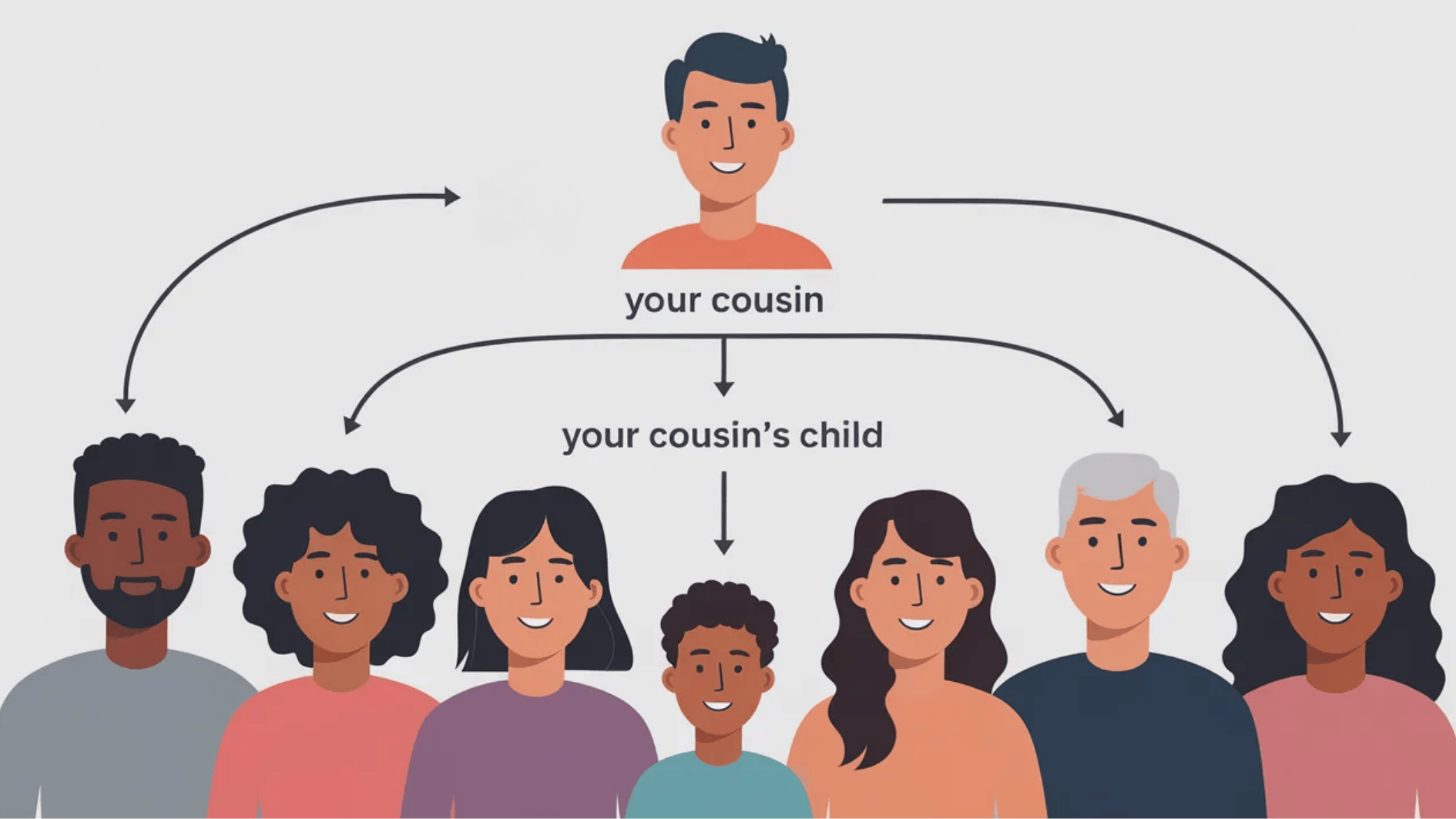
Many people ask this question online and during conversations with relatives. The technically correct term for your cousin’s children is first cousin once removed.
This phrase might sound complicated at first, but it simply explains the generational difference between two relatives who share the same family line.
Your cousin is part of the same generation as you. When your cousin has a child, that child belongs to the next generation in the family tree. Because of that difference, the term “once removed” is used.
So, if you are asking what your cousins’ kids are to you, the correct answer is first cousin once removed.
What Does “First Cousin Once Removed” Mean?
The phrase can be easier to understand when broken into two parts.
- First cousin: You and your cousin share the same grandparents.
- Once removed: The word “removed” describes the difference in generations.
Your cousin’s child is one generation younger than you. That one-generation gap creates the term once removed.
If the generational gap were larger, the term would change as well. For example, your cousin’s grandchild would be called your first cousin twice removed.
This system helps genealogists clearly explain family relationships across generations
Family Relationship Chart for Cousin Connections
Understanding cousin relationships becomes much easier when you see them organized in a simple chart.
| Family Member | Relationship to You | Explanation |
|---|---|---|
| Your cousin | First cousin | You share the same grandparents |
| Your cousin’s child | First cousin once removed | One generation younger than you |
| Your cousin’s grandchild | First cousin twice removed | Two generations younger |
| Your parent’s cousin | First cousin once removed | One generation older than you |
The term “removed” simply measures the number of generations between relatives.
This chart helps explain how family relationships shift as new generations are added.
Why Many People Use Simpler Terms
Even though “first cousin once removed” is technically correct, most families rarely use it in daily conversations.
Instead, people often choose simpler terms that feel more natural.
Common informal labels include:
- Niece or nephew
- Cousin’s child
- Extended family member
- Younger cousin
Families sometimes use these casual terms because they are easier to say and easier for children to understand.
In close families, people may also use these titles to express affection rather than strict genealogy.
For example, someone might introduce their cousin’s child as a niece or nephew simply because the relationship feels similar.
How Your Cousin’s Kids Might Address You
Another question people often ask is what their cousin’s children should call them.
Technically, your cousin’s children could also refer to you as a first cousin once removed. However, this term is rarely used in everyday speech.
In most families, children use simpler ways of addressing extended relatives.
Common examples include:
- Cousin
- Aunt or uncle (informally)
- Family friend
- First name
The title used usually depends on family traditions and how close everyone feels to each other. Some families prefer simple labels so children can easily understand relationships within the family.
Cultural Differences in Family Relationship Terms
Different cultures describe extended family relationships in different ways. In many communities, relatives outside the immediate family are still treated very closely.
- Cousins may be treated like siblings: In many families, cousins grow up together and are treated almost like brothers and sisters.
- Parents’ cousins may be called aunt or uncle: Instead of using formal genealogy terms, children often address older relatives as aunt or uncle out of respect.
- Respectful titles are used for older relatives: Many cultures encourage children to use respectful family titles when speaking to older family members.
- Family closeness influences the titles used: Some families choose relationship terms based on emotional closeness rather than on strict family-tree definitions.
These traditions help strengthen family connections and make relationships easier for children to understand.
Because of these cultural practices, many people use family titles based on custom and respect rather than technical genealogical terms.
Conclusion
Extended family relationships can sometimes feel confusing, especially when multiple generations are involved.
If you have ever wondered what your cousins’ kids are to you, the technically correct term is first cousin once removed.
This term simply describes the generational difference between you and your cousin’s children.
Even though the phrase may sound formal, many families prefer simpler ways of describing these relationships in everyday conversation.
In the end, the exact label matters less than the bond you share. Family relationships are defined not only by terminology but also by the connections and memories built across generations.