Knowing when to introduce a sippy cup can feel unclear because every baby develops at a slightly different pace.
It is not just about age, but about how ready your baby is to handle a new way of drinking. Small signs often matter more than the timeline itself.
Here, you’ll learn how to recognize those signs, understand the right timing, and follow a simple approach that makes the transition easier. You will also see how early choices can shape long-term habits.
Once you understand the basics, the process becomes much more manageable. Let’s start by looking at when to introduce a sippy cup and the signs your baby is ready.
When to Introduce a Sippy Cup: Signs Your Baby is Ready
Most babies can start trying a sippy cup around 6 months, but that number is only a general guide. What really matters is whether your baby has reached the stage where they can handle and learn this new skill comfortably.
Instead of rushing the process, you need to understand both the timing and the readiness signs together.
1. Recommended Age Range and Why It Matters
Around 6 months, babies usually gain better control over their hands and bodies. They can sit more steadily and start practicing how to hold and tilt objects.
Introducing a sippy cup at this stage gives them enough time to learn before the usual bottle transition window, which happens later in the first year.
2. How Starting Solids Connects to Sippy Cup Use
Sippy cups are often introduced when solids begin because babies are already in a structured feeding routine.
They are sitting for meals, exploring textures, and learning how to manage food.
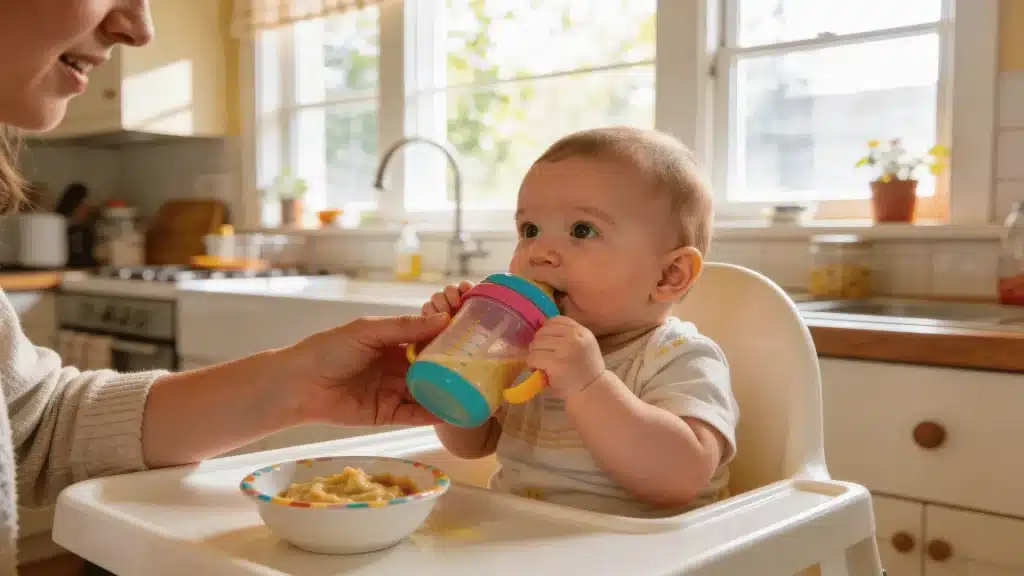
Adding a cup during this time feels like a natural extension of that learning, especially when you offer small sips of water alongside meals.
3. Physical and Motor Skill Indicators
A baby is more likely ready when they can sit upright with support and have enough control to hold and guide objects toward their mouth.
These motor skills are important because using a sippy cup requires coordination, not just sucking.
4. Feeding and Behavioral Signs of Readiness
You may notice your baby watching you drink, reaching for cups, or trying to grab utensils during meals.
Some babies also start wanting to hold their own bottle. These behaviors show growing curiosity and a shift toward independent feeding.
5. Why Readiness Matters More than Age Alone
Not all babies follow the same timeline. Introducing a sippy cup before your baby is ready can lead to frustration and resistance.
Waiting until both physical ability and interest are present makes the process easier and more positive.
A balanced approach works best here. Use 6 months as a starting point, but let your baby’s skills and interests decide when to move forward.
Why Introduce a Sippy Cup Early
Introducing a sippy cup early helps your baby learn new drinking skills gradually and makes the shift away from bottles easier over time.
Introducing a sippy cup early supports a smoother transition away from bottles by giving your baby time to adjust gradually.
1. Supporting the Transition Away from Bottles
One of the main reasons to introduce a sippy cup early is to avoid a sudden or difficult transition later.
Babies who are exposed to a cup around 6 months get time to practice while still using a bottle.
This overlap makes it easier to reduce bottle use gradually instead of forcing a quick change closer to the one-year mark.
2. Developmental Benefits for Drinking Skills
Using a sippy cup helps your baby develop new oral and motor skills. Unlike bottles, cups require different mouth movements and better coordination between hands and mouth.
This supports stronger control over sipping and swallowing, while also encouraging your baby to take a more active role during feeding.
3. How Early Introduction Affects Long-Term Habits
Early exposure to a sippy cup can shape healthier habits in the long run. It reduces the chances of prolonged bottle use, which is often discouraged beyond 12 to 18 months.
Babies who get comfortable with cups earlier tend to adapt more easily to regular cups later, making future transitions smoother.
Starting early does not mean rushing the process. It simply gives your baby the time and space to learn at a steady and natural pace.
How to Introduce a Sippy Cup Step-By-Step
Introducing a sippy cup works best when the process feels simple and low-pressure. A slow and steady approach helps your baby get used to the cup without turning it into a struggle.
If you’re setting up your baby’s feeding routine, you might want to look at a complete baby essentials list, so you have the right tools ready as your baby grows.
Step 1: Start with Small, Low-Stress Practice Sessions
Begin with short practice times instead of expecting your baby to use the cup right away. Let them hold it, touch it, and try a few sips at their own pace.
This keeps the experience calm and helps them get comfortable with something new.
Step 2: Use Familiar Liquids to Build Comfort
A baby may accept the cup more easily when it has something familiar inside. In the beginning, you can offer breast milk or formula, so the change is only about the cup, not the taste.
This can make the first few tries feel less confusing.
Step 3: Introduce the Cup During Mealtimes
Mealtime is usually the easiest time to offer a sippy cup because your baby is already seated and focused on eating or drinking.
Offering a small amount of water with meals helps them treat the cup as part of the routine rather than a separate task.
Step 4: Gradually Reduce Bottle Dependence
The shift should happen little by little, not all at once. Keep offering the cup regularly while slowly cutting back on bottle use as your baby becomes more comfortable.
This gives them time to adjust without resistance. Patience matters most here.
Some babies learn quickly, while others need more time and repeated practice before the cup starts to feel natural.
Types of Sippy Cups and What to Choose
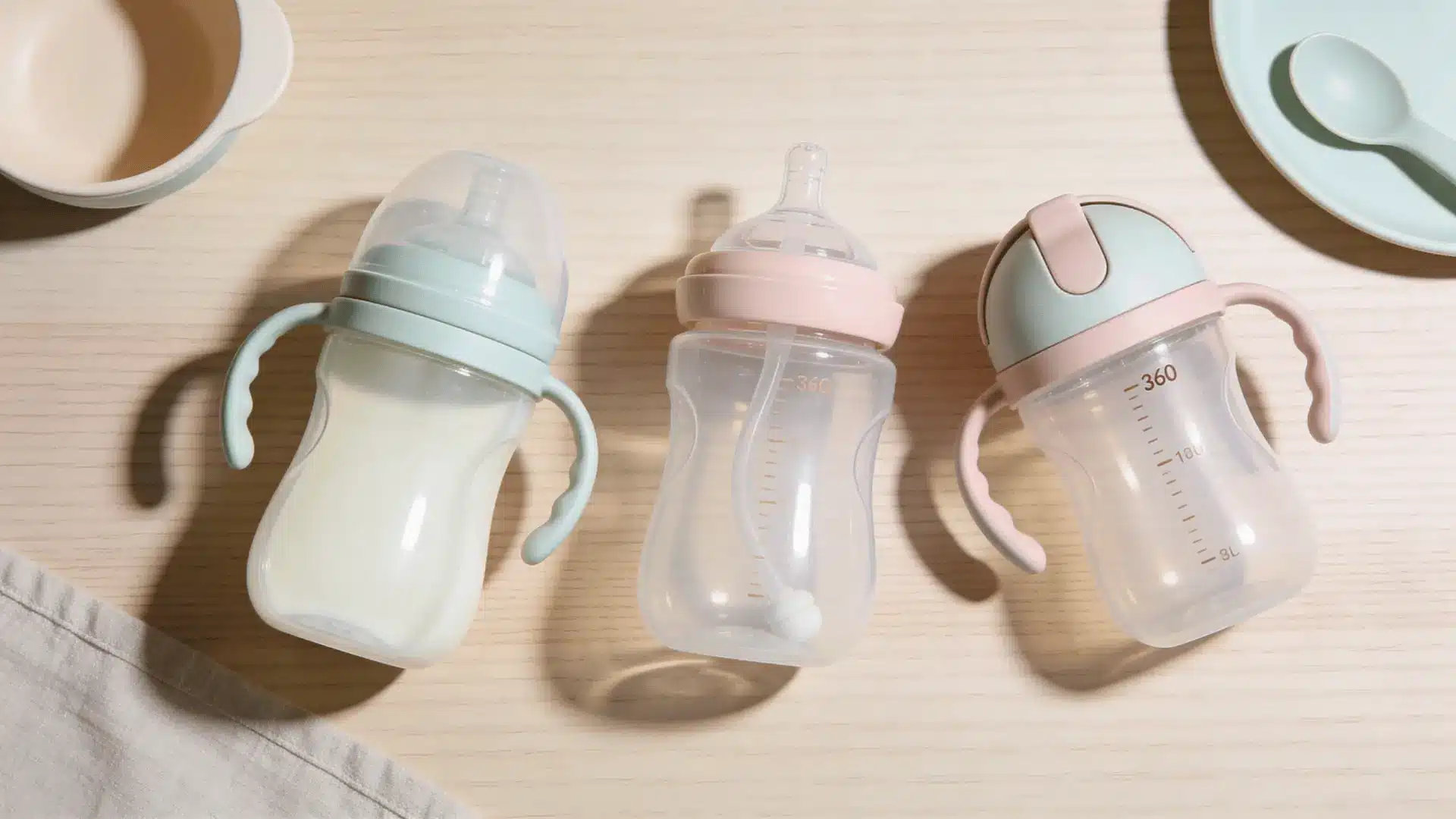
Sippy cups come in different types, and each one supports a slightly different stage of learning. Choosing the right type can make the transition smoother and help your baby build better drinking skills over time.
| Type | How It Works | Best For | Keep In Mind |
|---|---|---|---|
| Soft-Spout Cup | Has a soft, bottle-like spout for sucking | Early transition from bottle | Easy to accept but may not build new drinking skills quickly |
| Straw Cup | Baby drinks by sucking through a straw | Building oral and motor skills | Supports stronger coordination but may take practice |
| 360 Trainer Cup | Liquid comes from any edge like a regular cup | Transition toward open cup drinking | Reduces spills and feels closer to a real cup |
| Open Cup | No lid, baby sips directly from the rim | Long-term drinking skill development | Messier at first but best for natural drinking patterns |
Start with what your baby accepts easily, then gradually move toward straw or open cups as their skills improve.
Common Mistakes to Avoid when Introducing a Sippy Cup
It is easy to make small mistakes during this transition, especially when you want your baby to learn quickly. Avoiding these common issues can make the process smoother for both of you.
- Introducing Too Early Without Readiness: Starting before your baby has the right skills can lead to frustration. If they cannot sit steadily or control objects well, they may struggle with the cup.
- Using the Cup as a Constant Comfort Tool: Letting your baby carry a sippy cup around all day may seem convenient, but it can create dependency. It is better to offer the cup during structured times like meals.
- Expecting Immediate Success without Practice: Some babies take time to understand how a sippy cup works. Expecting quick results can lead to pressure. Regular, low-pressure practice helps build confidence.
Keeping things simple and consistent usually leads to better progress over time.
When to Transition Away from a Sippy Cup
Sippy cups are meant to be a short transition tool, not a long-term habit, as prolonged bottle use is generally discouraged for healthy development. Knowing when and how to move on helps your baby develop more natural drinking skills.
Recommended Timeline for Phasing out Sippy Cups
Most babies begin moving away from sippy cups between 12 and 18 months, as their coordination and control improve.
By this stage, they are better able to handle different drinking methods and no longer rely on the same level of support that a sippy cup provides.
This period is ideal for slowly reducing dependence while encouraging more advanced skills.
Moving Toward Open Cup Drinking
Shifting to an open cup is an important next step because it helps your baby learn how to control sips, manage spills, and drink in a more natural way.
Start with small amounts and offer it during mealtimes when your baby is calm and seated.
With regular practice and supervision, most babies gradually become more confident using an open cup.
Balancing Convenience with Development
Sippy cups are useful for reducing spills, but using them for too long may limit skill development.
Slowly replacing them with regular cups while still using them when needed creates a balanced approach.
A gradual shift works best here, giving your baby time to adjust while building more independent drinking habits.
Conclusion
The process of introducing a sippy cup works best when it follows your baby’s pace rather than a fixed schedule.
When you pay attention to readiness, use the right approach, and stay consistent, the transition becomes smoother over time.
Small steps add up, and your baby gradually builds confidence with each attempt. It is less about getting it perfect and more about keeping the experience steady and positive.
With the right balance, your baby will move forward naturally without resistance. Start simple, stay patient, and try your first sippy cup routine today.
Frequently Asked Questions
Is 4 Months Too Early for a Sippy Cup?
In most cases, yes. Around 4 months, babies usually do not have the motor skills or feeding readiness needed for a cup. It is better to wait until closer to 6 months, when they can sit with support and start solids.
What Should You Put in a Sippy Cup First?
Start with small amounts of water during mealtimes. If your baby resists, you can try breast milk or formula in the beginning to make the experience more familiar and easier to accept.
Can Breastfed Babies Use Sippy Cups the Same Way?
Yes, breastfed babies can use sippy cups just like bottle-fed babies. The timing and approach stay the same, though some babies may take a little longer to adjust since the sucking pattern is different.
How Long Does It Take for Babies to Learn?
It varies for every baby. Some pick it up in a few days, while others take weeks or even months of practice. Consistency and patience matter more than speed during this stage. Most babies learn with regular exposure, so keeping it simple and stress-free usually leads to better results.