

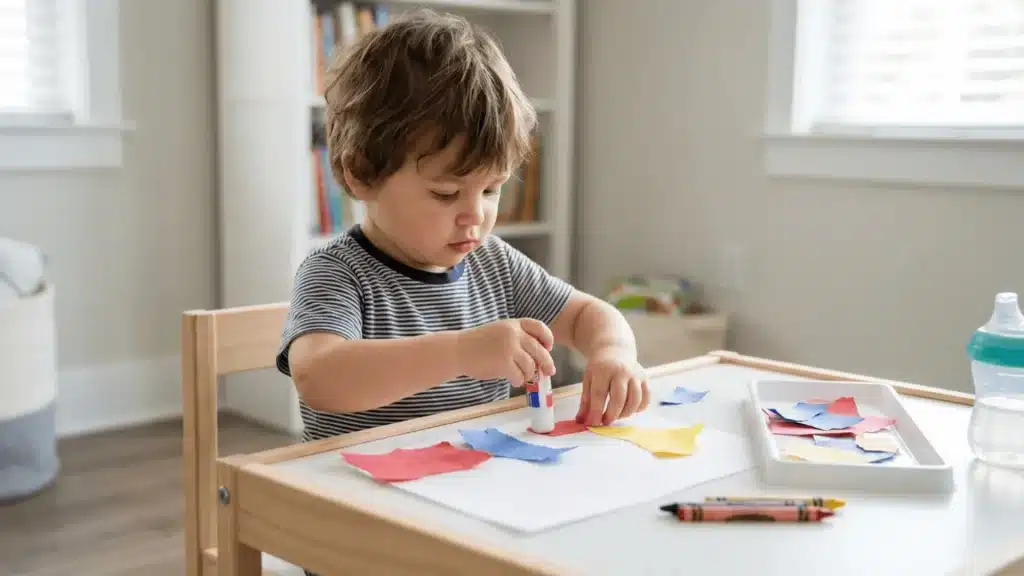
Finding crafts for a 3-year-old isn’t always as easy as it sounds. Attention shifts quickly, and if something feels too hard or slow, interest can disappear fast.
I’ve noticed that the best crafts at this age are the ones that start quickly and keep little hands busy right away.
You don’t need big setups or lots of materials. Simple actions like sticking, pressing, or rolling often work better than anything complicated.
Here, you’ll find easy craft ideas that are quick to set up and actually hold your child’s attention.
Quick Setup Rules Before Starting Any Craft
Keep materials limited to just two or three items at a time so your child stays focused on one simple action. Too many options often lead to switching instead of real engagement.
Set up a clear workspace using a tray, mat, or box so the mess stays controlled in one place. Prepare tricky parts like tearing paper in advance so your child can start without getting stuck.
Keep the setup quick so the activity begins within a minute or two, and interest doesn’t drop early, especially when you mix in easy daily play ideas you can rotate at home.
Easy Craft Ideas for 3-Year-Olds (Grouped by Type)
These craft ideas are grouped so it’s easier to pick one based on what your child feels like doing. Each activity is simple, quick to set up, and focused on doing rather than explaining, similar to simple games that keep your child actively involved.
Paper and Gluing Crafts
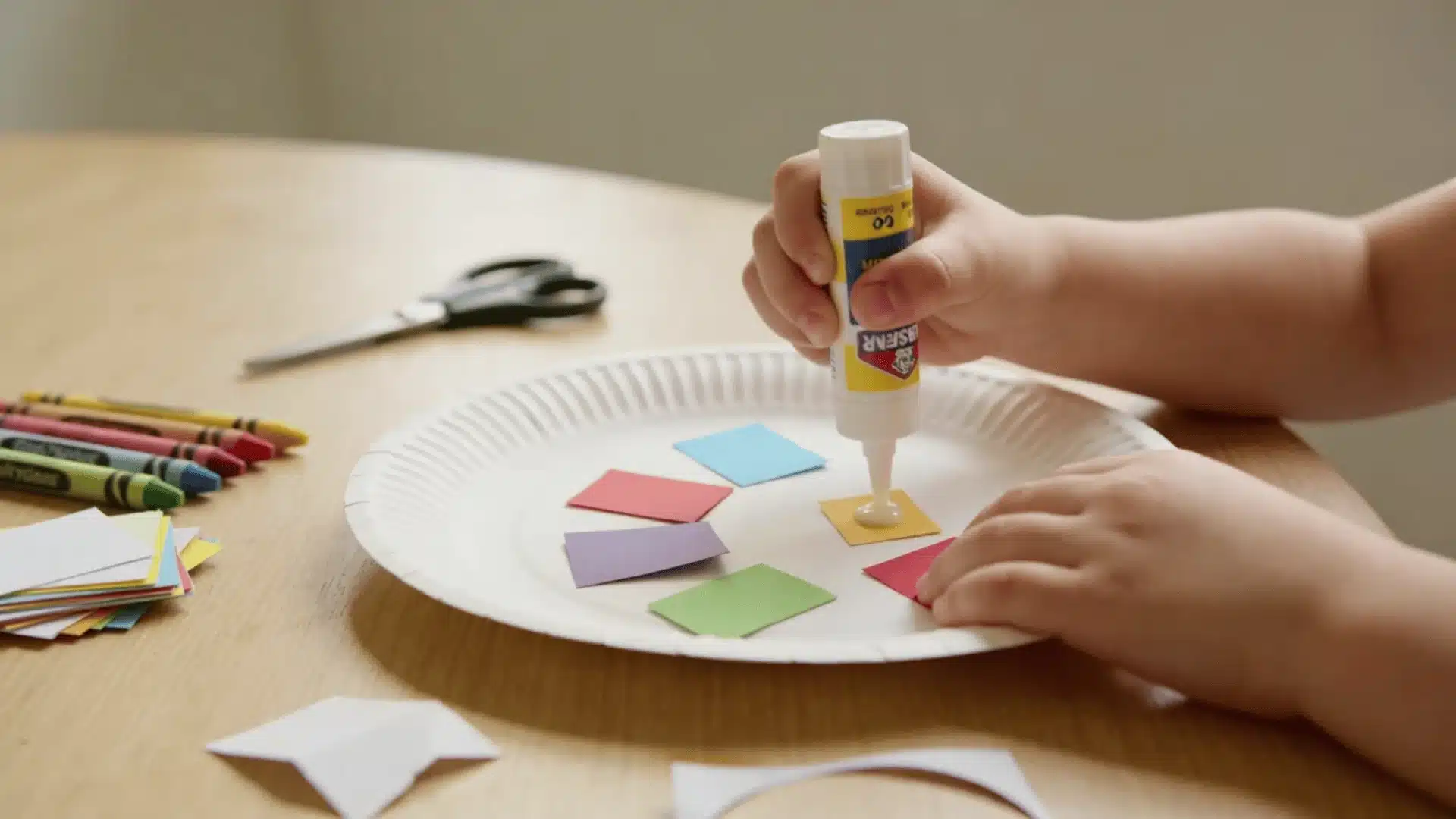
- Torn Paper Collage: Tear colored paper and glue it onto a sheet to build hand strength, keeping the activity simple.
- Paper Plate Face Craft: Use a plate and add pre-cut facial features to reduce the need for precise cutting.
- Paper Strip Chain: Loop and glue paper strips into chains to build coordination through repetition.
- Shape Fill Activity: Fill a drawn shape with paper or stickers to add simple structure without complexity.
- Scrap Paper Pasting: Glue random paper scraps freely to keep the activity open-ended and pressure-free.
- Paper Plate Animal: Create simple animals using a plate and a few cutouts for easy assembling.
- Tissue Paper Stick Art: Stick small tissue pieces onto paper to add texture using lightweight materials.
Painting and Color Crafts
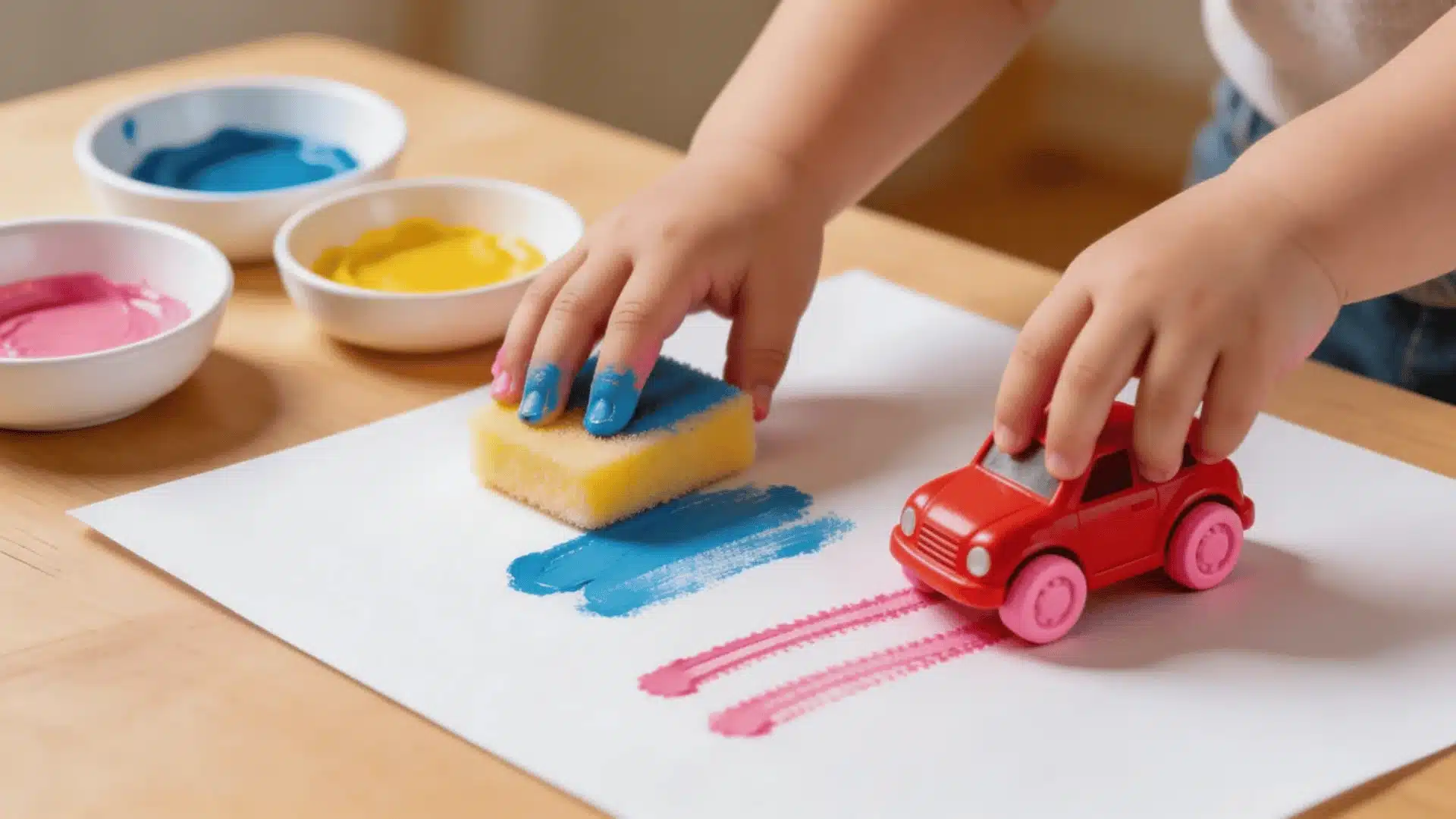
- Toy Car Painting: Roll paint-covered toy cars on paper to combine play with creative movement.
- Sponge Dabbing Art: Dab paint with sponge pieces using a simple, easy-to-repeat press motion.
- Finger Painting: Spread paint with fingers to encourage direct sensory play and color exploration.
- Vegetable Stamping: Use cut vegetables to stamp shapes and demonstrate clear cause-and-effect.
- Paint in a Bag: Press the sealed paint into a bag to mix colors without a mess.
- Bottle Cap Stamping: Stamp circles using bottle caps to build simple patterns through repetition.
- Water Painting: Paint with water on surfaces for a mess-free activity that can be repeated anytime.
Sensory and Fine Motor Crafts
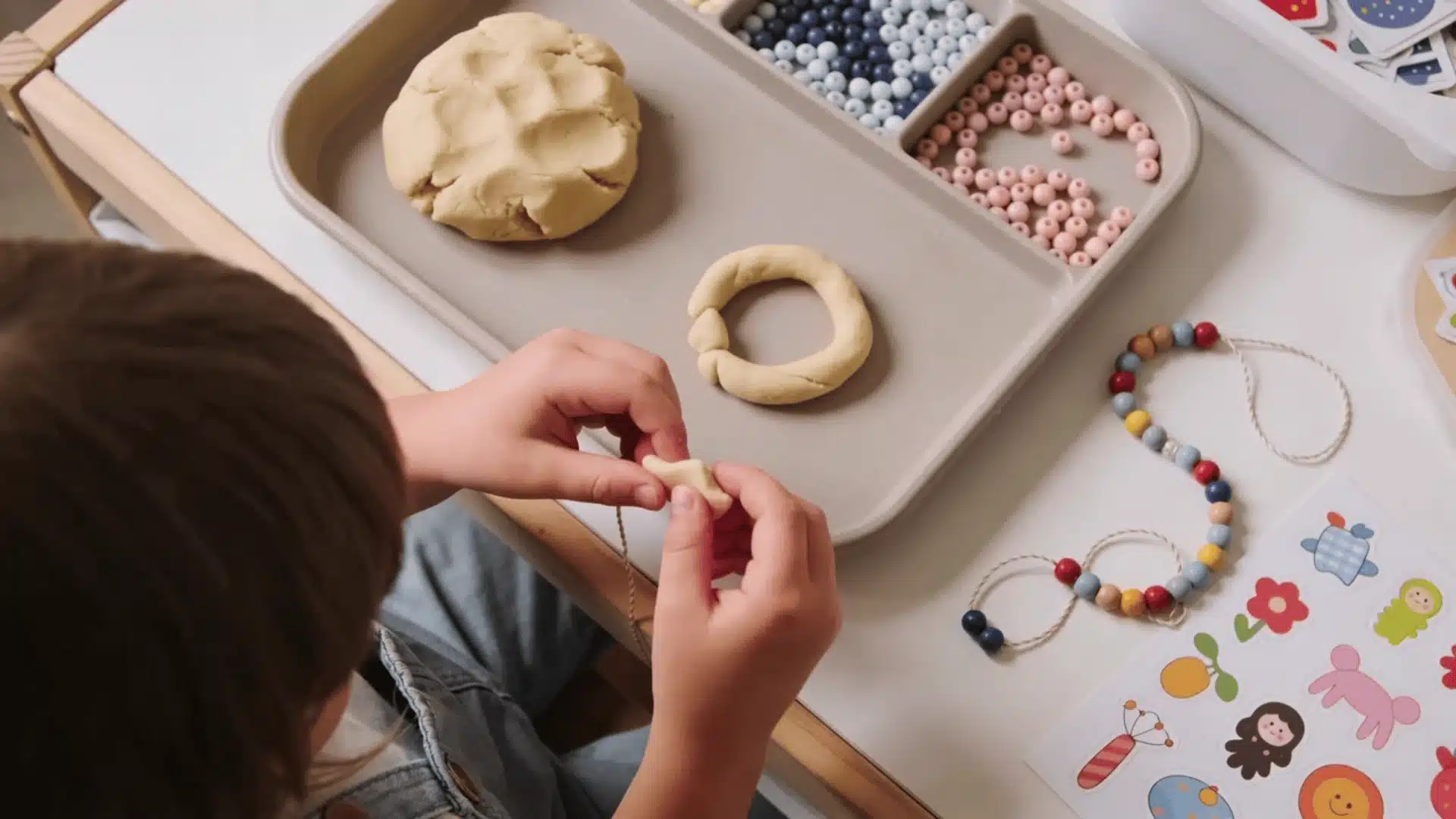
- Playdough Press and Roll: Shape dough using hands and tools to build strength and maintain focus.
- Sticker Play Art: Peel and stick stickers onto paper to improve finger control and coordination.
- Pipe Cleaner Bead Threading: Thread large beads onto pipe cleaners to practice simple hand-eye coordination.
- Pasta Necklace: String pasta onto yarn to build fine motor skills through repeated movement.
- Contact Paper Collage: Stick items onto contact paper to remove the need for glue and simplify the process.
- Bubble Wrap Press Art: Press painted bubble wrap onto paper to create patterns with sensory feedback.
- Sand or Flour Drawing: Draw shapes in a tray using fingers to support early writing skills with low pressure.
These simple, hands-on crafts make it easy to keep your 3-year-old engaged while building important skills through everyday play.
How to Keep a 3-Year-Old Engaged During Crafts
Start the activity right away instead of giving long explanations. Kids at this age learn faster when they see action rather than hear instructions.
Use short, clear prompts like “stick this” or “roll it.” Simple directions keep them focused and reduce confusion during the activity.
Let them repeat the same action as long as they enjoy it. If you force completion or talk too much, they may lose interest or resist.
When a Craft Isn’t Working (Real-Time Fixes)
If the activity feels too hard, simplify it instead of adding more steps. Reducing difficulty helps the child regain control and stay engaged.
Step in and physically assist your child if they seem stuck. A quick hand-over-hand start can help them understand what to do without frustration.
Remove extra materials or distractions if focus drops. Switching activities isn’t always needed, as making the current one easier often works better.
Quick Craft Flo2w You Can Repeat Daily
A simple routine makes craft time easier to manage and more enjoyable for your child. You don’t need new ideas every day, just a repeatable flow that works.
- Choose one craft at a time to keep focus clear and avoid overwhelm
- Run the activity for 5–10 minutes to match natural attention span
- Stop when interest drops instead of forcing completion
- Repeat the same craft later to build familiarity and comfort
Following this simple pattern helps your child feel more confident and makes daily craft time smoother for you.
Conclusion
Craft time with a 3-year-old works best when it stays simple and flexible. Small setups and short activities help you keep things calm while still supporting real skill growth.
You don’t need perfect results or long sessions. What matters is showing up, keeping it light, and letting your child enjoy the process at their own pace.
Start with one easy craft and see how your child responds. Stick with what they enjoy, and let that guide your next activity.
Frequently Asked Questions
What is the easiest craft to start with today?
Torn paper collage is one of the easiest options. It requires almost no setup, uses basic materials, and keeps most children engaged through simple tearing and sticking.
What if my child refuses to start the craft?
Start doing the activity yourself without asking them. Many children naturally join in when they see movement, rather than responding to instructions or being told to begin.
How do I stop crafts from becoming too messy?
Use a tray, mat, or box to define the workspace. Keep materials limited, avoid excess supplies, and choose contained activities like stickers or water painting when needed.


