


A runny nose during teething can feel confusing. Many parents hear that teething causes it, but the reality is not always that simple. Some signs are harmless, while others point to something more.
Knowing the difference can help avoid unnecessary worry or missed concerns.
Here, I will break down what actually happens during teething, when a runny nose is normal, and how to spot signs that need attention. This will help you make clearer decisions without second-guessing every symptom.
Let’s start by understanding how teething really affects your baby’s body.
Does Teething Cause a Runny Nose?
Many parents notice a runny nose right around the time their baby starts teething. It feels like an obvious connection, but is it actually one?
The short answer: No. Teething does not directly cause a runny nose, as explained in the AAP guide on teething symptoms in babies, which confirms that symptoms like a runny nose or fever are not caused by teething.
Most major pediatric health organizations, including the American Academy of Pediatrics, do not list a runny nose as a true teething symptom.
There is no biological mechanism by which a rising tooth triggers nasal discharge, and the NHS explanation of teething symptoms in babies also clarifies that cold-like symptoms are usually linked to infections, not teething.
What “not a direct cause” actually means:
- Teething does not trigger nasal passages to produce mucus
- A runny nose during teething is almost always from a separate cause, usually a mild viral infection
- The two things are happening alongside each other, not because of each other
- Treating a runny nose as a teething symptom can delay identifying the real cause
This is one of the most common parenting misconceptions out there. Because symptoms overlap in timing, it is easy to blame everything on teething.
But correlation is not causation, a lesson that applies just as much in the nursery as anywhere else. If your baby has a runny nose, it is worth looking beyond teething for the reason.
Why Teething and a RunnyNose Happen at the Same Time
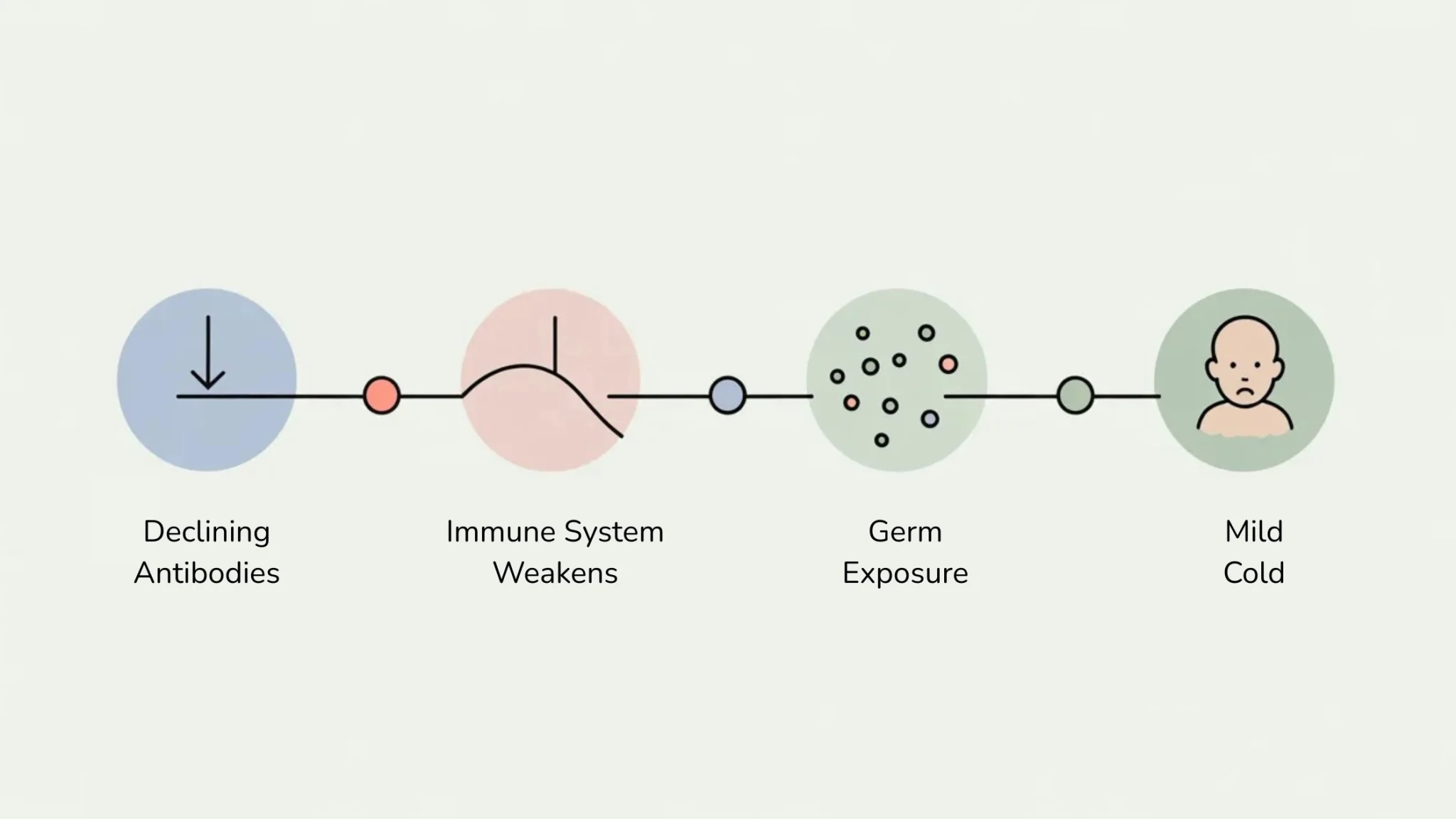
It is not a coincidence that these two things appear together, but it is not a direct link either. Here is what is actually going on.
- Maternal antibodies decline: Babies are born with antibodies passed on from their mother. These start fading around 4–6 months, right when teething begins.
- The immune system takes a dip: As those antibodies decrease, babies become more vulnerable to everyday viruses like the common cold.
- Hand-to-mouth activity increases: Teething babies constantly put fingers, toys, and anything else they can grab into their mouths, bringing germs along with it.
- Environmental exposure goes up: As babies become more active and interactive, they come into contact with more people, surfaces, and potential infections.
- Mild colds follow: All of the above lead to more frequent minor illnesses, and a runny nose is one of the most common cold symptoms in infants.
- Timing creates a false link: Parents see teething and a runny nose happening together and naturally assume one caused the other. But the tooth and the runny nose have entirely different origins.
The pattern repeats often enough that it becomes a widely accepted belief, even though the evidence does not support it.
True Teething Symptoms vs. Illness Symptoms

Every baby is different, but the symptoms of teething and illness often look surprisingly similar. Knowing what belongs to each helps you respond the right way.
| Symptom | Teething | Cold or Infection |
|---|---|---|
| Drooling | Excessive | Normal |
| Nasal discharge | Thin, clear, brief | Thick, colored, persistent |
| Gum irritation | Yes | No |
| Chewing on objects | Yes | No |
| Temperature | Mild rise only | 100.4°F (38°C) or higher |
| Coughing or sneezing | No | Yes |
| Irritability | Yes (gum-related) | Yes (illness-related) |
| Duration | Comes and goes | Persists for several days |
Getting this right is more than just a labeling exercise; it affects the care your baby receives.
Teething is a localized process. It affects the gums, causes discomfort, and triggers increased saliva production. That is where its effects end.
Illness involves the immune system actively fighting an infection. The symptoms are wider, more persistent, and often more intense.
Attributing them to teething means the real cause goes unaddressed, and recovery takes longer. When in doubt, a quick check with your pediatrician is always the right call.
Common Myths About Teething
Teething is one of the most misunderstood stages of early childhood. Here is what the evidence actually says.
Teething can cause fever, runny nose, and diarrhea: these are signs of infection. A baby’s body does not respond that way to a rising tooth.
Research backs this up. The Cleveland Clinic teething symptoms guide confirms that symptoms like fever, runny nose, or diarrhea are not caused by teething and usually indicate illness.
“Every baby I know had these symptoms.” Parenting forums reinforce existing beliefs, so teething automatically gets the blame for every cold.
“It went away, so teething caused it.” Most mild infections clear up on their own. That recovery has nothing to do with teething.
The immune system gets no credit: It did the work, but teething gets the credit simply because the timing lines up.
Teething is uncomfortable, but it is not an illness. Treating it like one means real symptoms get overlooked.
When something feels off beyond the usual fussiness and drool, trust that instinct and get it checked.
When a Runny Nose Should Not Be Linked to Teething
At some point, teething stops being a reasonable explanation. These signals make it clear when something else is going on.
- Runny nose lasts more than 2 to 3 days: A rising tooth cannot sustain nasal discharge over several days. That level of persistence points to an active infection, not teething.
- Mucus becomes thick, cloudy, or colored: When the body fights a virus or bacterial infection, it increases mucus production to trap and remove pathogens. This leads to thicker or discolored mucus, something teething does not cause.
- Other symptoms appear alongside it: A cough, high fever, or persistent sneezing shows the body is responding system-wide. Teething is limited to the gums and does not trigger this kind of response.
- Discomfort feels constant instead of on and off: Teething discomfort usually comes and goes during the day. Illness tends to feel more steady and harder to settle.
- Usual soothing methods stop working: If the things that normally calm your baby are not helping, that is a strong signal. At this point, teething may be happening at the same time, but it is not the cause
When to See a Doctor
Most runny noses during teething clear up on their own. But these signs mean it is time to contact your pediatrician.
- Fever of 100.4°F (38°C) or higher: This is not linked to teething and may indicate an infection that needs medical attention.
- Runny nose lasting more than three days: Ongoing symptoms without improvement usually point to something beyond teething.
- Thick yellow or green mucus: This can signal the body is fighting a viral or bacterial infection.
- Unusual lethargy or refusal to feed: Low energy or poor feeding is not typical with teething and should be checked.
- Coughing or labored breathing: Any breathing difficulty or persistent cough needs prompt evaluation.
When in doubt, a quick call to your doctor is the right move. It is better to check early than wait.
Wrapping Up
A runny nose during teething is often mild and temporary, but it is important to look at the full picture.
Small changes in duration, mucus type, or your baby’s behavior can tell you a lot.
Instead of assuming every symptom is linked to teething, pause and assess what is happening. This approach keeps you informed when making decisions.
When something feels off, trusting that instinct matters. If you are unsure about a runny nose or teething situation, do not wait. Reach out to your pediatrician and get clarity early.
Frequently Asked Questions
Can Teething Cause a Runny Nose in Babies?
Teething may lead to mild drooling, but it does not directly cause a runny nose. If nasal discharge appears, it is usually due to a cold or irritation, not teething itself.
How Do I Know if It is Teething or a Cold?
Teething symptoms stay limited to the gums and come and go. A cold brings ongoing symptoms like thick mucus, cough, fever, or sneezing that affect the whole body.
How Long Should a Runny Nose Last in Babies?
A mild runny nose should improve within 2 to 3 days. If it continues longer or worsens, it is more likely linked to an infection rather than teething.


