

Finding the right indoor games for 3-year-olds can feel tricky. Limited space and short attention spans make it harder to keep things going.
You need simple ideas that are quick to set up. Games should be easy to manage without adding extra effort.
This guide shares easy indoor games you can start right away. If you want more play ideas in one place, take a look at a full list of simple play activities at home.
What Makes an Indoor Game Work for a 3-Year-Old
Indoor games need to make up for limited space by keeping your child actively involved. When movement is low, interaction and hands-on play help maintain interest.
Simple rules reduce confusion and help your child start playing faster. Clear, short instructions also support what children are expected to handle at this stage.
Short game cycles work best because attention spans are still developing. Quick wins keep your child engaged and ready to continue playing.
Indoor games often fail when there is too much waiting, long instructions, or no physical activity. Keeping things simple and repeatable makes playtime smoother and more enjoyable.
Easy Indoor Games for 3-Year-Olds Using Everyday Items
These indoor games are quick to set up and easy to start with items you already have at home. Each one keeps things simple while giving your child a mix of movement, learning, and quiet play.
Active Movement Games
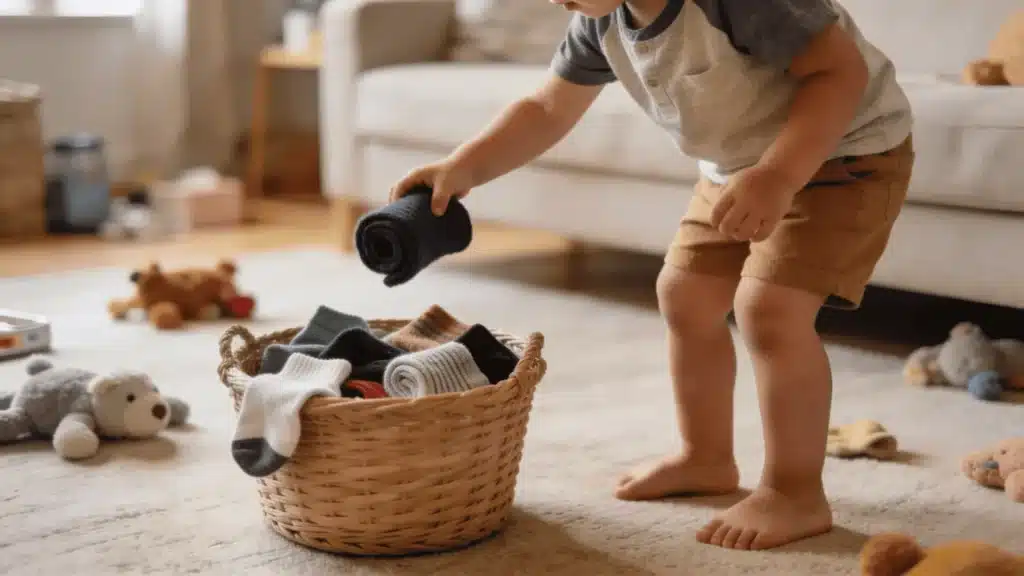
- Sock Toss Basket: Roll up socks and toss them into a basket from a short distance to build aim, coordination, and simple focus.
- Ball Roll Chase: Roll a ball across the room and ask your child to chase it, pick it up, and bring it back.
- Follow the Leader: Take turns copying simple actions like jumping, clapping, or crawling to build listening skills and body control.
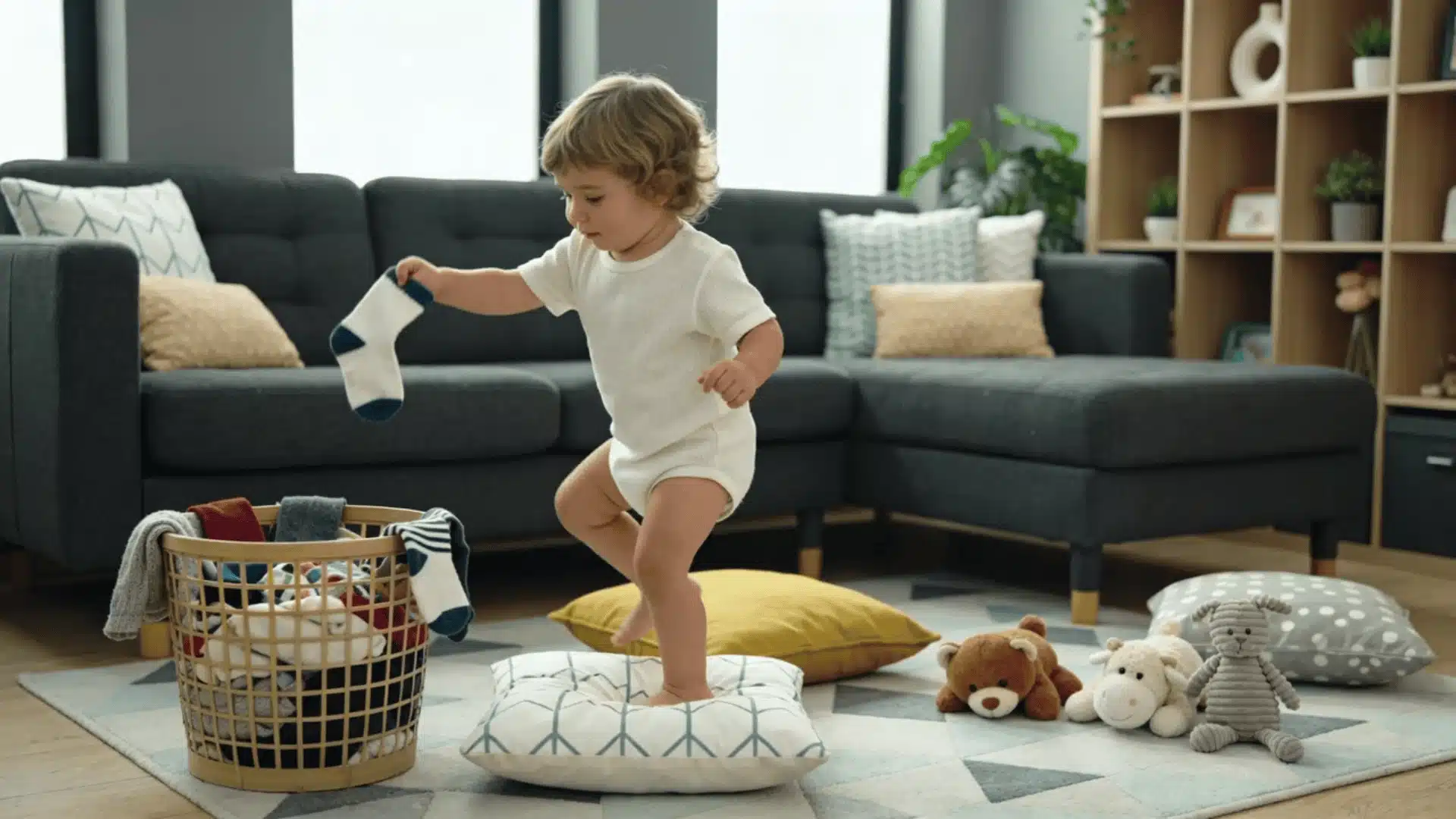
- Pillow Path Walk: Place pillows on the floor and walk, jump, or balance across them to improve coordination and movement confidence.
- Dance and Freeze: Play music and dance freely, then freeze when it stops to build listening skills, control, and quick reactions.
Fine Motor and Hands-On Games
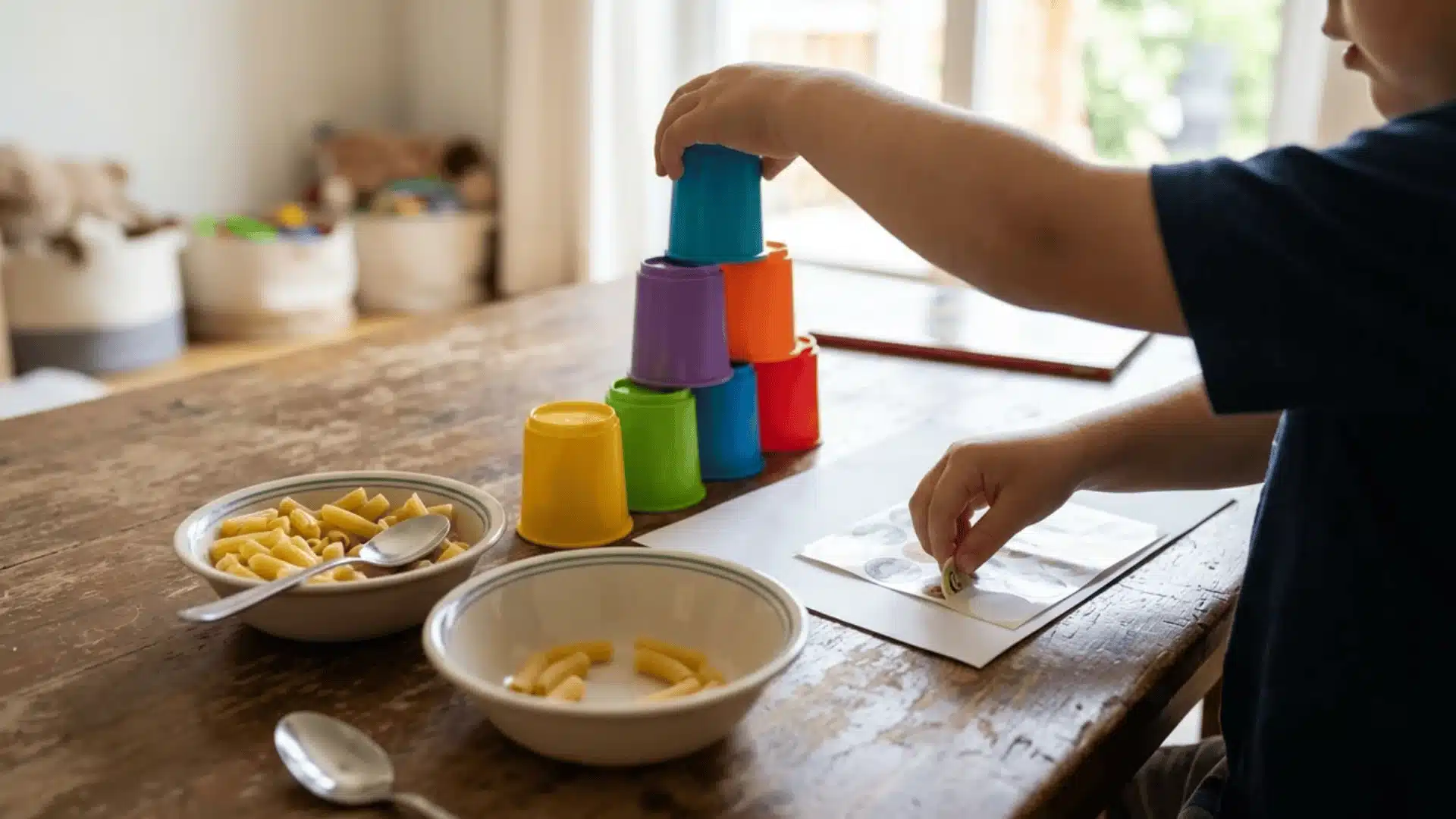
- Cup Stack Knockdown: Stack plastic cups into a tower and knock them down using a soft ball to build hand control and excitement.
- Sticker Peel and Stick: Peel stickers and place them on paper or cardboard to strengthen finger muscles and improve coordination.
- Spoon Transfer Game: Use a spoon to move small items like beans or pom-poms between bowls to build control and focus.
- Tape Road Play: Create simple roads using tape on the floor and move toy cars along them for guided and creative play.
- Paper Tearing Collage: Tear paper into small pieces and stick them onto a sheet to build hand strength and keep play simple.
Learning and Thinking Games
- Color Hunt: Call out a color and ask your child to find matching objects around the room to build recognition and observation skills.
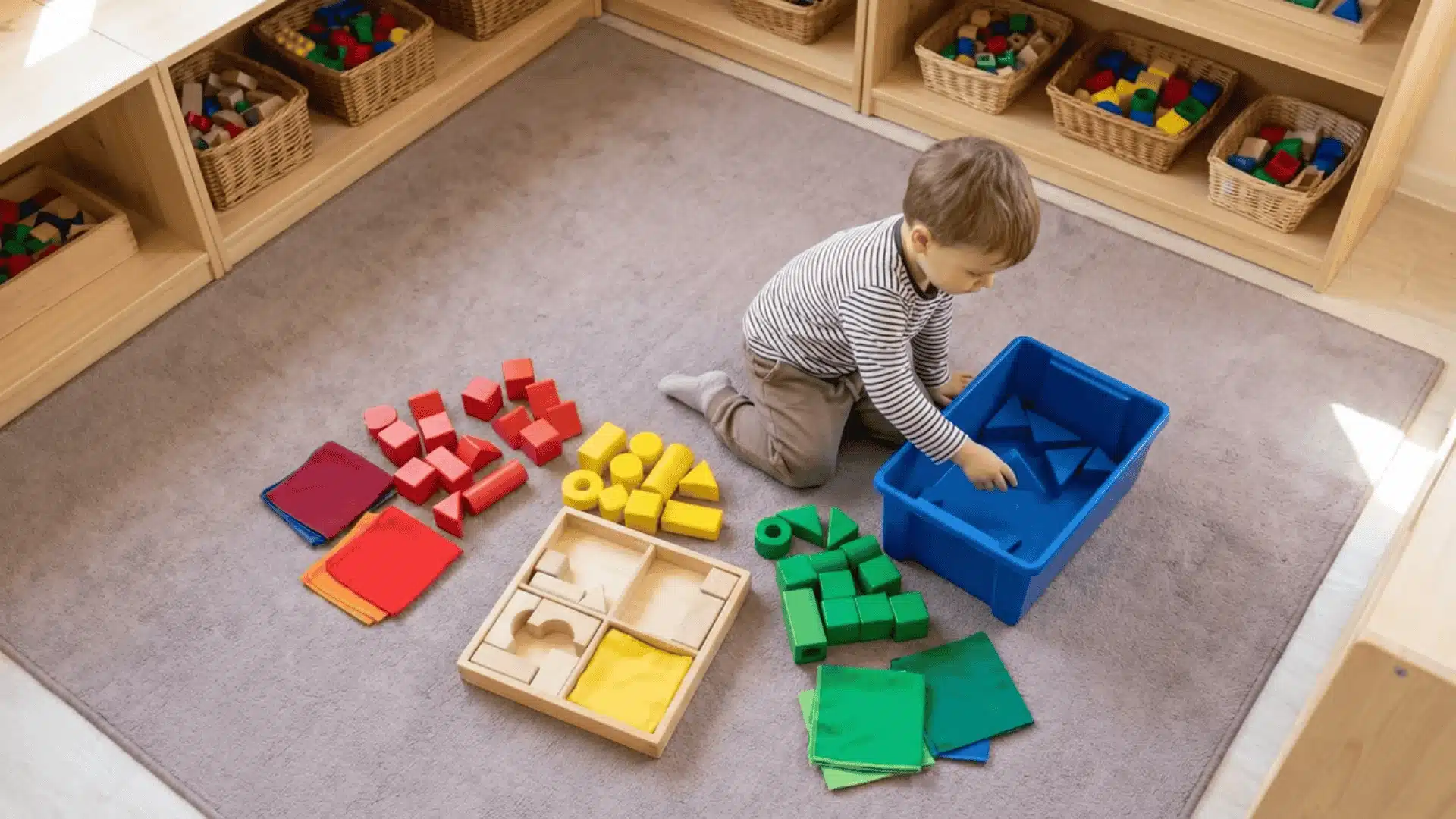
- Shape Sorting Game: Sort toys or items by shape into groups to support early thinking skills and simple problem-solving.
- Matching Pairs Game: Match socks, cards, or pictures together to improve memory, focus, and visual recognition skills.
- Simple Counting Game: Count toys, blocks, or everyday items together up to five or ten to build early number awareness naturally.
Calm and Quiet Games
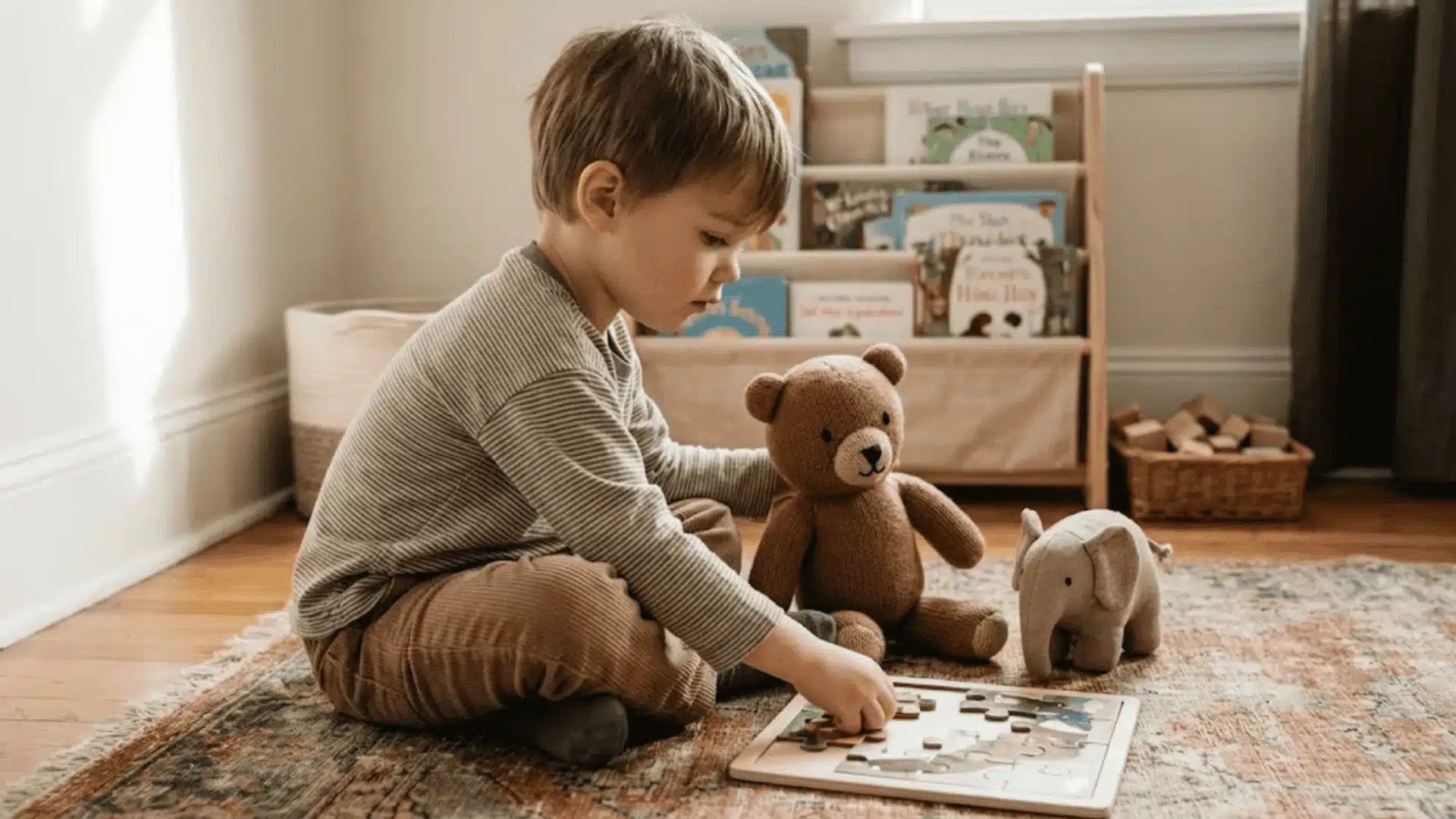
- Puzzle Time: Work on a simple 2–4 piece puzzle to support focus, patience, and basic problem-solving in a calm setting.
- Book and Act Play: Read a short story and act out small parts together to build memory, language, and imagination.
- Soft Toy Pretend Play: Use stuffed toys to create simple stories and conversations to support imagination and early social skills.
You can pick one or two of these based on your child’s mood and switch when needed to keep playtime smooth and engaging.
How to Keep Indoor Games Going without Losing Attention
Attention often drops when the game starts feeling predictable. When the outcome stays the same, your child quickly loses interest and looks for something new.
Switching roles can bring the game back to life. Let your child take the lead while you follow, which makes the activity feel fresh and more engaging.
Small changes in how the game is played can extend playtime. Adjust speed, distance, or actions to keep the experience slightly different each round.
Games usually stop working when the same instruction is repeated too long. If nothing changes, your child may lose focus or walk away.
A lack of challenge also reduces interest over time. If the game feels too easy or too hard, engagement drops quickly.
You can keep things going by adding simple tweaks, such as countdowns or new targets. Letting your child change the rules for a short time also helps keep them involved.
How to Adjust Games in Real Time Based on Your Child’s Behavior
Small changes during play can keep the game going without stopping completely. When the game matches your child’s ability and energy, they stay engaged longer and enjoy the activity more.
If the Child Gets Bored Quickly
Boredom usually happens when the game feels too easy or when it repeats the same action over and over. Adding movement or small changes can quickly bring back interest and keep the game going.
If the Child Gets Frustrated
Frustration often means the game feels too hard or confusing to follow. Simplifying the rules or reducing steps makes it easier for your child to succeed and stay involved.
If the Child Loses Focus
Loss of focus happens when the game becomes passive or includes too much waiting. Adding quick actions or physical movement helps bring attention back and keeps your child engaged.
Quick Setup Checklist Before Starting Any Indoor Game
Before starting any game, a quick check can save time and avoid frustration. Simple setups make it easier for your child to jump in and stay engaged.
- Can the game be explained in under 30 seconds?
- Does it include movement or hands-on action?
- Are all items already available at home?
- Can the rules be changed easily during play?
- Is the setup quick and simple without extra effort?
- If the answer is “no” to any of these, simplify the game before starting
- Reduce steps, remove rules, or adjust the setup to keep it easy and engaging
A quick setup check helps you get started smoothly and keeps playtime fun and uninterrupted.
Conclusion
Indoor games for 3-year-olds work best when they stay simple and easy to adjust. Small changes in how you play can make a big difference in keeping your child involved.
You don’t need a long list of activities to make playtime work. A few reliable games, used in different ways, can keep things fresh and manageable.
Start with one game your child enjoys and build from there. Over time, you’ll find a simple routine that fits your child’s mood and energy.
Frequently Asked Questions
What is the easiest indoor game to start with a 3-year-old?
A sock toss or a color hunt is a great starting option. They need almost no setup, have very simple rules, and keep most children active and interested right away.
Can I reuse the same indoor games daily?
Yes, repeating games helps your child learn and feel confident. You can keep it interesting by changing small things, like the speed, the objects used, or the play area.
How many indoor games should I play in one session?
Stick to one to three short games in a session. Too many switches can reduce focus, while fewer games help your child stay engaged and enjoy playtime.


