


Children often struggle with scissors because cutting requires more than just practice. It depends on hand strength, finger control, and coordination working together. Without these, even simple cutting tasks can feel difficult.
The right fine motor activities help build these skills step by step. As control improves, children can cut more smoothly, follow lines better, and feel more confident during practice.
In this blog, you will learn how to build the skills behind cutting that improve results without overwhelming the child, and how these skills connect to structured cutting practice over time.
Fine Motor Activities that Improve Cutting Skills
If your child is learning to use scissors, the fastest way to help is not to cut more. It is better hand control. These simple activities build the exact skills kids need before and during cutting practice.
1. Playdough Squeezing and Rolling
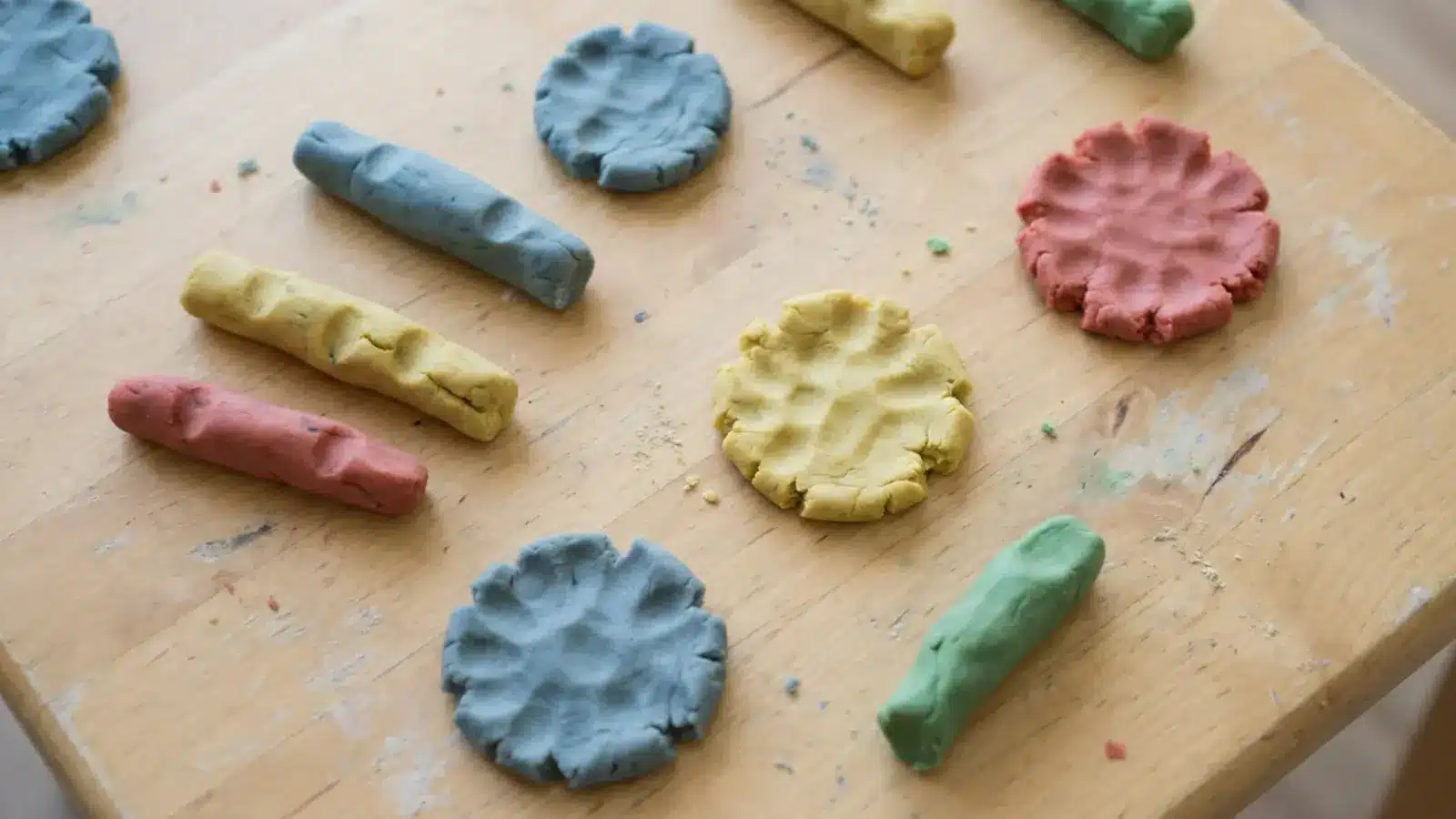
Give your child a small piece of playdough and ask them to squeeze, roll, pinch, and flatten it using their fingers. These actions activate the small muscles in the hands and fingers.
Stronger hand muscles make it easier for kids to open and close scissors smoothly without getting tired too quickly during cutting tasks.
2. Tweezers or Clothespin Picking
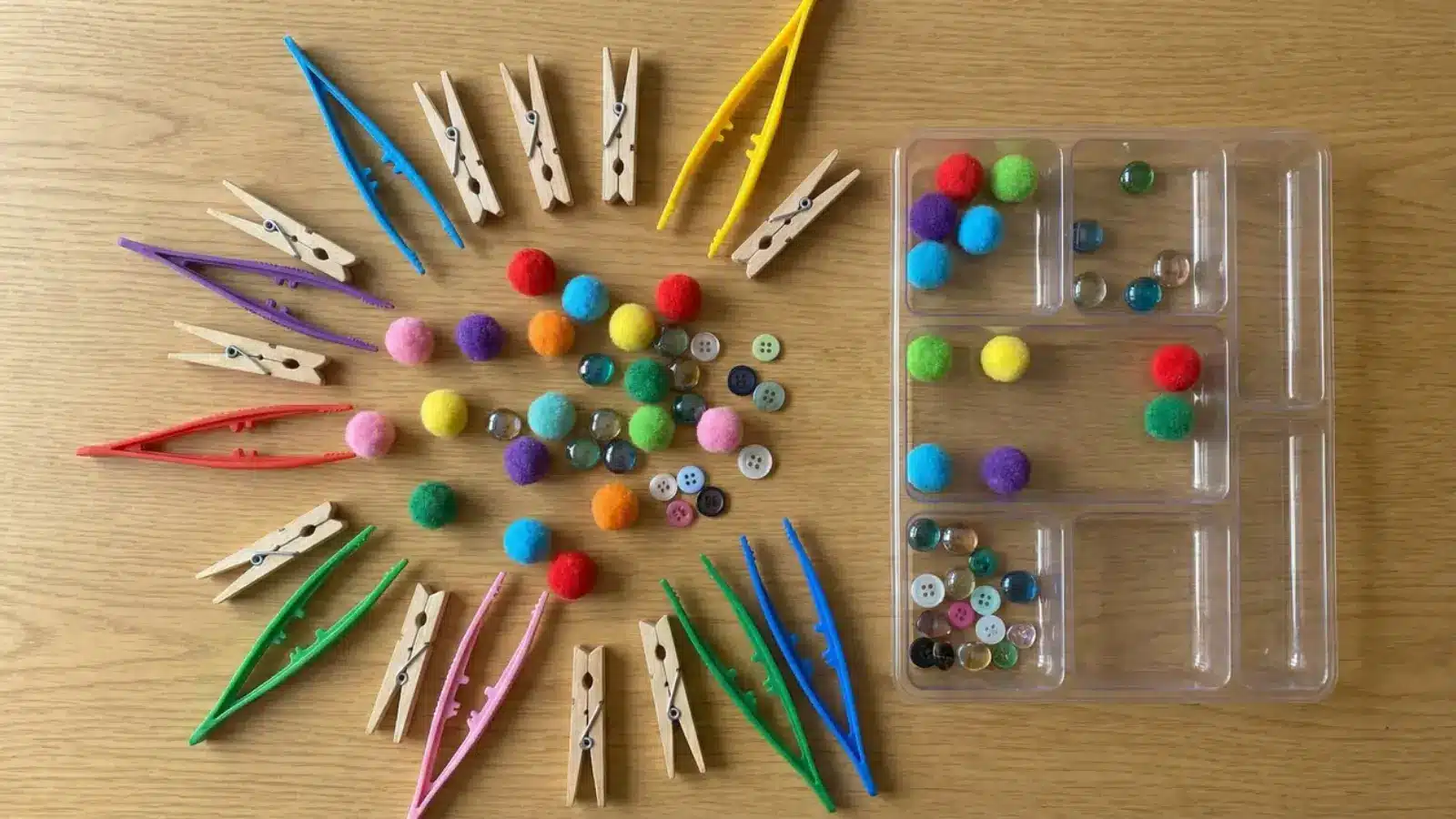
Set up a small activity where your child uses tweezers or clothespins to pick up items like pom-poms, cotton balls, or beads. This movement builds finger strength and teaches control using the thumb and fingers.
It closely matches how scissors are held, helping kids develop a stable grip and better control during cutting practice.
3. Tearing Paper Strips
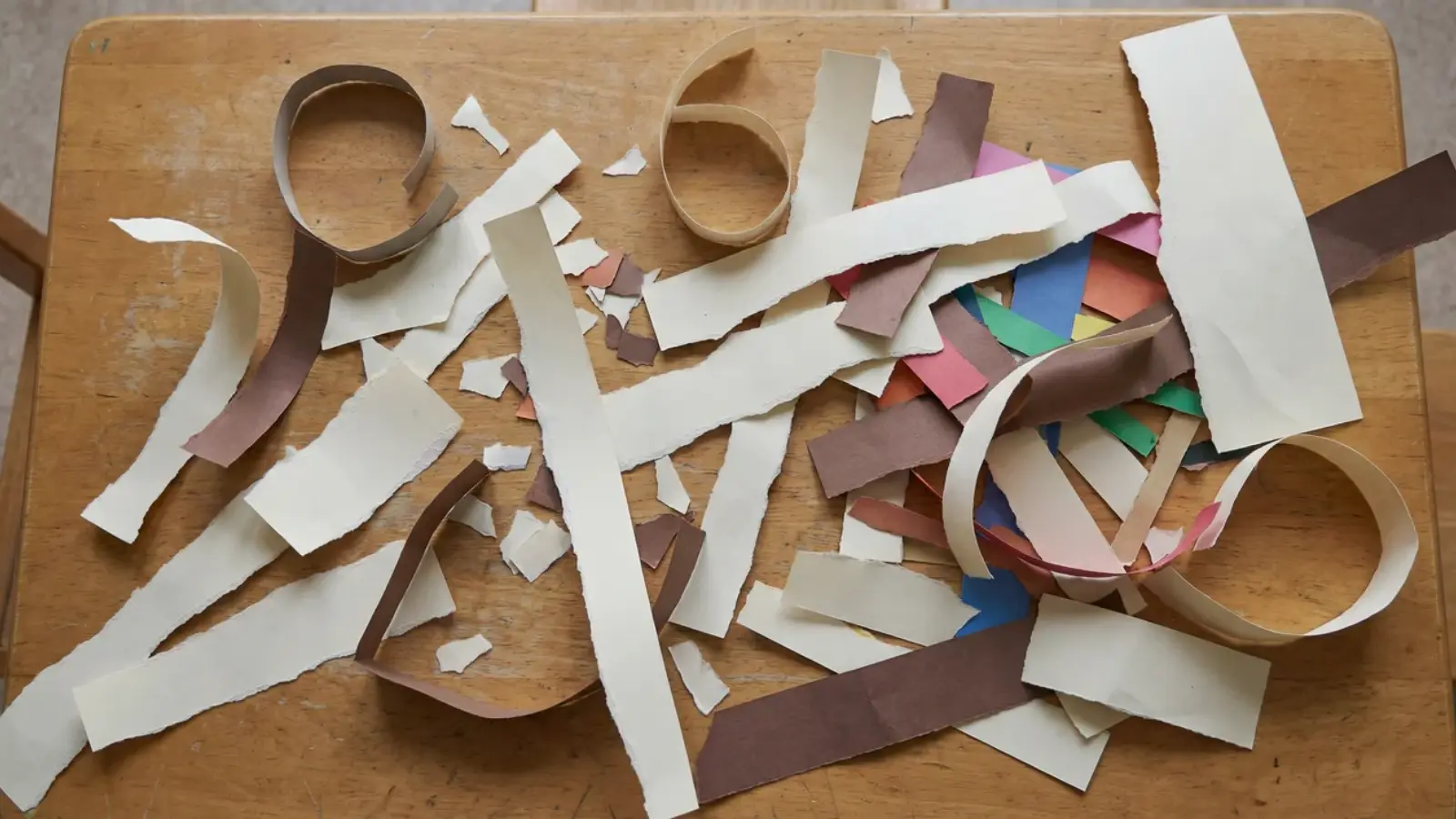
Give your child paper and encourage them to tear it into strips or small pieces. This activity may look simple, but it teaches controlled hand movement and direction.
Tearing requires both hands to work together, which supports coordination. This makes it easier for kids to guide scissors along a line instead of cutting randomly.
4. Snipping Straws or Yarn
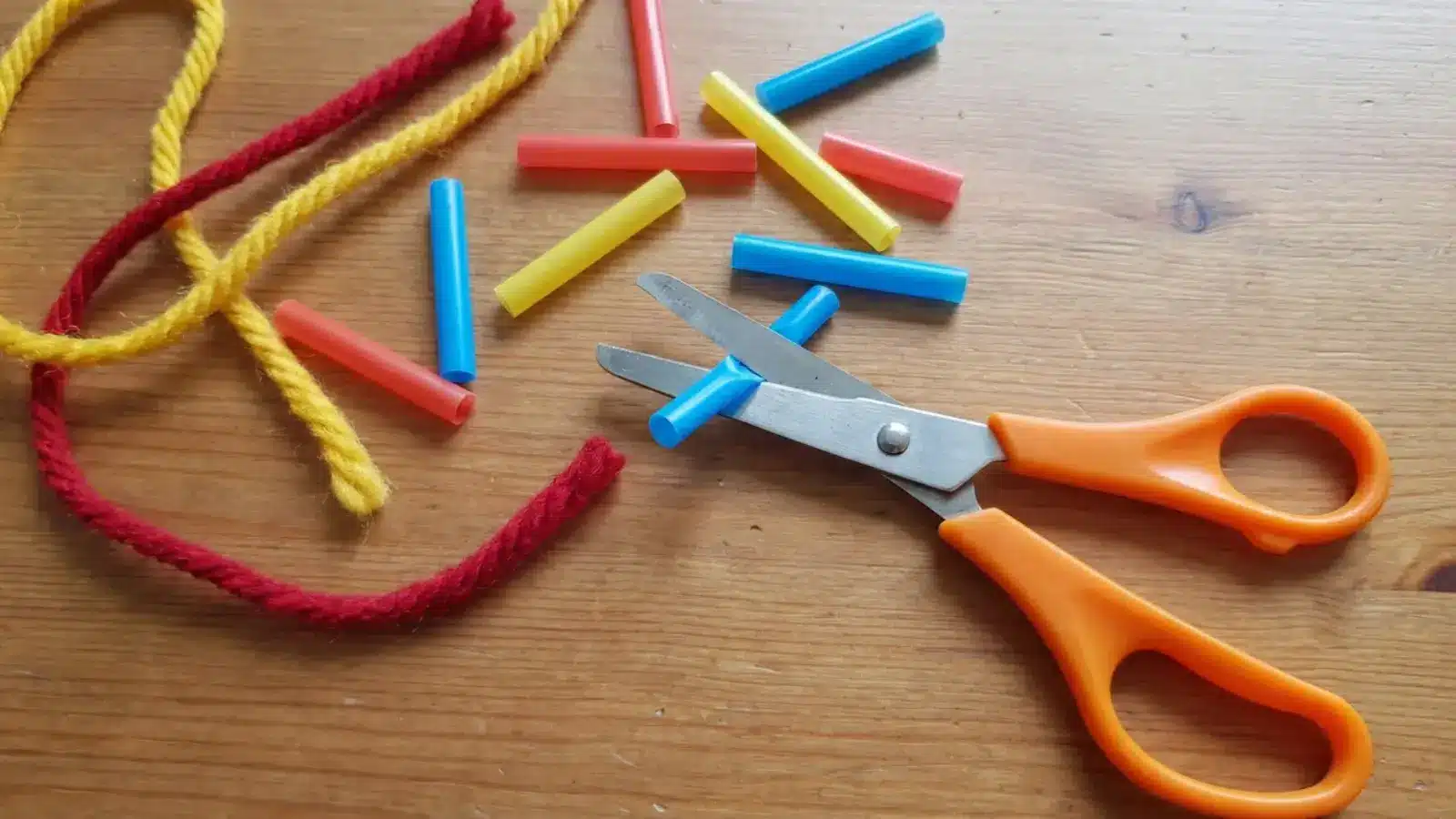
Start with soft and easy-to-cut materials like drinking straws, yarn, or thin paper. These materials require less force, so kids can focus on learning the scissor motion.
Practicing the open-and-close action without resistance helps build confidence and reduces frustration, especially for beginners who are still learning how scissors work.
5. Sticker Peeling and Placing

Let your child peel stickers and place them on paper, shapes, or objects. This activity strengthens finger control and improves precision.
Peeling requires careful finger movement, while placing improves accuracy. Both skills are important when children try to position scissors correctly and follow lines during cutting activities.
6. Threading Beads or Pasta
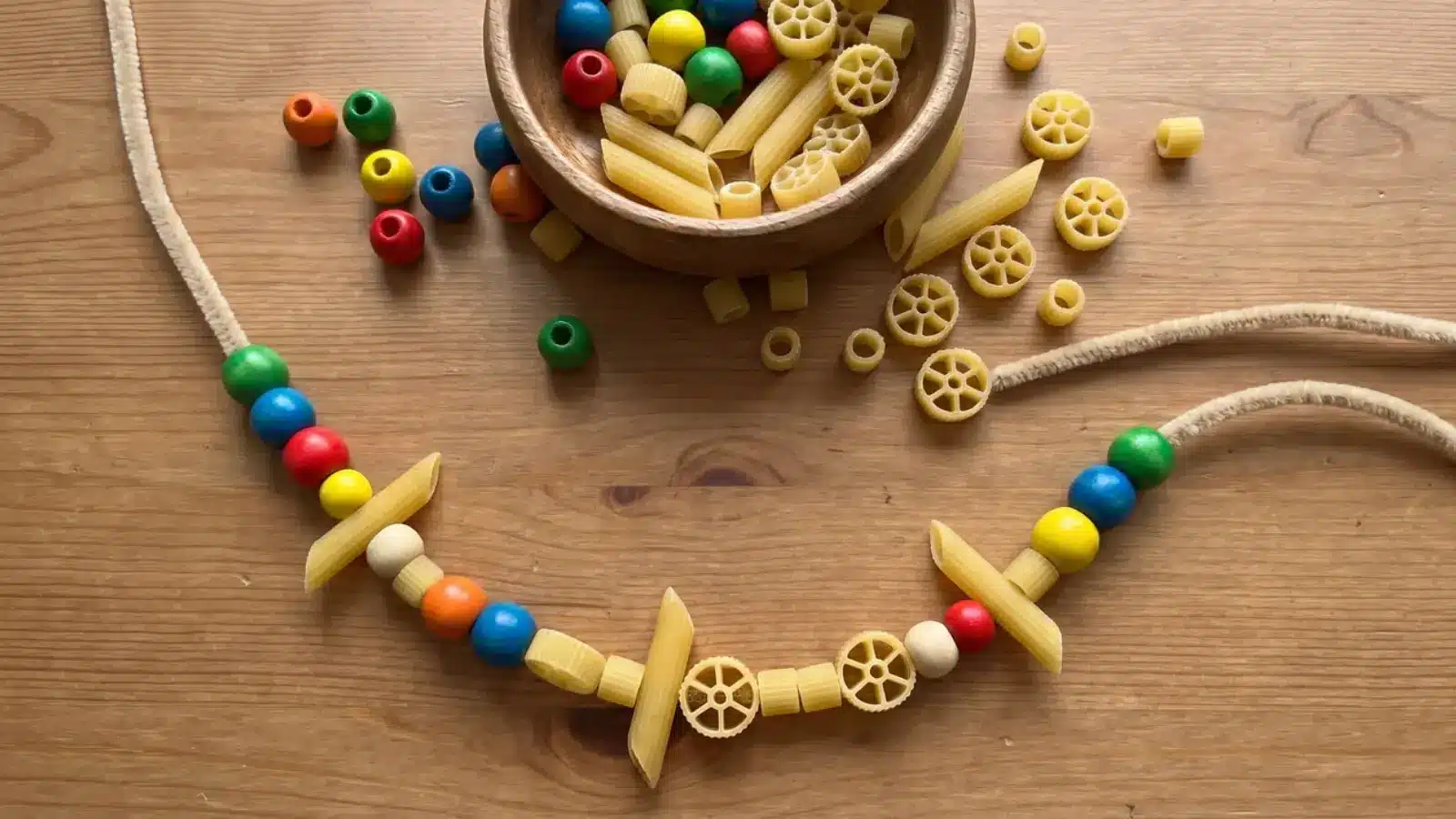
Provide string or pipe cleaners and let your child thread beads or dry pasta. This activity builds strong hand-eye coordination because the child must guide the object carefully into a small space.
That same coordination helps when cutting, as children need to visually guide their scissors along lines or shapes.
7. Spray Bottle Play
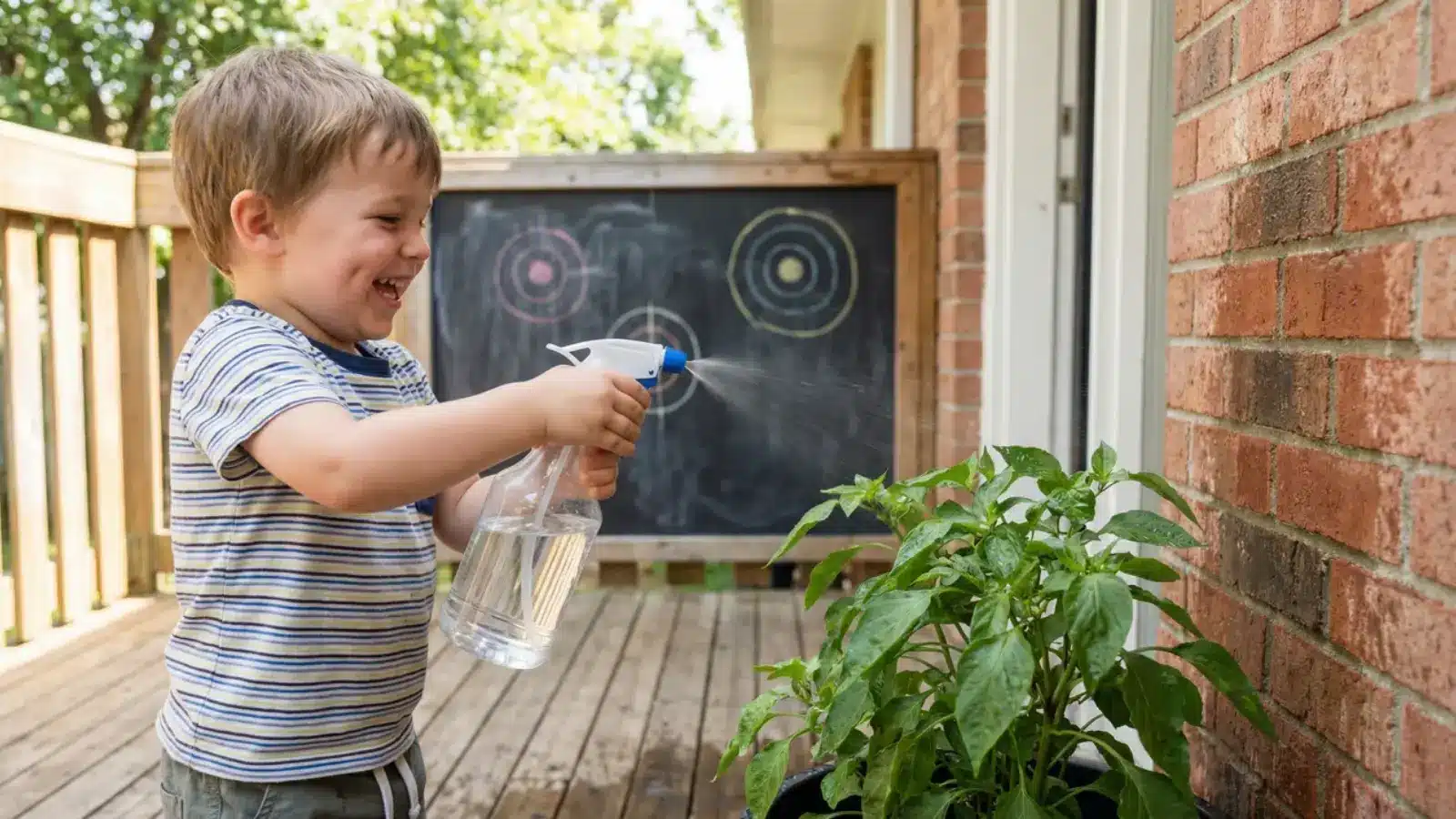
Fill a spray bottle with water and let your child spray plants, walls, or simple targets. The squeezing motion builds hand strength and endurance over time.
Stronger hands allow kids to cut for longer periods without fatigue, which improves both control and confidence when working on cutting tasks.
Why These Activities Improve Cutting Skills
Strong hand strength, finger control, and hand-eye coordination all work together to improve cutting skills. Strong hands help children open and close scissors smoothly without getting tired.
Good finger control allows proper grip and precise movement instead of stiff handling. Hand-eye coordination helps guide scissors along lines and shapes accurately. Activities like playdough, tweezers, stickers, and threading build these skills through simple practice.
When these areas improve, cutting becomes smoother and more controlled. If they are weak, children may struggle with grip, lose control, or cut randomly, which slows progress and causes frustration.
Best Activities Based on Your Child’s Level
Not every child is ready for the same type of cutting practice. The key is to match the activity to their current ability. Having a sense of what cutting skills look like at different ages can make it easier to choose the right starting point.
Before Cutting (Pre-Cutting Stage): Use playdough, tearing paper, or squeezing tools to build hand strength and basic movement. Best for kids who cannot open and close scissors yet.
Starting scissors too early often leads to poor grip and frustration.
Learning To Cut (Beginner Stage): Use soft materials like straws, yarn, or thin paper for easy snipping. Focus is on learning the open-close motion, not accuracy. Using thick paper too soon can make cutting feel difficult and discouraging.
Improving Accuracy (Developing Stage): Practice cutting lines, curves, and simple shapes.
This builds control and helps children follow paths. Jumping to complex shapes too early can reduce confidence and accuracy.
How to Use These Activities with Cutting Practice
Start with a quick warm-up before cutting. Activities like playdough or tweezers help wake up hand muscles and improve control. This makes it easier for your child to handle scissors without getting frustrated early.
During cutting, take short breaks and switch back to simple activities if your child feels tired. This keeps their hands active and prevents overload.
Keep practice short and consistent. Around 10 to 15 minutes each day is enough. Regular practice builds strength, improves control, and helps children feel more confident with cutting over time
Common Mistakes that Slow Progress
Many kids struggle with cutting not because they cannot learn, but because small mistakes in practice slow them down. Fixing these early makes a big difference.
- Activities that are too easy do not build strength or control, so progress stays slow.
- Activities that are too hard can frustrate kids and make them avoid cutting altogether.
- Ignoring how the child holds scissors can lead to poor grip habits that are harder to fix later.
- Inconsistent practice makes it difficult for skills to develop and stick over time.
Keeping the right level of challenge and practicing regularly helps children improve faster and with more confidence.
Conclusion
Helping kids improve their cutting skills does not have to be complicated. A few simple activities, done regularly, can build the strength and control they need over time. The key is to keep practice short, consistent, and matched to their level.
I’ve seen how small improvements add up. With the right support and a bit of patience, kids move from struggling with scissors to cutting with confidence.
If you’ve tried any of these activities or have your own ideas that worked well, share them in the comments.


