

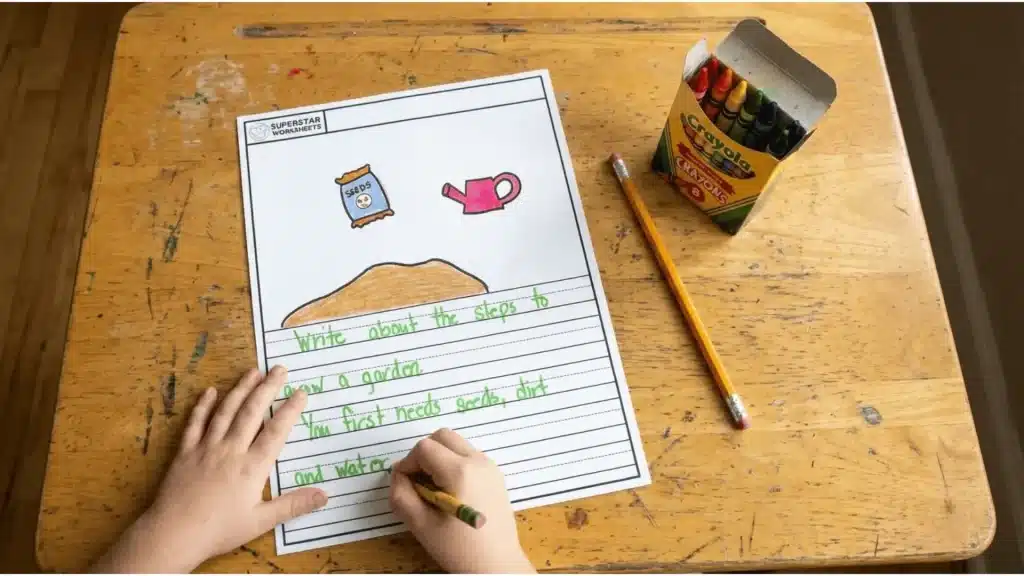
Many young students struggle to begin writing because they are unsure what to say or how to form their first sentence.
This is where kindergarten writing prompts make a real difference. They give children a clear starting point and help turn writing into a simple, enjoyable activity.
With the right prompts, students can express ideas, share experiences, and build early confidence without feeling overwhelmed.
Today, I’ll give you a wide range of prompts that support daily practice, creativity, and classroom participation, along with helpful tips for using them effectively.
Why Writing Prompts Help Kindergarten Students
Writing prompts give young students a clear starting point. They help children think about simple ideas and begin writing without confusion in follow ways:
- Helps Students Start Writing Easily: Many students feel unsure when they see a blank page and do not know what to write. Writing prompts give one clear topic, helping students begin quickly and feel more comfortable.
- Builds Early Thinking Skills: Writing prompts encourage students to explain ideas using simple words and short sentences. This practice helps children connect thoughts, describe experiences, and develop early communication skills through regular writing.
- Encourages Classroom Participation: Prompts give every student a chance to share ideas and experiences. Even with the same prompt, responses are different. This keeps writing activities active and helps more students take part.
This variety keeps writing activities engaging while giving each student a chance to participate and feel included.
If students need help turning prompts into writing, these examples of simple sentences for kindergarten students can make it easier to get started.
Free Kindergarten Writing Prompts for Students
Teachers often need simple prompts for daily writing time. Clear topics help kindergarten students write short sentences or draw pictures as they share their ideas.
Below are easy kindergarten writing prompts that work well during classroom writing activities.
Daily Life Writing Prompts
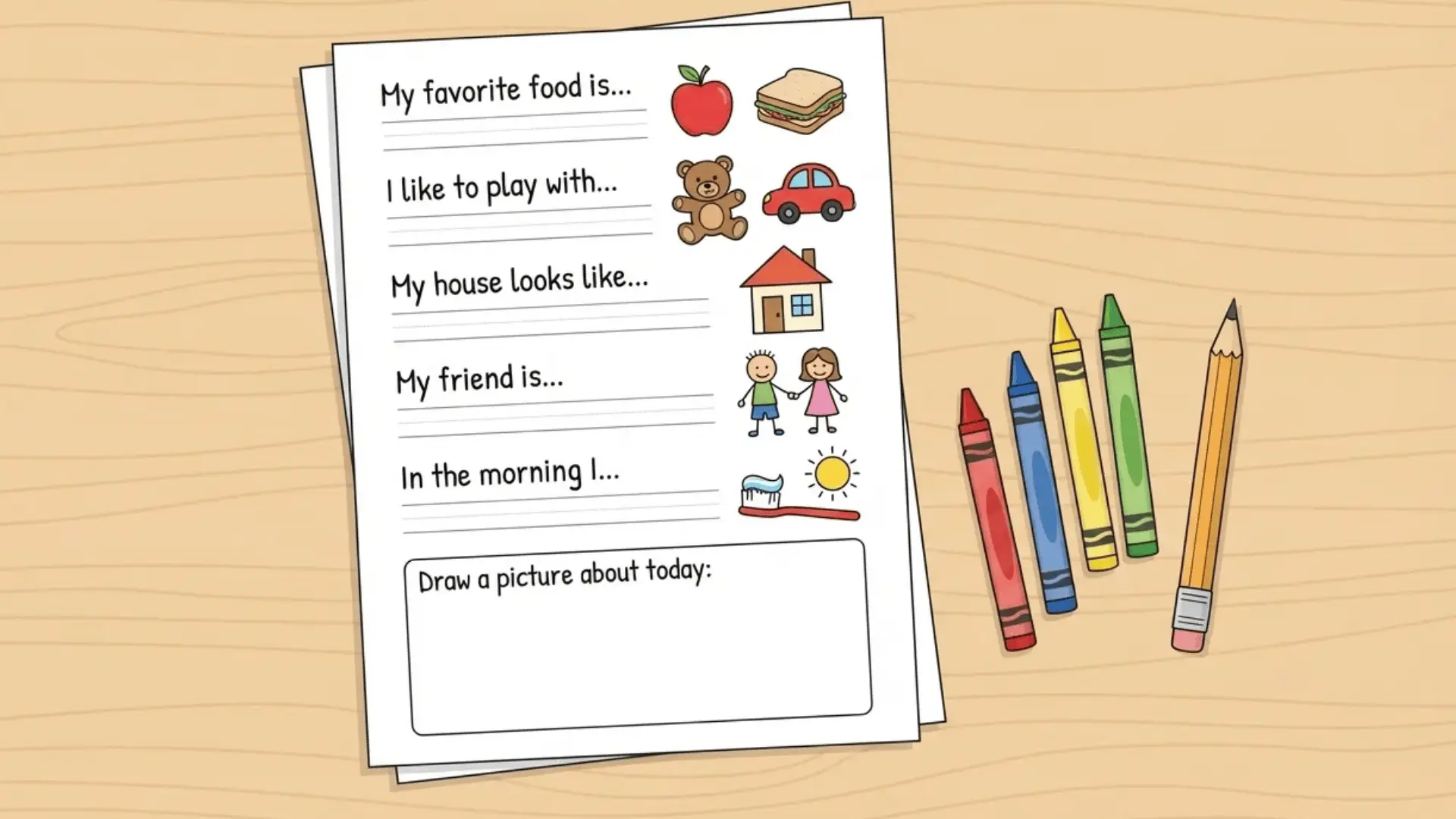
These prompts focus on everyday experiences that students already understand.
Familiar topics help children think of ideas quickly and start writing with less hesitation.
1. My Favorite Food: Write about the food you like the most. Describe what it tastes like, when you like to eat it, and why it is your favorite. Students can also draw the food and label it with simple words.
2. My Best Friend: Write about a friend in your class. Describe what makes them a good friend and what activities you like doing together at school or during playtime. Students can add a drawing of themselves with their friend.
3. My Favorite Toy: Tell about your favorite toy. Explain what the toy looks like, how you play with it, and why you like it so much. Students can draw the toy and write a few words describing it.
4. My Favorite Place: Write about a place you enjoy visiting. It could be a park, your home, or a classroom area. Describe what you like doing there and why the place makes you happy.
5. My Morning Routine: Write about the things you do in the morning before school. Students can describe waking up, brushing teeth, eating breakfast, or getting ready for class using short sentences and simple words.
These familiar topics make writing easier and help students share simple ideas with confidence.
Classroom Experience Prompts
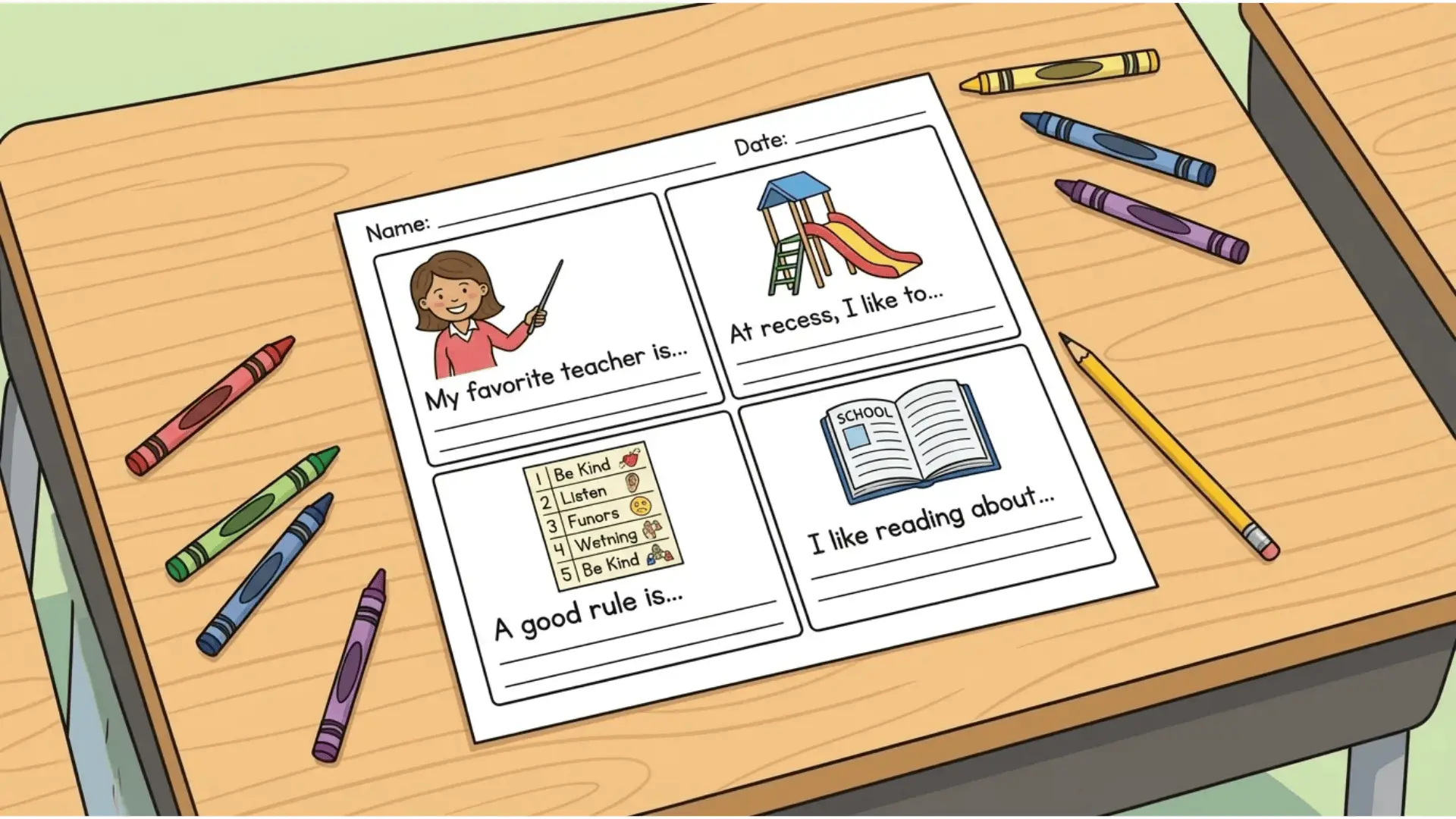
Students often enjoy writing about their experiences at school.
These prompts help them think about classroom routines, teachers, and activities they see every day.
6. My Teacher: Write about your teacher and what makes them special. Describe something helpful or kind they do in class and why you enjoy learning with them.
7. Best Classroom Job: Write about the classroom job you like the most. It could be a line leader, a board cleaner, or helping the teacher. Explain why this job is fun to do.
8. Classroom Rules: Write about one important classroom rule. Explain why the rule matters and how it helps students learn and work together.
9. Favorite School Subject: Write about the school subject you like the most. Tell why you enjoy it and what activities you like doing during that lesson.
These prompts help students think about their school environment and share their classroom experiences.
Simple Opinion Writing Prompt Ideas
Opinion writing prompts help kindergarten students share what they like or prefer. These activities also support early decision-making and speaking skills. Teachers can use these prompts during writing time or simple classroom discussions.
Students can write short sentences or share their answers aloud during class discussion. Opinion prompts help students practice giving simple reasons for their choices.
Favorite Things Opinion Prompts
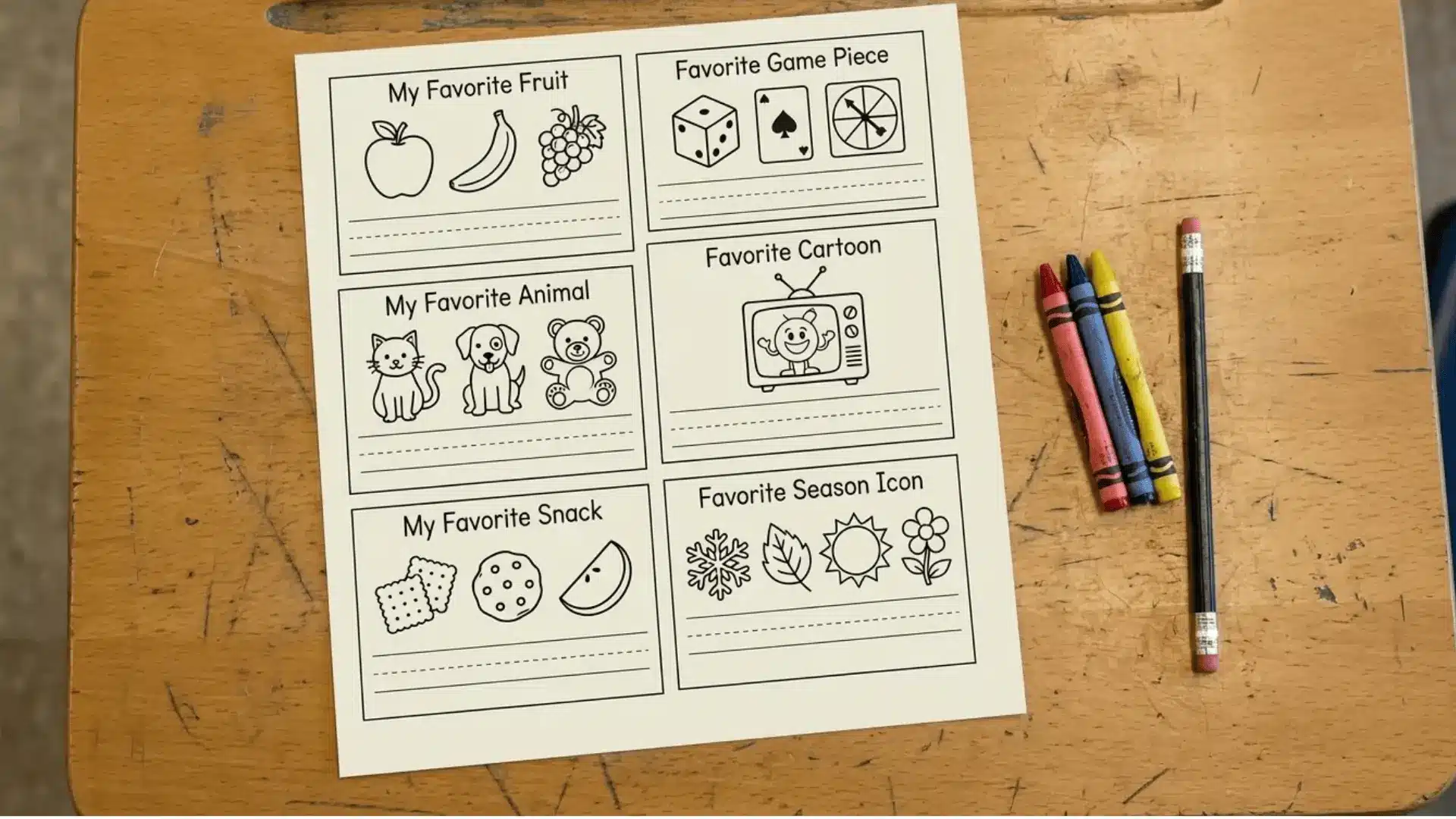
Young students enjoy talking about the things they like most. These prompts help them share their opinions and explain their choices using simple sentences.
10. Best Fruit: Write about the fruit you like the most. Describe how it tastes and why you think it is the best fruit to eat.
11. Best Cartoon: Write about the cartoon you enjoy watching the most. Tell who your favorite character is and what you like about the show.
12. Best Game: Write about the game you think is the most fun to play. Describe how the game works and who you like playing with.
13. Favorite Animal: Write about the animal you like the most. Describe what the animal looks like, where it lives, and why you think it is the best animal.
14. Best Snack: Write about the snack you enjoy eating the most. Tell what it tastes like and when you usually eat it at home or school.
15. Best Season: Write about the season you like best, such as summer, winter, spring, or fall. Explain what activities you enjoy during that time of the year.
These prompts help students practice sharing personal opinions clearly and confidently.
School Choice Opinion Prompts
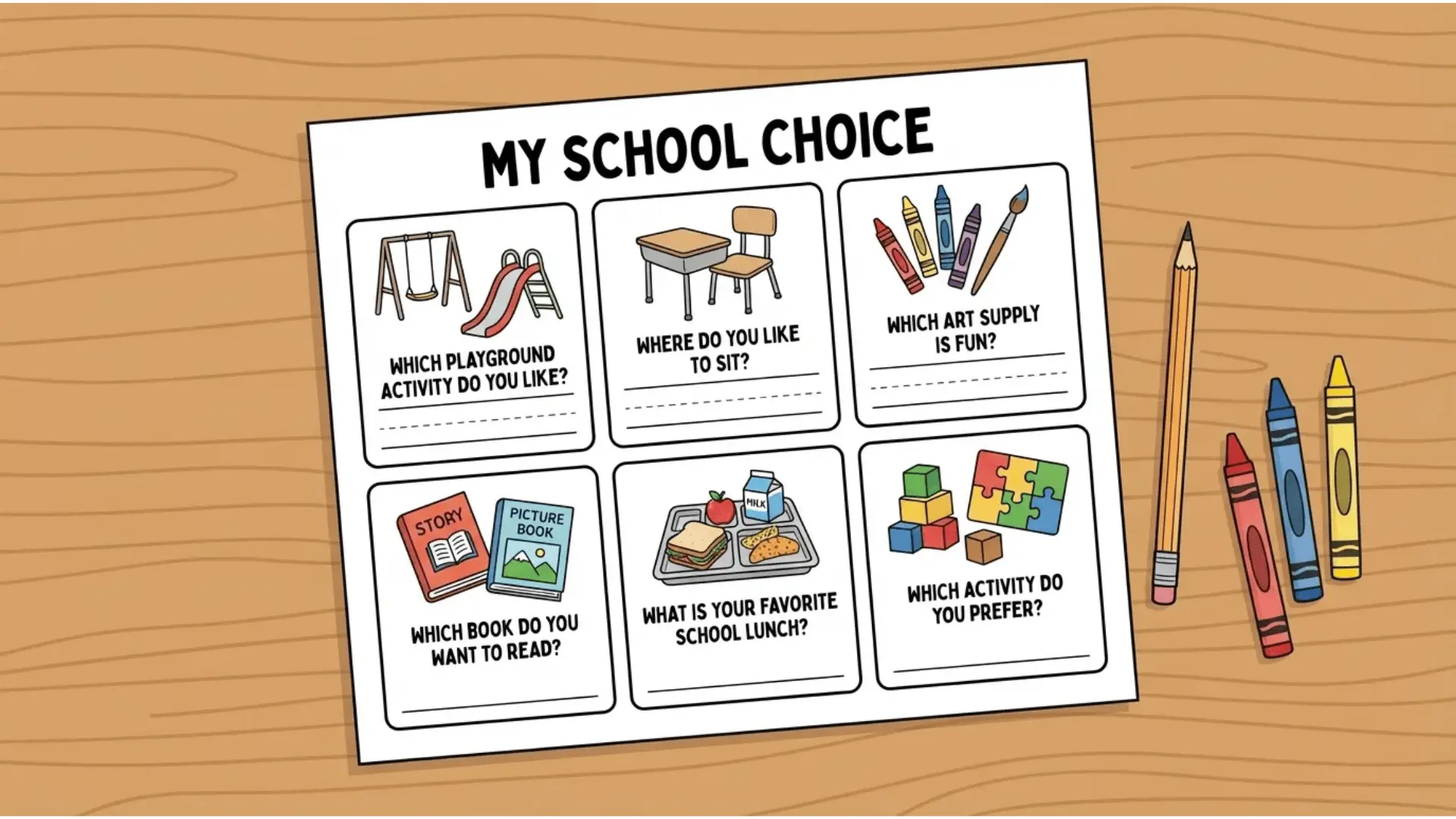
These prompts help students think about school activities and share their preferences. They encourage children to explain their ideas about classroom routines and choices.
16. Best Recess Activity: Write about the activity everyone should play during recess. Explain why it is fun and why other students might enjoy playing it too.
17. Best Classroom Seat: Write about where you think the best place to sit in class is. Tell why that seat helps you learn or feel comfortable.
18. Best Art Activity: Write about the art activity you enjoy the most. It could be drawing, painting, or making crafts. Explain why this activity is fun.
19. Best Reading Time: Write about when the class should read books during the day. Explain why that time is good for reading.
20. Best School Lunch: Write about the school lunch you enjoy the most. Tell what food is included and why it tastes good to you.
21. Best School Activity: Write about the school activity you enjoy the most. It could be drawing, reading time, or playing outside. Explain why this activity is your favorite part of the school day.
These prompts help students explain their ideas and share opinions about school life.
Creative Kindergarten Writing Prompt Ideas
Creative prompts give students a chance to use their imagination during writing time. These make writing activities more engaging while helping students describe ideas using simple sentences.
Fun Imagination Writing Prompts
22. If I Had Wings: Write about where you would fly if you had wings. Describe the places you would visit and what you would like to see in the sky.
23. My Dream Pet: Write about the pet you would like to have. Describe what the pet looks like, how it behaves, and what you would do together.
24. If I Were a Teacher: Write about what you would teach if you were the teacher. Describe the activities you would plan for students in your class.
25. My Superpower: Write about the superpower you would like to have. Explain how you would use this power to help people or solve problems.
26. A Magical Tree: Write about a magical tree that grows something special. Describe what grows on the tree and what happens when someone uses it.
Creative prompts help students share imaginative ideas and express their thoughts freely. They also give teachers a simple way to start class discussions and writing activities.
Easy Story Starter Prompts
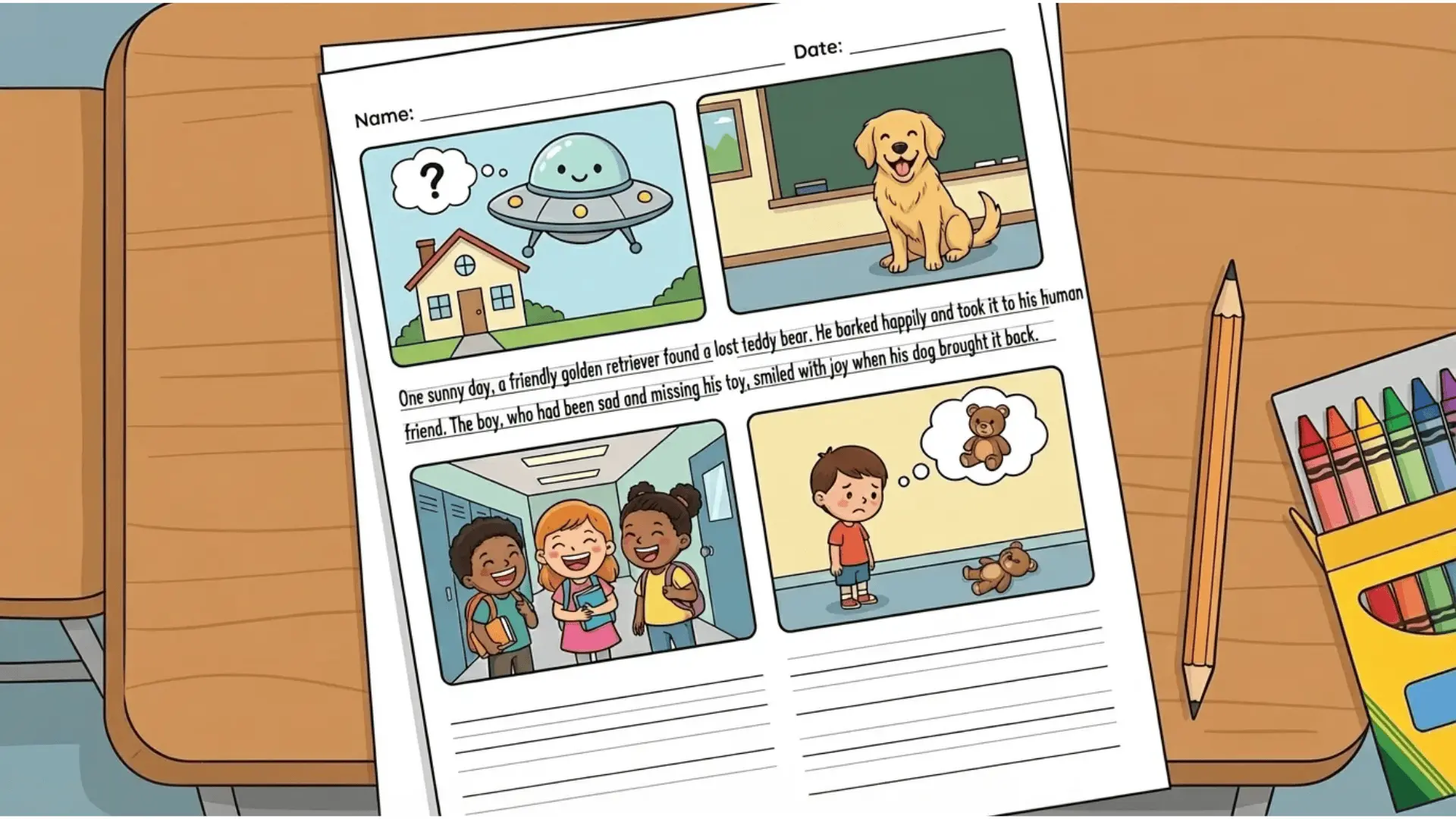
Story starter prompts give students the first line of a story to get them started writing. This support helps young learners start quickly and continue the story using their own ideas and imagination.
27. One Morning I Saw: One morning, I saw something surprising outside my home or school. Write about what you saw, what happened next, and how the situation ended.
28. My Pet Went to School: My pet came with me to school one day. Write about what the pet did in the classroom, how students reacted, and what the teacher said.
29. A Funny Day: One day, something very funny happened at school. Write about what made the day funny, what your friends did, and why everyone laughed.
30. Lost Toy: A toy was lost and later found again. Write about how the toy disappeared, where it was found, and who helped return it.
Weekend Experience Prompts
These prompts help students write about activities they do at home. They encourage children to connect writing with everyday experiences outside the classroom.
31. My Weekend: Write about what you did during the weekend. Describe activities you enjoyed at home, places you visited, or time spent with family members.
32. Family Dinner: Write about a dinner you had with your family. Describe the food you ate, who was at the table, and what you talked about.
33. Favorite Game at Home: Write about the game you like playing at home. Explain who you play with and why the game is fun.
34. Helping at Home: Write about a chore or task you help with at home. Describe what you do and how it helps your family.
Nature and Animals Writing Prompts
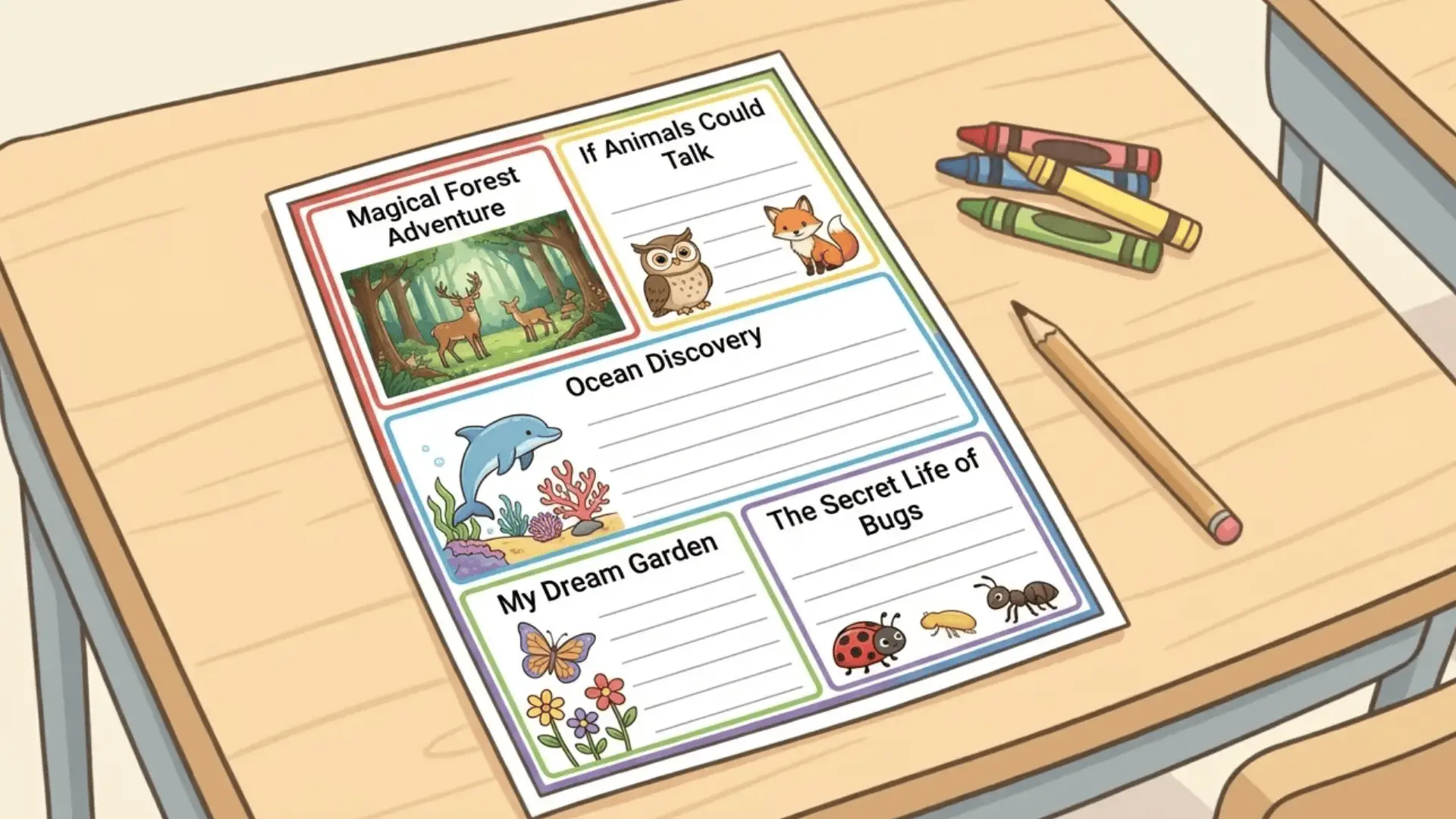
These prompts help students write about the world around them. They encourage observation and curiosity about living things and outdoor environments.
35. My Favorite Animal Sound: Write about the animal sound you like the most. Describe what animal makes the sound and why you enjoy hearing it.
36. A Day as a Bird: Write about what your day would be like if you were a bird. Describe where you would fly and what you would eat.
37. My Favorite Season Flower: Write about a flower you like. Describe its color, where it grows, and why you think it is beautiful.
38. A Rainy Day: Write about what happens outside when it rains. Describe what you see, hear, and smell when the rain falls.
39. My Favorite Insect: Write about an insect you find interesting. Describe what it looks like and where you have seen it before.
40. The Ocean: Write about the ocean and what you think it is like. Describe the animals that live there and what the water looks like.
41. A Walk in the Park: Write about a walk you took outside. Describe the things you saw, heard, and felt during your walk.
42. Baby Animals: Write about a baby animal you think is cute. Describe what it looks like and how it acts when it is young.
43. My Favorite Tree: Write about a tree you like. Describe how it looks in different seasons and why you enjoy being near it.
44. A Butterfly: Write about a butterfly and where it goes. Describe its wings, colors, and what it does during the day.
Family and Relationships Writing Prompts
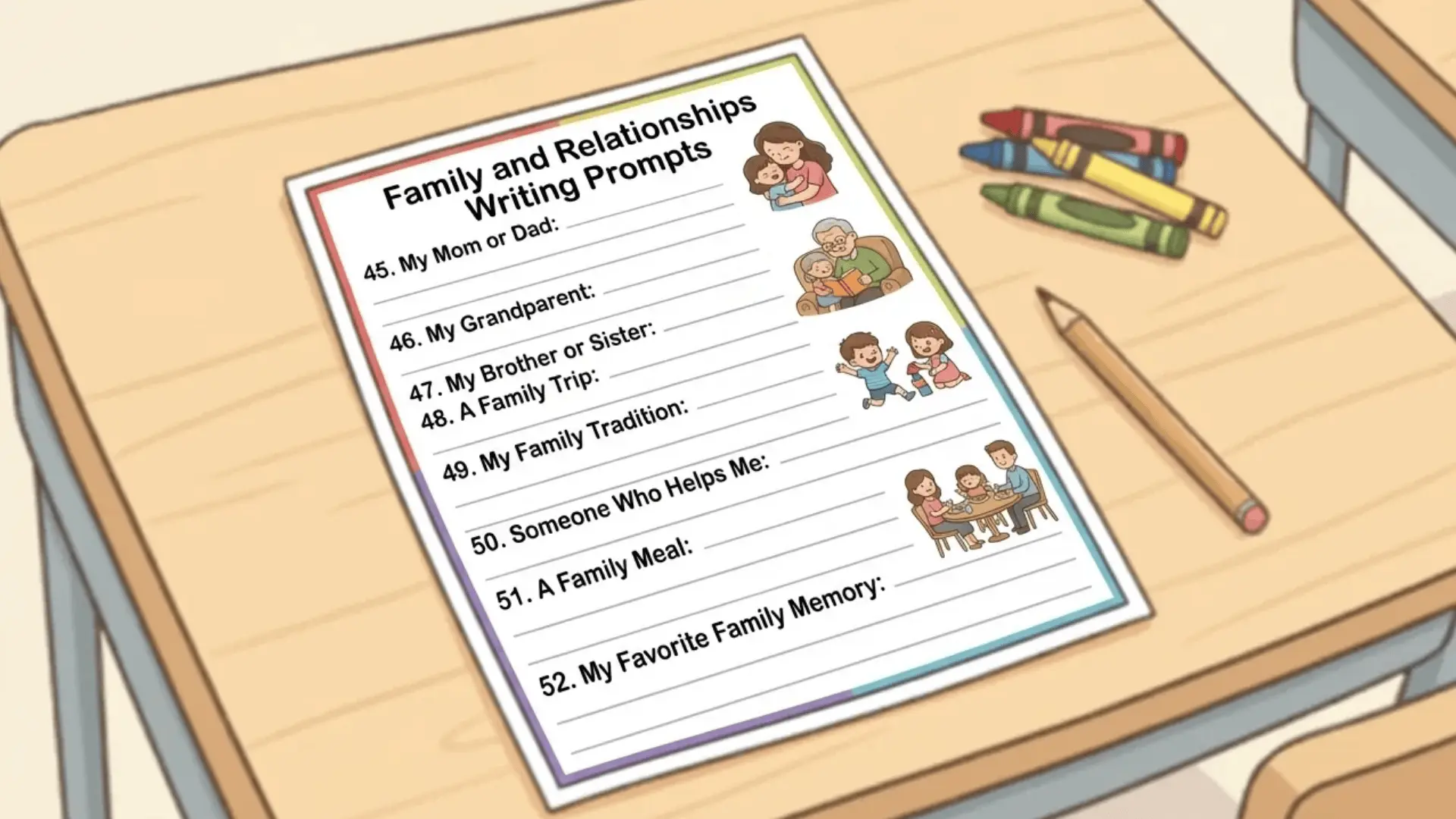
These prompts help students think about the people they love. Writing about family helps children connect their personal experiences to their words.
45. My Mom or Dad: Write about one of your parents or guardians. Describe something kind they do for you and why you love them.
46. My Grandparent: Write about a grandparent or an older family member. Describe something you enjoy doing together and what makes it special.
47. My Brother or Sister: Write about a sibling or a cousin. Describe what you like about spending time with them and one activity you enjoy together.
48. A Family Trip: Write about a trip you took with your family. Describe where you went, what you did, and your favorite part of the trip.
49. My Family Tradition: Write about something special your family does together every year. Describe what happens and why you look forward to it.
50. Someone Who Helps Me: Write about a person who helps you when you feel sad or confused. Describe what they do and why their help matters to you.
51. A Family Meal: Write about a meal your family makes together. Describe the food, who helps cook, and what you enjoy about eating it.
52. My Favorite Family Memory: Write about a happy memory you have with your family. Describe what happened and why it made you feel good.
Feelings and Emotions Writing Prompts
53. When I Feel Happy: Write about something that makes you feel very happy. Describe what happens and how your body feels when you are happy.
54. When I Feel Sad: Write about something that makes you feel sad. Describe how you feel and what helps you feel better after.
55. When I Feel Scared: Write about something that makes you feel scared. Describe the feeling and what you do to feel safe again.
56. When I Feel Proud: Write about a time you felt proud of yourself. Describe what you did and why it made you feel good inside.
57. When I Feel Excited: Write about something that makes you feel very excited. Describe what you do while you are waiting for it to happen.
58. When I Feel Angry: Write about something that makes you feel angry. Describe what happens and what you do to calm yourself down.
59. A Time I Was Brave: Write about a time you did something even though you felt scared. Describe what happened and how you felt afterward.
60. Something That Made Me Laugh: Write about something funny that made you laugh out loud. Describe what happened and who was there with you.
61. A Time I Felt Left Out: Write about a time you felt left out. Describe how it felt and what helped you feel better about the situation.
62. Feeling Loved: Write about a time someone made you feel loved and cared for. Describe what they did and how it made you feel inside.
Food and Health Writing Prompts
These prompts connect writing to everyday healthy habits. They help students think about food, exercise, and taking care of their bodies.
63. My Favorite Breakfast: Write about the breakfast you enjoy the most. Describe what it looks like and how it tastes in the morning.
64. A Healthy Snack: Write about a healthy snack you like to eat. Describe what it is made of and why it is good for your body.
65. My Favorite Vegetable: Write about a vegetable you like to eat. Describe what it looks like and how it tastes when you eat it.
66. Drinking Water: Write about why drinking water is important. Describe how your body feels when you drink enough water during the day.
67. Playing Outside: Write about your favorite outdoor activity. Describe what you do, who you play with, and how it makes your body feel.
68. Washing My Hands: Write about why washing hands is important. Describe the steps you follow and when you wash your hands during the day.
69. My Favorite Sport: Write about a sport or physical activity you enjoy. Describe how to play it and why it is fun for your body.
70. Sleeping Early: Write about why going to sleep early is good for you. Describe what your bedtime routine looks like before you fall asleep.
Holiday and Special Occasion Writing Prompts
71. My Favorite Holiday: Write about the holiday you enjoy the most. Describe what your family does to celebrate and what makes it special.
72. A Birthday Party: Write about your birthday or someone else’s birthday party. Describe the decorations, the food, and the games you played.
73. A Gift I Received: Write about the best gift you ever received. Describe what it was, who gave it to you, and how you felt when you opened it.
74. A Gift I Gave: Write about a gift you gave to someone special. Describe what it was and how the person felt when they received it.
75. My Favorite Celebration Food: Write about the food you enjoy the most during a holiday or celebration. Describe what it tastes like and who makes it.
76. A Parade or Festival: Write about a parade or festival you attended or would like to attend. Describe the colors, sounds, and activities you would see there.
77. New Year: Write about what you would like to do or learn in the new year. Describe one goal you have and how you plan to reach it.
Weather and Seasons Writing Prompts
These prompts help students connect writing to the natural world around them. They encourage children to observe and describe changes in weather and seasons using simple words.
78. My Favorite Weather: Write about the type of weather you enjoy the most. Describe how it looks outside, what you wear, and what activities you like doing in that weather.
79. A Snowy Day: Write about what you would do if it snowed outside your home or school. Describe what the snow looks like and what games you would play in it.
80. A Hot Summer Day: Write about what you do on a very hot day. Describe how the heat feels and what you do to stay cool and comfortable.
81. The Wind: Write about a windy day you experienced. Describe what the wind felt like, what it moved around outside, and whether you enjoyed it or not.
82. Watching the Clouds: Write about the shapes you see when you look up at the clouds. Describe one cloud shape you spotted and what it reminded you of.
83. My Favorite Thing About Spring: Write about what you enjoy most when spring arrives. Describe the changes you notice outside and the activities you look forward to doing.
Future Goals and Dreams Writing Prompts
These prompts help students think about what they want to do and become. They encourage children to dream big and express their hopes in simple words.
84. What I Want to Be: Write about the job you want to have when you grow up. Describe what you would do every day and why you chose that job.
85. A Place I Want to Visit: Write about a place in the world you would like to see one day. Describe what it looks like and what you would do when you get there.
86. Something I Want to Build: Write about something you would like to build when you are older. Describe what it looks like and who it would help.
87. A Skill I Want to Learn: Write about one thing you want to get better at this year. Describe what it is and how you plan to practice it.
88. My Dream House: Write about the house you would like to live in when you grow up. Describe what it looks like inside and outside.
89. A Team I Want to Join: Write about a sports team or club you would like to be part of someday. Describe what the team does and why you want to join.
90. Something I Want to Make: Write about something you would like to create or make one day. Describe what it is and who you would share it with.
91. A Country I Want to Live In: Write about a country you would like to live in someday. Describe what you know about it and why it interests you.
92. My Future Pet: Write about the pet you would like to have when you are older. Describe what kind it is and how you would take care of it.
93. A Book I Want to Write: Write about a book you would like to write someday. Describe what the story would be about and who the main character would be.
94. A Sport I Want to Play: Write about a sport you would like to learn and play when you are older. Describe how the sport is played and why it excites you.
95. Something I Want to Invent: Write about a new invention you would like to create someday. Describe what it does and how it would make life easier for people.
96. My Future School: Write about the school you imagine going to when you are older. Describe what it looks like and what subjects you would study there.
97. A Language I Want to Speak: Write about a language you would like to learn someday. Describe why you want to learn it and who you would speak it with.
98. Someone I Want to Meet: Write about a real or imaginary person you would like to meet in the future. Describe who they are and what you would say to them.
99. A Goal for This Week: Write about one small goal you want to achieve before the week ends. Describe what it is and the steps you will take to reach it.
100. How I Want to Help My Family: Write about one way you would like to help your family when you are older. Describe what you would do and why it matters to you.
101. A New Food I Want to Try: Write about a food you have never eaten but would like to try someday. Describe what it looks like and why you are curious about it.
102. My Future Garden: Write about a garden you would like to grow one day. Describe what plants or vegetables you would grow and how you would take care of them.
103. Something I Want to Do With a Friend: Write about an activity you would like to do with a friend in the future. Describe what you would do and why it would be fun for both of you.
Kindness and Character Writing Prompts
These prompts help students think about how they treat others. They support the development of empathy, respect, and positive behavior.
104. An Act of Kindness: Write about something kind you did for someone recently. Describe what you did, how the person reacted, and how it made you feel.
105. Being a Good Friend: Write about what a good friend looks like. Describe three things a good friend does and why those things matter.
106. Helping Someone in Need: Write about a time you helped someone who needed it. Describe the situation and what you did to make things better for them.
107. Saying Sorry: Write about a time you said sorry to someone. Describe what happened, why you apologized, and how things changed after you did.
108. Being Honest: Write about a time you told the truth even when it was hard. Describe what happened and how you felt after being honest.
109. Including Others: Write about a time you included someone who was left out. Describe what you did and how the person responded when you included them.
110. Sharing With Others: Write about a time you shared something with a classmate or friend. Describe what you shared and how it made the other person feel.
111. A Kind Word: Write about a time someone said something kind to you. Describe what they said, how it made you feel, and how you responded to them.
112. Respecting Others: Write about what it means to show respect to someone. Describe one way you show respect to your teacher or a classmate every day.
113. Taking Turns: Write about a time you had to wait for your turn during a game or activity. Describe how you waited patiently and how it felt when your turn finally came.
114. Cheering Someone Up: Write about a time you helped a friend who was feeling sad. Describe what you did or said to make them feel better again.
115. Being Grateful: Write about someone you are thankful for in your life. Describe what they do for you and how you show them that you appreciate them.
116. Standing Up for Others: Write about a time you stood up for someone who was being treated unfairly. Describe what happened and what you did to help the situation.
117. A Compliment I Gave: Write about a nice compliment you gave to someone at school or at home. Describe what you said, why you said it, and how the person reacted when they heard it.
Tips for Using Writing Prompts
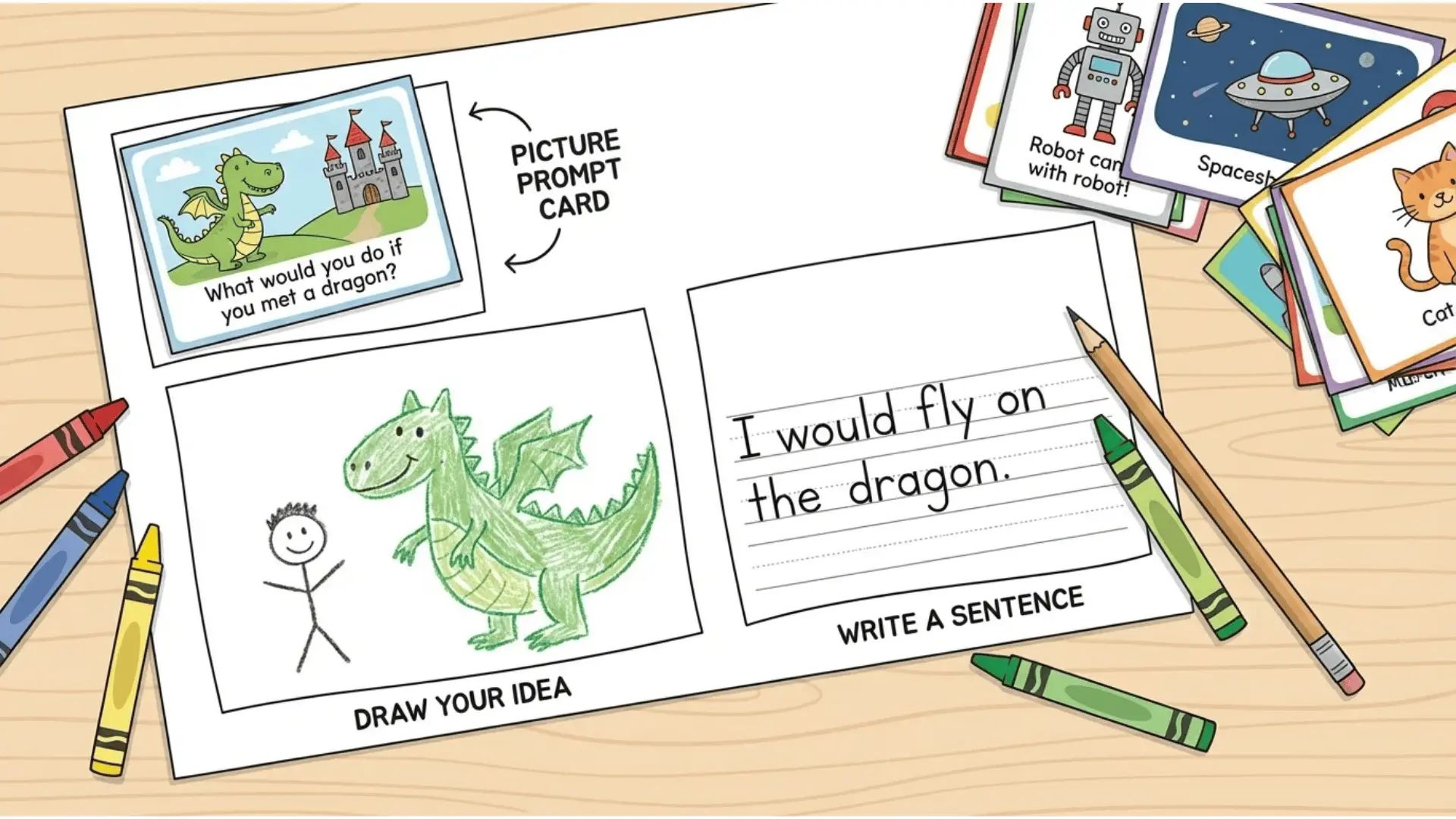
- Use Visual Aids With Prompts: Add pictures along with prompts to help students understand the topic faster. Visuals make it easier for children to connect ideas and start writing.
- Let Students Draw Before Writing: Allow students to draw their ideas first. This helps them organize their thoughts and makes it easier to turn those ideas into simple sentences.
- Keep Instructions Short and Clear: Use simple and direct prompts so students can understand them easily. Short instructions help young learners stay focused and complete the task.
- Model a Simple Example: Show a quick example of how to respond to a prompt. This gives students a clear idea of what to do without making the task confusing.
- Encourage Sharing After Writing: Let students share their work with the class. This builds confidence and helps them feel more comfortable expressing their ideas.
Using these simple methods helps students stay engaged and makes writing activities more comfortable and effective in the classroom.
Conclusion
Building strong writing habits early helps students feel more confident and comfortable expressing their ideas.
Using kindergarten writing prompts regularly gives children a simple way to practice thinking, speaking, and writing in a structured yet flexible manner.
Over time, these small activities support better communication and classroom participation. A balanced mix of prompt types keeps students engaged and encourages consistent learning.
Teachers can use these prompts to create meaningful writing routines without extra preparation.
Start using a few prompts each day and help young learners grow more confident with every sentence they write.
Frequently Asked Questions
What are kindergarten writing prompts?
Kindergarten writing prompts are short topics or questions that help young students practice writing. They give children simple ideas so they can write or draw about a specific subject.
Why are opinion writing prompts useful for kindergarten?
Opinion writing prompts help students explain what they like or prefer. These activities teach children how to share thoughts and give simple reasons.
How many writing prompts should teachers use daily?
One or two prompts per day are usually enough. Short writing activities help students practice regularly without feeling overwhelmed.
Can kindergarten students draw instead of writing?
Yes, drawing helps students express ideas when they cannot yet write full sentences. Teachers often allow drawing before writing words.
Where can teachers find free kindergarten writing prompts?
Teachers can find free prompts online, in teaching resources, and in classroom blogs. Many education websites share printable prompts that teachers can use in class.


