
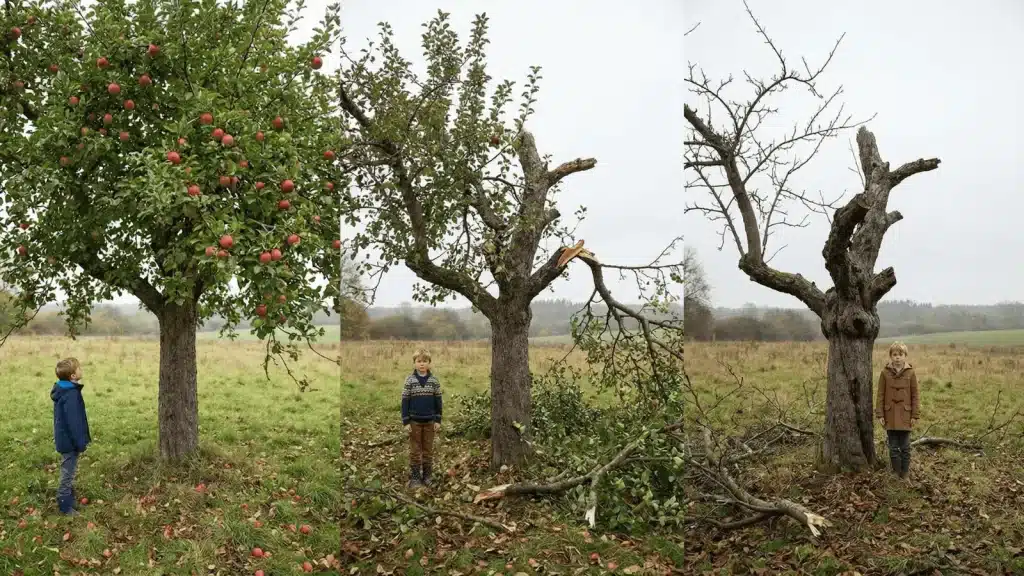
The Giving Tree is one of those stories that feels simple on the surface. A tree gives. A boy takes. But the more you sit with it, the more uncomfortable it gets.
Most people walk away thinking it’s about kindness or generosity. But there’s a much deeper current running through the story, one about relationships, identity, and what happens when giving never stops.
This blog unpacks the real lesson hiding beneath the surface, why so many readers miss it, and what the story can actually teach us about balance in everyday life.
If you haven’t gone through the full story yet, read the complete breakdown of The Giving Tree first.
What is the Real Lesson of The Giving Tree Beyond the Obvious?
Most people read this story and see a simple give-and-take dynamic. The tree gives. The boy takes. That contrast is hard to miss.
But the real lesson goes further than that.
The deeper message is about imbalance in relationships, and how that imbalance quietly destroys both people involved. Not just the giver.
Readers often miss this because the tree never complains. It seems content. So the emotional damage gets buried under a surface-level warmth that feels like love.
The story isn’t just asking you to be kind. It’s asking you to look at what unchecked giving costs actually, and whether a relationship built on constant sacrifice can really be called healthy at all.
When Does Giving Become Harmful?
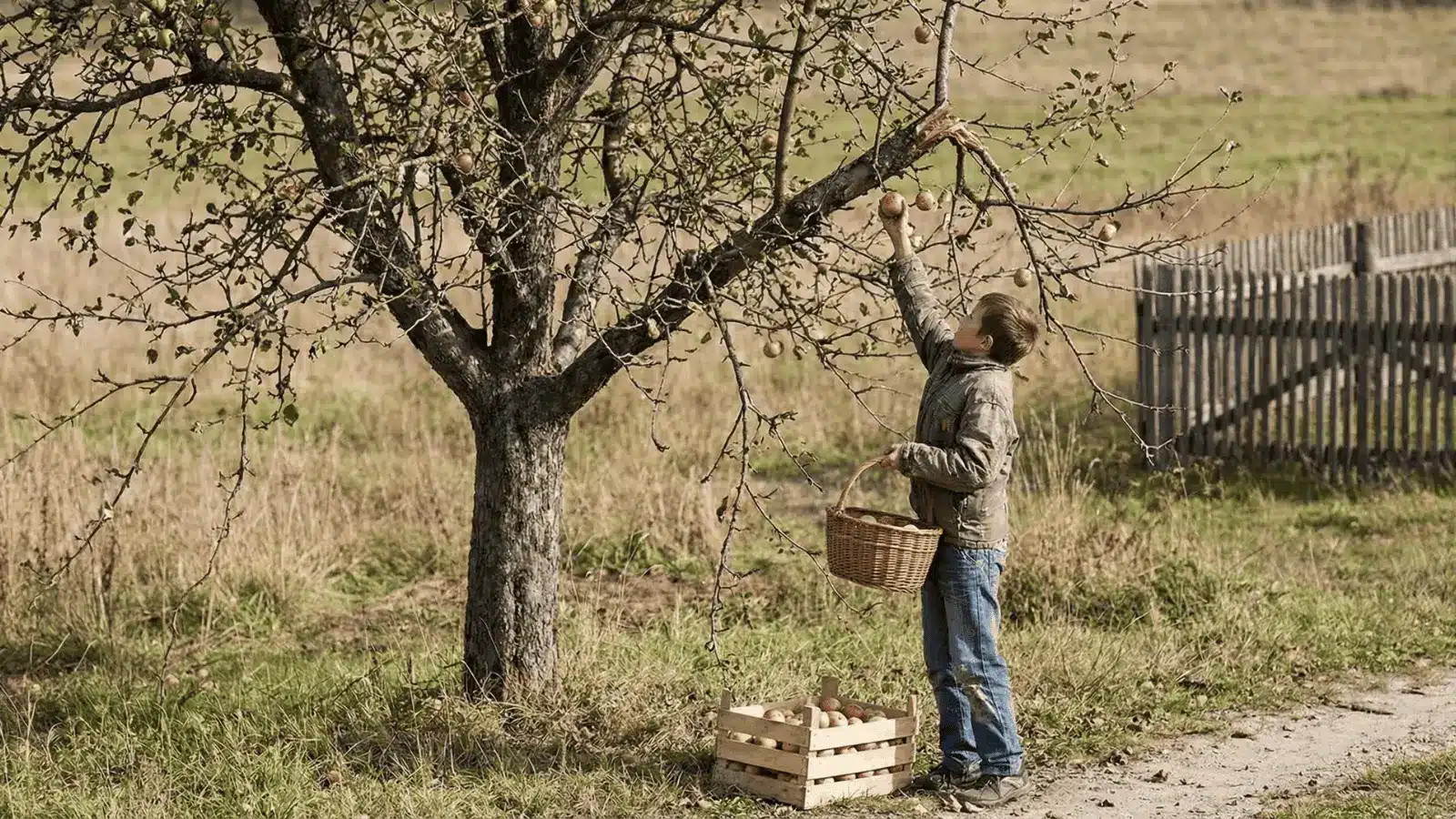
There’s a clear line between giving from a full cup and giving until you’re empty.
Healthy giving is a choice. It comes from a place of abundance, and it doesn’t erase who you are in the process.
Over-giving is different. It happens when giving becomes the only mode, when it continues regardless of what’s left.
Here’s the thing: every time you give without limits, you remove a resource that isn’t replaced. Over time, that adds up.
The signs show up like this:
- Loss of identity: you no longer know who you are outside of what you provide.
- Emotional depletion: you feel drained but keep going anyway.
- Physical exhaustion: the body starts reflecting what the mind has been ignoring.
Eventually, the giver stops being a person in the relationship. They become a function. Something the other person relies on, not respects.
And here’s the part that trips people up: giving can feel good in the moment while still leading to long-term loss. The warmth of being needed can mask the damage until it’s too late to reverse.
Why the Boy Keeps Taking without Change
The boy isn’t a villain. That’s the first thing to understand. He never becomes cruel on purpose. He just never had a reason to stop and reflect.
If you want a clearer view of how these patterns show up across the full story, you can go through this detailed summary and breakdown.
The reason is simple: the tree never resisted.
When giving is unlimited and unconditional, there’s nothing to push back against. No friction means no reflection. No reflection means no growth.
This is how the mechanism works:
- Easy access removes the need to consider cost.
- No consequences mean no learning.
- No learning means behavior stays exactly the same.
The boy never develops gratitude because gratitude usually grows from awareness of what something costs. When nothing is ever withheld, nothing is ever truly valued.
The tree’s constant availability doesn’t just enable the behavior, it shapes it. The boy is a product of the dynamic, not a bad person operating outside of it.
The Hidden Cost of Unconditional Giving
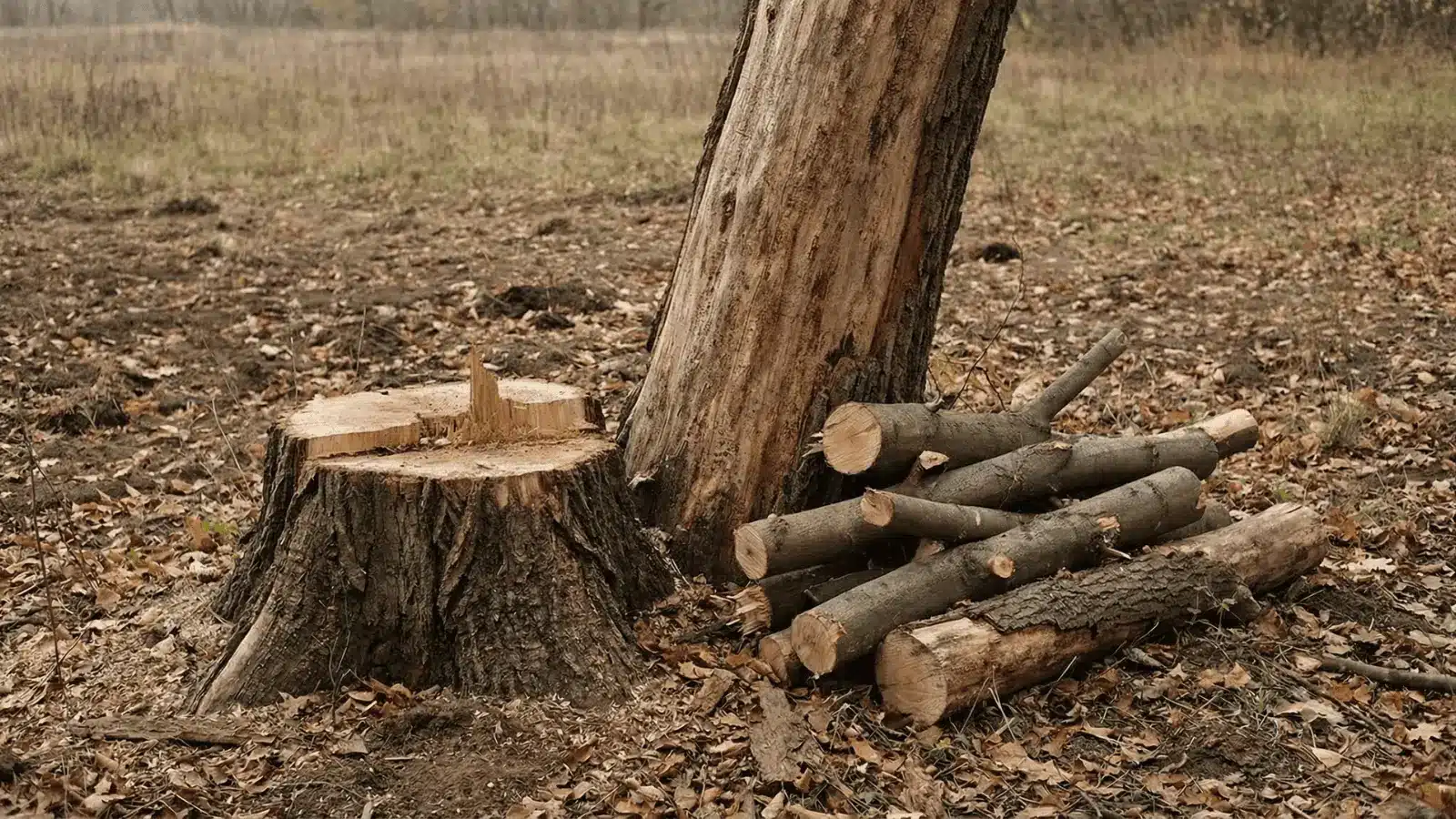
The tree’s losses aren’t dramatic all at once. They’re gradual. First, the apples. Then the branches. Then the trunk.
By the end, there’s almost nothing left, not even a clear sense of what the tree was before the giving started.
This is the real cost: giving without recovery leads to irreversible depletion.
There are two layers to what the tree loses:
- Physical cost: the literal parts of itself, stripped away one by one
- Emotional cost: the quiet erosion of identity, purpose, and presence
The story tells you the tree is happy. But that happiness is worth questioning. Is it real contentment? Or is it a coping mechanism, a way to frame loss as meaning?
There are moments when self-sacrifice carries genuine value. Giving something up for someone you love, when it’s a choice, and when it matters, can be meaningful.
But when sacrifice is total and ongoing, when nothing is preserved, it stops being meaningful and becomes destructive. The difference lies in whether the giver retains anything of themselves in the process.
What the Story Teaches About Boundaries (without Saying It Directly)
The word “boundaries” never appears in the story. But the entire book is a lesson in what happens when they don’t exist.
Here’s the key insight: boundaries weren’t rejected in this story. They were never there to begin with. That absence is what drives everything.
When there are no limits:
- There’s no accountability for how much is taken
- There’s no signal that the giver has needs of their own
- There’s no reason for the taker to slow down
Even one small boundary, the tree saying, “I can give you some apples, but not all of them,” would have changed the entire arc. It would have introduced the idea that the tree has value beyond what it provides.
In real life, saying no works the same way. It’s not a rejection of the other person. It’s a protection of yourself, and, indirectly, of the relationship.
A relationship where one person can never say no will eventually have nothing left to hold it together.
Why Readers Disagree on the Lesson
Two people can read the exact same story and come away with opposite conclusions. One person sees a beautiful portrait of unconditional love. Another sees a cautionary tale about self-destruction.
Neither is reading it wrong.
The disagreement comes from different value systems being applied to the same events:
- If you prioritize sacrifice and devotion, the tree looks noble
- If you prioritize self-preservation and reciprocity, the tree looks depleted
The ending makes this harder to resolve. The tree says it’s happy. But the tree has also lost everything. That tension doesn’t settle cleanly.
There’s also a generational shift in how people read it. Many people loved the story as children and find it unsettling as adults. What felt like warmth at age seven reads like codependency at thirty-five.
That shift isn’t a mistake in either reading. It reflects how life experience changes what we’re willing to call love.
What You Should Actually Take from the Story
The lesson isn’t “give everything,” and it isn’t “protect yourself at all costs.” It’s about balance.
Giving works when it doesn’t erase the person doing the giving. It can be generous, even selfless, but it has to leave something behind for the giver to still exist in the relationship.
Taking works when it comes with awareness. When the person receiving understands what it costs the other person, and feels something about that.
Here’s the logic of what happens without balance:
- The giver loses themselves
- The taker loses the relationship
- Both end up with less than they started with
One-sided relationships don’t just hurt one person. They fail both people, just in different ways and at different speeds.
The practical takeaway is this: healthy relationships need limits, not just love. Love without limits isn’t stronger. It’s just more vulnerable to collapse.
Quick Moral (Simplified for Clarity)
If you want the core of it in plain terms:
- Giving without limits can lead to losing yourself.
- Taking without gratitude leads to emptiness.
- Balance matters more than sacrifice.
The tree gave everything. The boy took everything. And at the end, what did either of them really have?
Conclusion
The Giving Tree lesson runs deeper than kindness or generosity. It’s really about what happens when a relationship has no balance, and no one steps in to change that.
The tree’s endless giving doesn’t build love. It builds a pattern that drains one person and stunts the other. Real relationships need both people to stay whole.
If this story made you see giving differently, that’s exactly the point. Healthy love needs limits, not to care less, but to last longer.
What’s your take on the story’s real lesson? Drop your thoughts in the comments below, we’d love to hear how you read it.
Frequently Asked Questions
Is The Giving Tree based on a real relationship?
No, it’s fictional. But it mirrors real-life dynamics, parent-child, romantic, or human-nature relationships, which is why it feels so personal to many readers.
Is The Giving Tree appropriate for children?
Yes, but adults feel it differently. Kids see kindness. Adults often recognize the imbalance. It works on both levels.
What does the tree represent in The Giving Tree?
The tree symbolizes unconditional love, like a parent or caregiver, who gives everything without limits and never asks for anything back.
Why does the boy never say thank you in The Giving Tree?
Because the tree never asks for it. Without resistance or consequences, the boy has no reason to pause and feel grateful.