Beneath the thick green canopy, an entire world is alive and thriving. The rainforest is one of the most biodiverse places on Earth, absolutely packed with jaw-dropping creatures.
Understanding how these ecosystems function also means examining the roles of the rainforest’s primaryconsumers.
Colorful birds that look like living works of art, big cats that move through the shadows without making a single sound, tiny frogs that carry enough poison to floor you, and insects so strange they barely look real.
Every layer of the rainforest hides something new and something wonderful. Ready to find who is actually living in there? Let’s get into it!
What Makes Rainforests the Perfect Home for Wildlife?
Rainforests provide one of the most ideal environments for wildlife due to their warm temperatures, high humidity, and abundant rainfall throughout the year. This biodiversity is also reflected in jungle animal species.
These conditions support dense vegetation, which offers both food and shelter for a wide variety of species. The forest is structured in multiple layers, allowing animals to occupy different niches without intense competition.
This vertical diversity helps thousands of species coexist in the same area. Additionally, the constant availability of resources reduces seasonal survival challenges.
Many animals have evolved specialized adaptations to thrive in this rich ecosystem. As a result, rainforests are home to some of the highest levels of biodiversity on Earth.
Iconic Animals that Thrive in Rainforest Ecosystems
Rainforests are home to some of the most iconic and extraordinary animals on Earth, each uniquely adapted to survive and thrive in this rich, layered ecosystem.
Forest Floor and Ground-Dwelling Animals
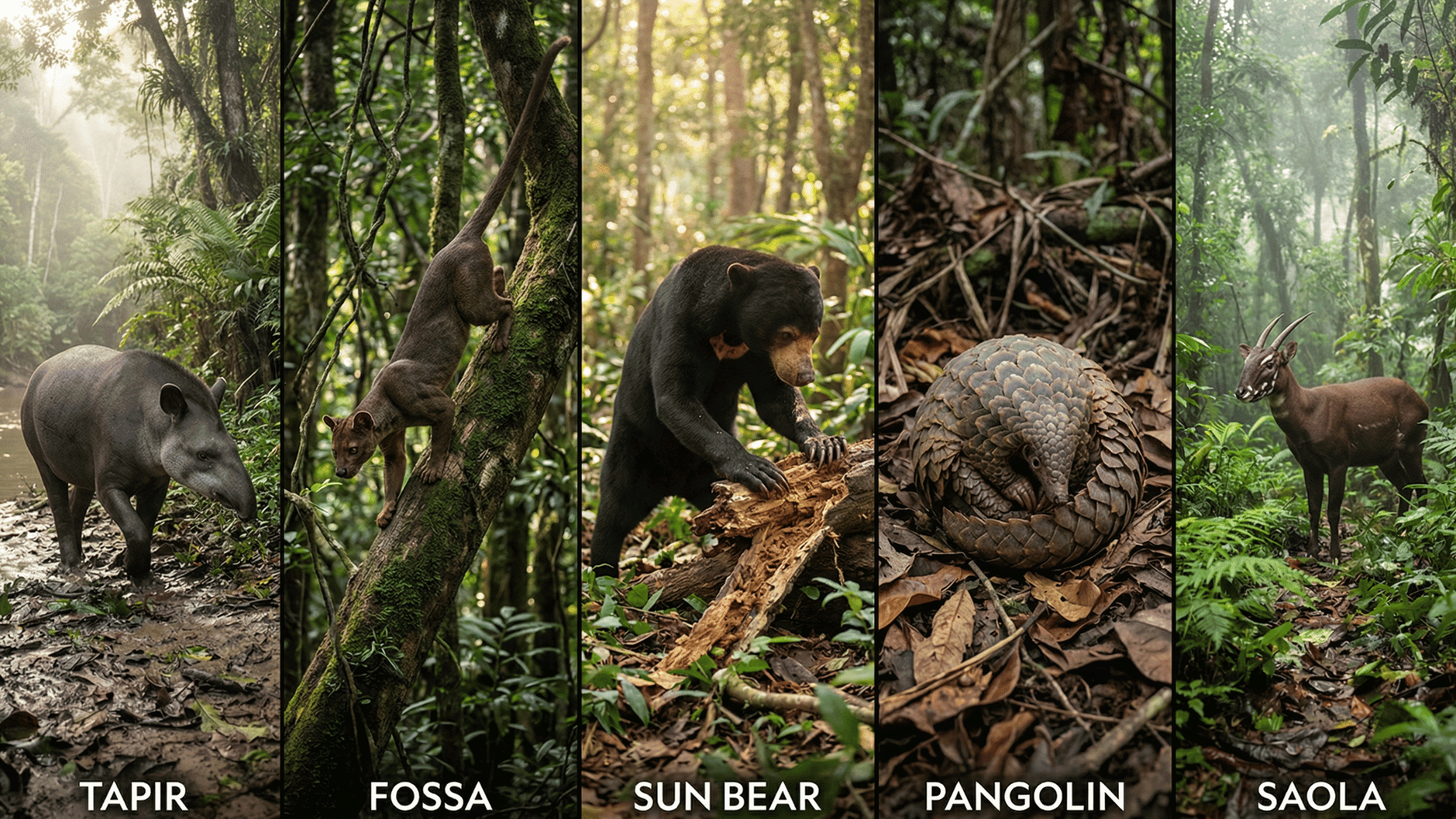
These animals mainly live on the rainforest floor or lower levels, where they search for food, avoid predators, and play an important role in maintaining the ecosystem balance.
1. Tapir
Tapirs are large, herbivorous mammals that roam rainforest floors and riverbanks, feeding on leaves, fruits, and aquatic plants. They have a short, flexible snout that helps them grab food easily. These animals are mostly nocturnal and prefer to stay hidden during the day.
Surprising fact: Tapirs are more closely related to horses and rhinos than pigs.
2. Fossa
The fossa is a cat-like predator found in Madagascar’s rainforests, known for its agility and sharp hunting skills. It can climb trees easily while chasing lemurs and birds through the canopy.
Fossas are solitary animals and can be active both during the day and night.
Surprising fact: Fossas can rotate their ankles to climb down trees headfirst.
3. Sun Bear
Sun bears are the smallest bear species living in Southeast Asian rainforests and are excellent climbers. They use their long tongues to extract honey and insects from tree bark and logs.
Their strong claws and limbs help them climb and search for food. Sun bears also break apart rotting wood, which supports the ecosystem. They are generally shy and avoid humans.
Surprising fact: A sun bear’s tongue can grow up to 25 cm long.
4. Pangolin
Pangolins are unique mammals covered in tough keratin scales that act as armor. They feed mainly on ants and termites using their long, sticky tongues.
When threatened, they roll into a tight ball to protect themselves from predators.
Surprising fact: Pangolins are the most trafficked mammals in the world.
5. Saola
The saola is a rare and mysterious animal found in the dense rainforests of Southeast Asia. It resembles an antelope with long, straight horns and a slender body.
Saolas live in remote forest areas and are rarely seen by humans. They are critically endangered due to habitat loss.
Surprising fact: The saola is often called the “Asian unicorn” because it is so rarely spotted.
Tree-Dwelling & Canopy Animals
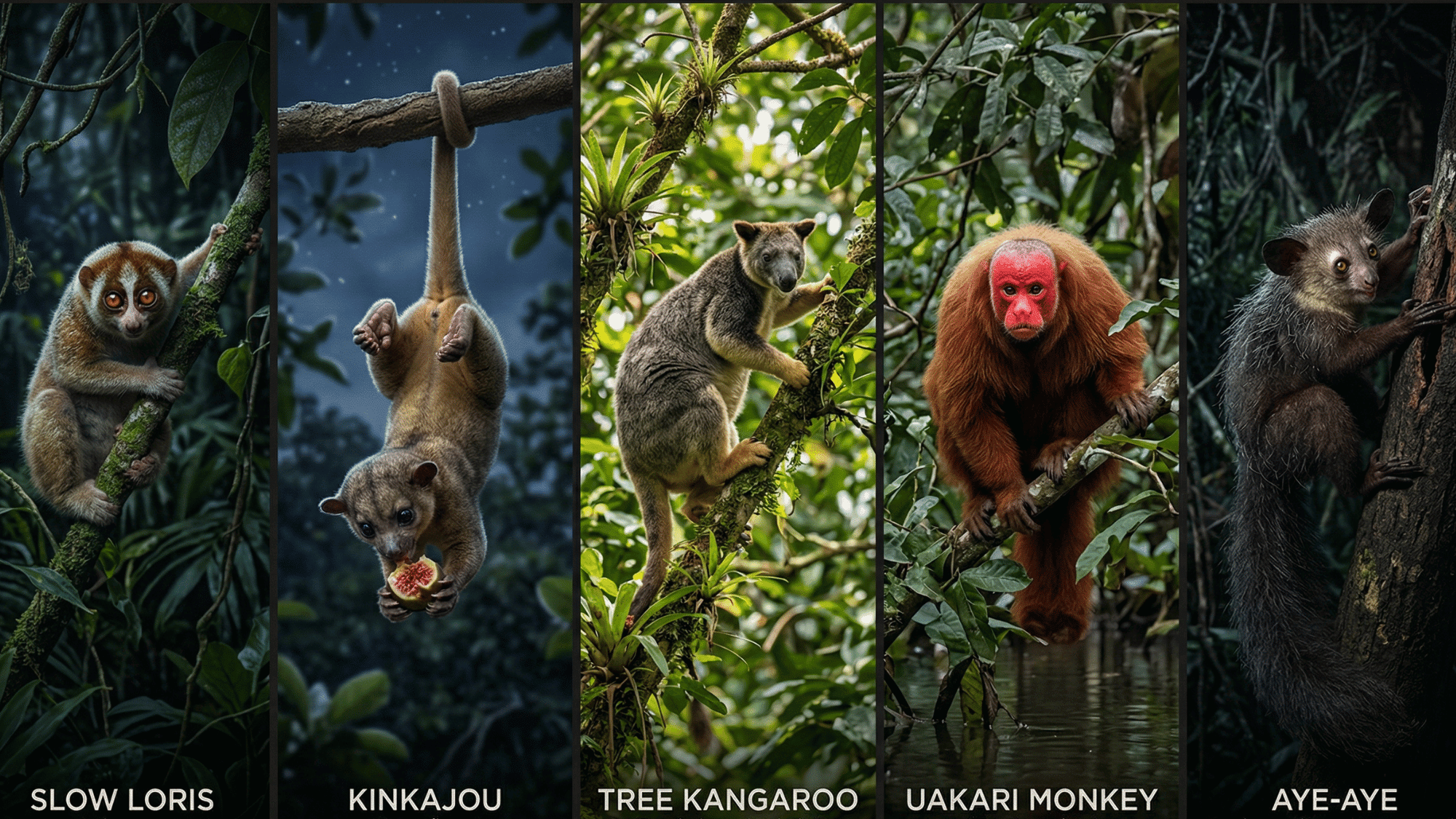
These animals spend most of their lives in trees, using strong limbs, tails, and climbing skills to move through the dense rainforest canopy.
6. Slow Loris
Slow lorises are small primates with large eyes adapted for nighttime activity in rainforests. They move slowly and silently through trees to avoid predators. Their diet includes fruits, insects, and tree sap.
They have a strong grip that allows them to hang from branches for long periods. Slow lorises are mostly solitary and territorial.
Surprising fact: Slow lorises are the only venomous primates in the world.
7. Kinkajou
Kinkajous are small, tree-dwelling mammals found in Central and South American rainforests.
They are nocturnal and feed mainly on fruits, nectar, and insects. Their prehensile tails help them grip branches and move easily through the canopy.
Surprising fact: Kinkajous are often called “honey bears” because of their love for honey.
8. Tree Kangaroo
Tree kangaroos are specially adapted to life in rainforest trees rather than open land.
Unlike ground kangaroos, they move slowly and carefully among branches. They feed on leaves, fruits, and flowers. These animals are well adapted to arboreal life.
Surprising fact: They can leap from tree to tree from heights of over 18 meters.
9. Uakari Monkey
Uakari monkeys are unusual primates known for their bright red, bald faces. They live in flooded rainforest areas, especially in the Amazon basin.
Their diet mainly consists of fruits, seeds, and small insects. Uakaris are social animals that move in groups. Their appearance helps signal health to others.
Surprising fact: A brighter red face indicates better health and stronger immunity.
10. Aye-Aye
The aye-aye is a unique nocturnal primate found in Madagascar’s rainforests. It uses its long, thin middle finger to tap on trees and locate insects inside. Once it finds prey, it gnaws into the wood and carefully extracts it.
Aye-ayes have large eyes and sensitive hearing for night activity.
Surprising fact: The aye-aye uses echolocation-like tapping to find food.
Birds, Reptiles & Small Creatures
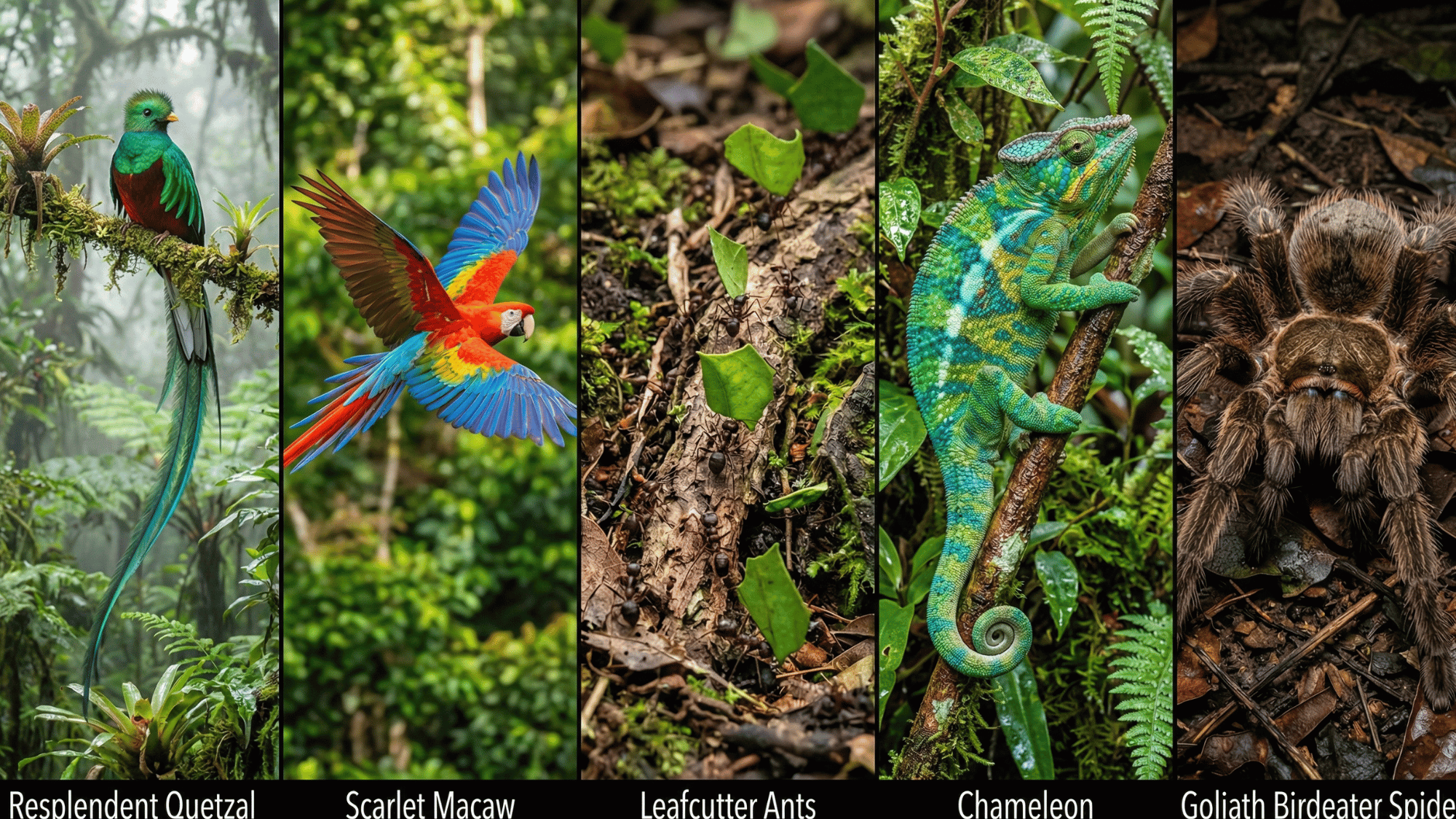
This group includes birds, reptiles, and smaller species that thrive across rainforest layers and contribute to pollination, pest control, and biodiversity.
11. Quetzal
The resplendent quetzal is a brightly colored bird found in Central American rainforests. It has shimmering green feathers and a long, flowing tail that makes it stand out.
These birds mainly feed on fruits like wild avocados. They prefer dense, high-altitude forest areas. Quetzals are known for their cultural significance.
Surprising fact: Ancient civilizations considered quetzals sacred and symbols of freedom.
12. Scarlet Macaw
Scarlet macaws are vibrant parrots that bring life and color to rainforest ecosystems. They are social birds that travel in pairs and communicate loudly. Their strong beaks help them crack hard nuts and seeds.
They also help in seed dispersal across forests. Macaws are highly intelligent birds.
Surprising fact: Scarlet macaws can live up to 50 years in the wild.
13. Leafcutter Ant
Leafcutter ants are known as the farmers of the rainforest because they cut leaves to grow fungus for food. They live in highly organized colonies with millions of members.
Each ant has a specific role within the colony. They play a major role in maintaining the ecosystem. Their teamwork is highly advanced.
Surprising fact: Some leafcutter ant colonies can contain millions of ants.
14. Chameleon
Chameleons are reptiles famous for their ability to change color in response to their mood and environment. They have independently moving eyes that allow them to look in different directions.
Their long sticky tongues help them catch insects quickly. They mostly live in trees and shrubs.
Surprising fact: A chameleon’s tongue can be twice the length of its body.
15. Goliath Birdeater Spider
The Goliath birdeater is one of the largest spiders in the world, found in rainforest regions. It feeds on insects, frogs, and small animals using its powerful fangs. It also uses defensive hairs to protect itself from predators. Despite its size, it is not dangerous to humans. It is mostly nocturnal.
Surprising fact: Despite its name, it rarely eats birds.
How Can We Help Protect Rainforest Wildlife?
Protecting rainforest wildlife is essential to preserving biodiversity and maintaining the balance of our planet’s ecosystems. Here are some simple yet impactful ways we can help:
- Support sustainable products, such as certified wood, coffee, and palm oil, to reduce deforestation.
- Reduce, reuse, and recycle to lower demand for resources that harm rainforest habitats.
- Donate to or volunteer with organizations working to protect rainforest wildlife.
- Spread awareness about endangered species and the importance of conservation.
- Avoid products linked to illegal wildlife trade or habitat destruction.
Wrapping It Up
The rainforest is unlike anywhere else on earth, and the animals living in it are proof of just how extraordinary nature can be. Every creature plays a role in keeping this incredible ecosystem alive and balanced.
But the rainforest and everything in it need protection now more than ever. Learning about these animals is not just attractive; it is important.
Because you cannot care about something you do not know exists. Share it, talk about it, and never stop being amazed by the wild, weird, and absolutely wonderful world hiding beneath that canopy!