If you’ve ever watched your child struggle to hold a crayon, button a shirt, or use scissors, you already know how important fine motor skills are.
These small but mighty movements help kids write, dress, eat, and feel more independent every day. In this guide, I’ll share practical fine motor skills activities you can try at home; no special tools needed.
I’ll cover age-appropriate ideas, playful games, simple crafts, everyday routines, and even DIY options using things you already have around the house.
This blog will also cover OT-approved tips, resources, and a few red flags to watch for. By the end, you’ll feel confident helping your child build stronger, more capable hands in fun and stress-free ways.
What are Fine Motor Skills Activities?
Fine motor skills activities are simple tasks that strengthen the small muscles in the hands, fingers, and wrists. These muscles help children perform everyday actions, such as holding a crayon, buttoning a shirt, tying their shoes, or using utensils.
Activities can be playful, creative, or part of daily routines, but they all work toward building better hand control and coordination.
These skills are important because they support independence and school readiness. A child with strong fine motor skills finds it easier to write, cut with scissors, or dress themselves without help.
They also build confidence by being able to do things on their own. Starting with small, fun activities at home makes learning a natural and stress-free process.
Fine Motor Skills Activities for Kids

When it comes to fine motor skills, there are so many ways to help kids grow stronger and more confident with their hands.
Play-Based Fine Motor Activities
Play-based activities are one of the most effective ways to develop fine motor skills. They mix fun with learning, keeping kids engaged while strengthening control and coordination. A few are given below:
- Playdough & putty: Rolling, pinching, and cutting shapes work finger and hand muscles while sparking creativity.
- Building blocks & puzzles: Stacking, balancing, and fitting pieces together improve coordination and problem-solving skills.
- Games (Jenga, Connect 4, Mancala): Handling small pieces builds focus, precision, and careful control.
- Sticker peeling & placing: Peeling and lining up stickers help develop grip strength and dexterity.
- Tweezers or tongs play: Picking up pom-poms, beads, or marbles strengthens grip and hand coordination.
Play-based activities don’t feel like practice. They are fun, flexible, and easy to add into everyday routines, helping kids build fine motor skills naturally.
Creative & Craft Activities
Crafts are a simple way for kids to strengthen fine motor skills using everyday materials:
- Beading and lacing: Builds hand-eye coordination and focus.
- Paper activities (tearing, cutting, folding): Improves grip and finger control.
- Drawing, coloring, and finger painting: Support pencil grip and hand movement.
- Sticker art: Sharpens accuracy and dexterity.
These quick activities keep kids’ hands busy while building practical skills.
Everyday Life Skill Builders
Everyday routines provide kids with numerous opportunities to develop their fine motor skills. These activities don’t require special tools or toys, and they help build independence while developing hand control.
Common life-skill activities include:
- Buttons, zippers, and tying shoes: Practicing with clothing helps kids coordinate both hands and develop patience.
- Inserting coins or sorting pasta: Small objects sharpen precision and improve finger strength.
- Using utensils and snack prep: Peeling bananas or opening lids builds grip while teaching self-care skills.
- Folding small clothes or napkins: Encourages hand-eye coordination and sequencing, which supports daily routines.
These simple tasks show kids that practice doesn’t have to be separate from daily life. As they master these skills, they gain confidence in caring for themselves and completing everyday responsibilities.
Household & DIY Activities
Many fine motor activities can be done with items you already have at home. These budget-friendly ideas are simple to set up and still very effective:
- Clothespins and paper clips: Strengthen finger muscles by clipping and unclipping small objects.
- Rubber band stretching: Improves grip, coordination, and finger strength while being playful.
- Straws, pipe cleaners, and pom-poms: Perfect for threading, sorting, or creating small crafts that help build fine motor control.
- Reusable snack containers or spice jars: Twisting lids open and closed helps develop hand and wrist strength.
Household items are often the best learning tools. With little cost and effort, kids can practice fine motor skills while having fun.
Fine Motor Skills Activities by Age
Children develop fine motor skills gradually as they grow. Each stage brings new abilities, and engaging in the right activities makes a significant difference.
| Age Group | Activity 1 | Activity 2 | Activity 3 |
|---|---|---|---|
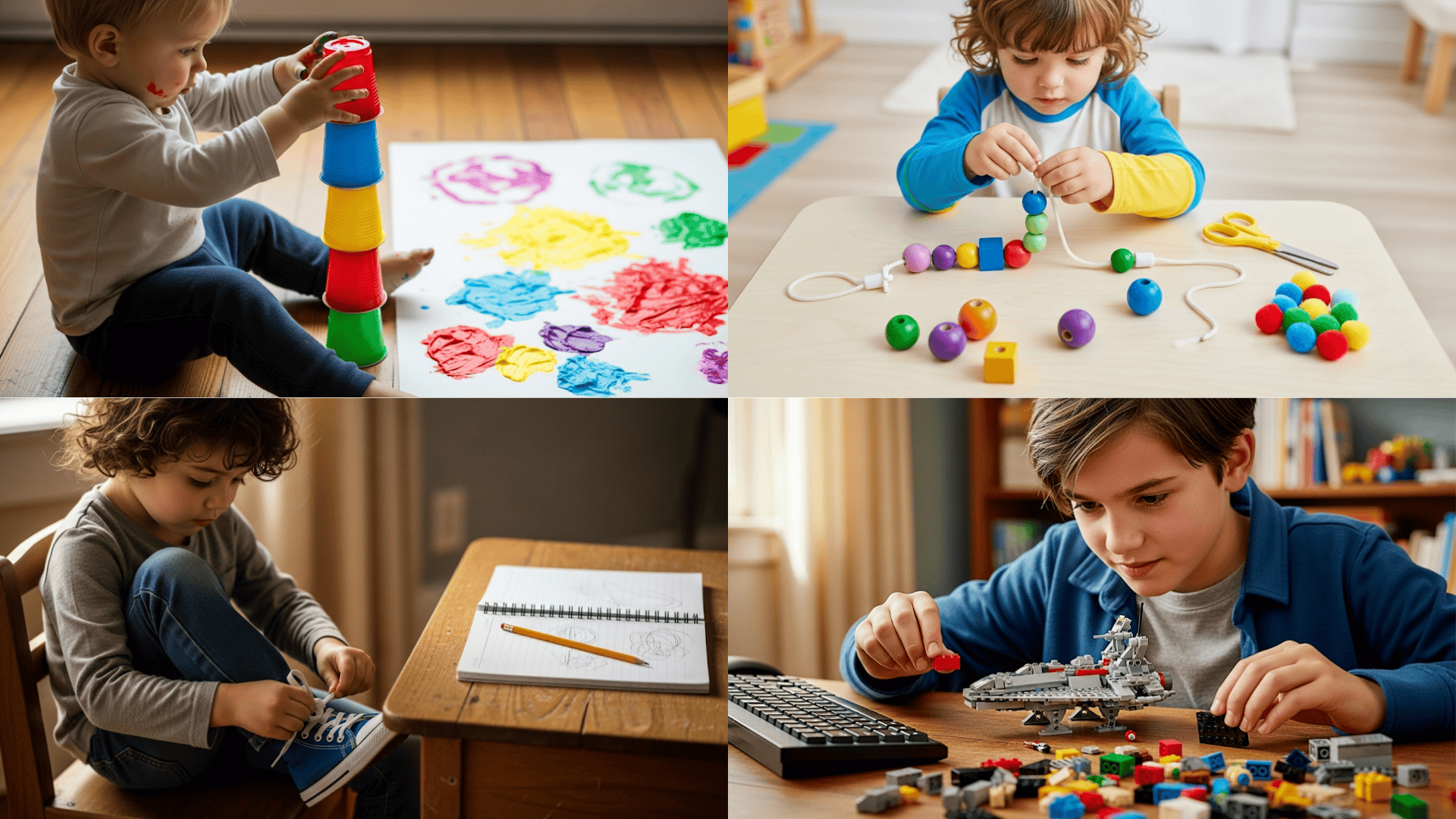
| Toddlers (1–2 years) | Stacking cups – Builds coordination and cause & effect | Finger painting – Strengthens fingers & sparks creativity | Pulling grapes off stems – Practices grip & hand strength |
| Preschoolers (3–4 years) | Threading beads – Improves focus & hand-eye coordination | Using scissors – Builds control & hand strength | Sorting pom-poms – Sharpens grasping & sorting skills |
| Kindergarten (5–7 years) | Tying shoes – Builds patience & fine motor skills | Using utensils – Strengthens grip & builds independence | Handwriting practice – Prepares for writing & drawing |
| Older Kids (7+ years) | Keyboard typing – Boosts finger coordination & speed | LEGO builds – Encourages problem-solving & precision | Simple crafts – Folding, cutting, sewing refine muscle control |
By matching the activity to your child’s age, you can build strength, control, and confidence in a way that feels natural and fun. These activities help maintain fine motor growth as kids take on increasingly advanced tasks.
Fine motor development doesn’t stop at one stage. It grows with your child and shows up in school, hobbies, and daily life. When children practice age-appropriate activities, they develop skills that last for years.
OT-Approved Tips & Guidance
Occupational therapists often recommend fine motor activities because they support the development of everyday skills, such as writing, eating, and dressing. Here are some key points to keep in mind:
- Skill progression: Fine motor control develops in a step-by-step manner. Children typically progress from the pincer grasp (using the thumb and finger) to the tripod grip (holding a pencil correctly), and then to writing.
- Red flags: If a child avoids using their hands, struggles to hold small items, or shows no progress over time, it may be a sign to seek professional help.
- Motivation strategies: Keep sessions short and playful. Use favorite toys, games, or colorful tools to hold attention and reduce frustration.
- Expert insight: OTs emphasize that practice should feel like play, not work. Kids learn best when they are having fun.
These tips make it easier to support children at home while knowing when extra help might be needed.
Tools, Toys & Resources
The right tools and resources can make fine motor practice more engaging and structured. Here are some useful options to consider:
| Resource | Examples | How It Helps |
|---|---|---|
| Fine motor toys | Sorting sets, peg boards, lacing kits, and building blocks | Strengthen grip, coordination, and problem-solving skills through play. |
| Printables & worksheets | Tracing sheets, cut-and-paste activities, and coloring pages | Support pencil control, accuracy, and school readiness. |
| OT-recommended resources | Books, activity guides, therapy tools | Provide structured guidance and proven strategies from professionals. |
These resources help keep kids engaged while providing targeted practice at home or in the classroom.
Where to Buy
- Fine motor toys: Amazon, Target, Walmart, or local toy stores.
- Printables & worksheets: Teachers Pay Teachers, Etsy, or free parenting blogs.
- OT-recommended resources: Bookstores, library collections, or trusted health and therapy websites.
Starting with simple tools like peg boards, lacing kits, or printable tracing sheets is often the most affordable and effective option.
Conclusion
Fine motor skills play a big role in helping kids grow confident, independent, and ready for daily life.
From simple play to everyday tasks, there are countless ways to strengthen small hand muscles without needing fancy tools.
Activities like threading beads, stacking blocks, or even helping in the kitchen can make a big difference over time.
I believe the best part is how natural these skills can be woven into fun and family routines. With a little creativity and consistency, you’ll see steady progress.
If you’re ready to get started, choose a few of the ideas shared here and make them part of your child’s day. Small steps today can build strong, capable hands for tomorrow.