The Amazon rainforest has one rule only: everything here is wilder than you expect.
This is the place where the birds are louder than your alarm clock, the snakes are longer than your car, the frogs come in colors that should not exist in nature, and something is always watching you from the trees, even when you cannot see it.
Its diversity is part of a much larger world of jungle wildlife species found across tropical ecosystems. Let’s meet the residents of the most untamed neighborhood on earth!
What Makes the Amazon Rainforest a Hub of Incredible Wildlife?
The Amazon rainforest is considered a hub of incredible wildlife due to its unmatched biodiversity and vast ecosystem. This richness is closely linked to the primary consumer animals, which support the entire ecosystem.
Its warm climate, heavy rainfall, and dense vegetation create ideal living conditions for thousands of species. The forest is layered into different zones, allowing animals to occupy unique habitats without direct competition.
Abundant food sources such as fruits, leaves, and insects support a wide variety of diets. Rivers and wetlands further add to the diversity by providing aquatic habitats.
Many species have evolved specialized traits to survive in this rich environment. Together, these factors make the Amazon one of the most wildlife-rich regions on Earth.
Incredible Wildlife of the Amazon Rainforest
The Amazon rainforest is home to an incredible variety of wildlife, featuring diverse species that have adapted to thrive in its rich and complex ecosystem.
Forest Floor Creatures
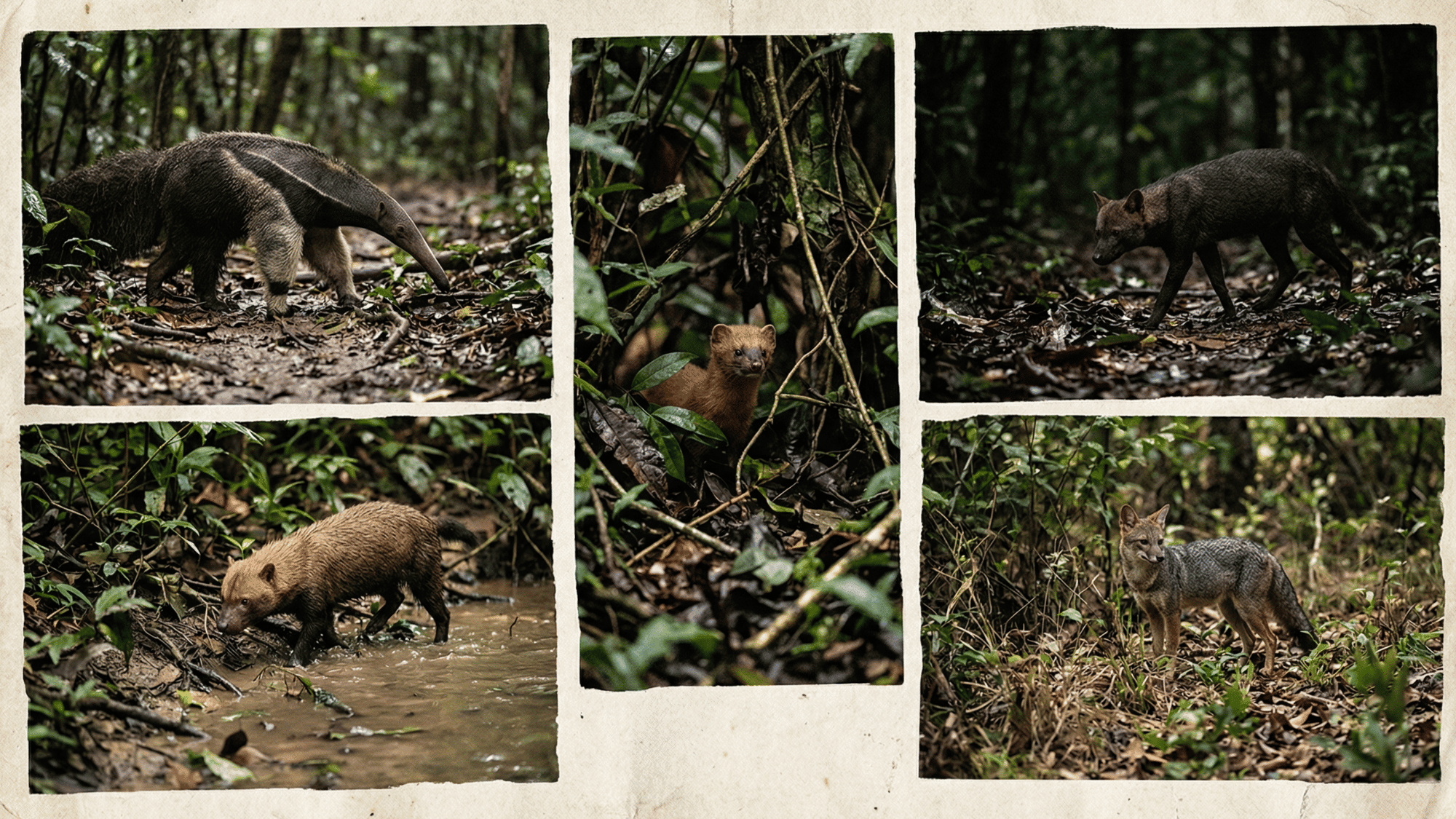
The forest floor of the Amazon is home to a variety of animals that thrive among dense vegetation, fallen leaves, and hidden pathways.
1. Giant Anteater
The giant anteater is a unique mammal known for its long snout and bushy tail. It feeds mainly on ants and termites using its sticky tongue.
These animals are solitary and roam large areas in search of food. They play an important role in controlling insect populations in the rainforest.
2. Bush Dog
Bush dogs are rare, small carnivores found in dense rainforest regions. They have short legs and webbed feet, making them excellent swimmers. These animals hunt in packs and mainly feed on small mammals. Their secretive nature makes them difficult to spot in the wild.
3. Amazon Weasel
The Amazon weasel is one of the least known carnivores in the rainforest. It has a slender body that helps it move quickly through thick vegetation. This animal hunts small rodents and birds. Due to its elusive behavior, very little is known about its lifestyle.
4. Short-Eared Dog
The short-eared dog is a rare species found deep in the Amazon rainforest. It has a slender body and prefers living near water sources.
These dogs are omnivorous, feeding on fruits, fish, and small animals. They are shy and rarely seen by humans.
5. Hoary Fox
The hoary fox is a small wild dog known for its soft gray coat. It mainly feeds on insects, especially termites, as well as fruits. This animal is mostly active at night and prefers quiet forest areas. It helps control insect populations in its habitat.
Amazon Canopy Animals
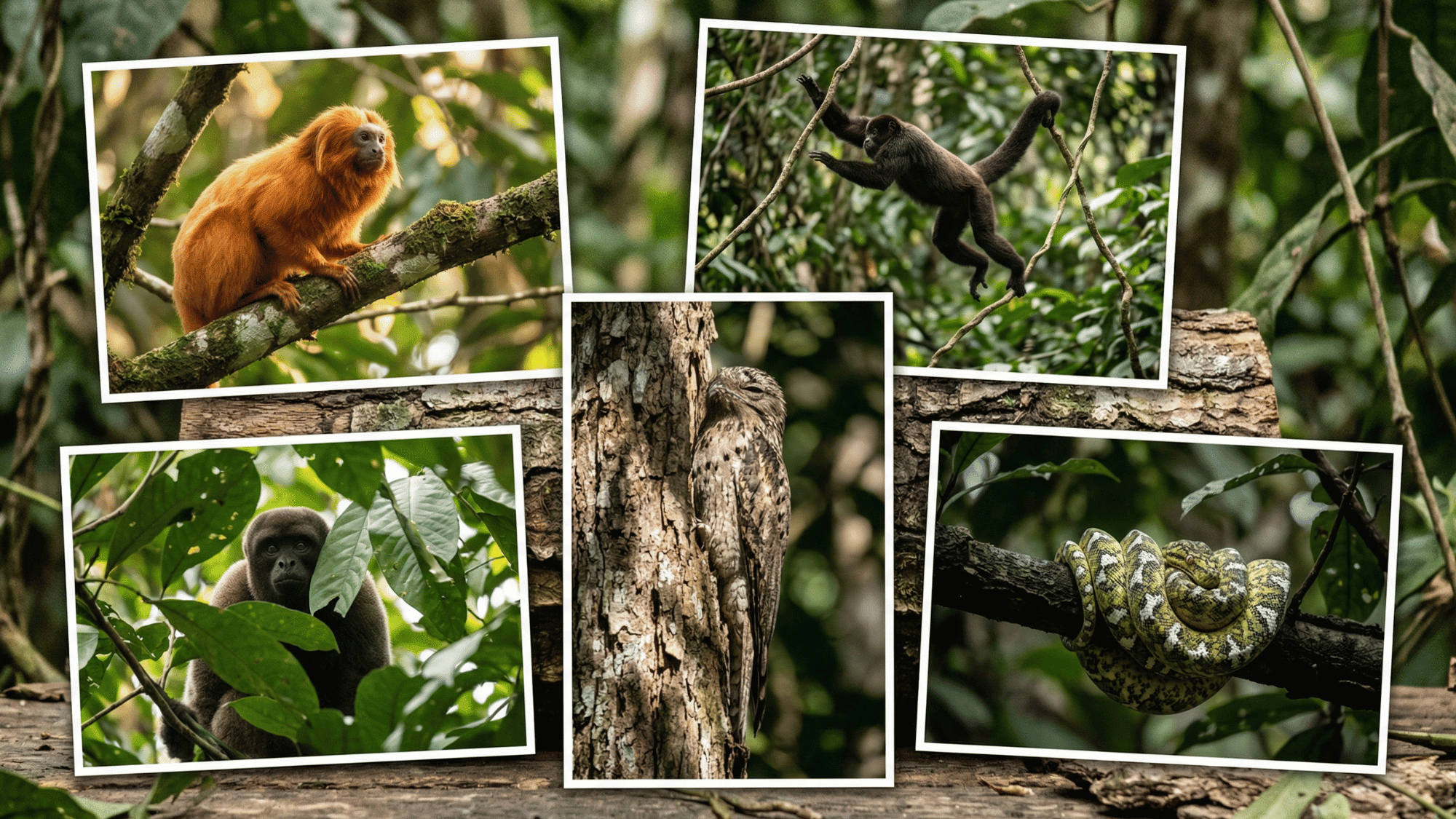
High above the ground, the Amazon canopy is filled with animals that live, feed, and move through the treetops.
6. Golden Lion Tamarin
The golden lion tamarin is a small primate with bright orange fur. It lives in groups and spends most of its time in trees. These animals feed on fruits, insects, and small animals. They play a key role in seed dispersal in the rainforest.
7. Saki Monkey
Saki monkeys are known for their bushy tails and unique facial features.
They live in the canopy and feed mainly on fruits and seeds. These monkeys are agile and can leap long distances between trees. They help spread seeds throughout the forest.
8. Woolly Monkey
Woolly monkeys are large primates with thick fur and strong limbs. They use their prehensile tails to move through trees with ease. Their diet mainly consists of fruits, leaves, and flowers. These monkeys are highly social and live in groups.
9. Potoo Bird
The potoo bird is a master of camouflage, blending perfectly with tree branches. It remains still during the day and becomes active at night. This bird feeds on insects caught mid-air. Its unique appearance helps it avoid predators.
10. Amazon Tree Boa
The Amazon tree boa is a non-venomous snake that lives in trees. It uses its strong body to wrap around branches and ambush prey. This snake feeds on birds and small mammals. Its coloration helps it blend into the forest canopy.
Birds, Reptiles, and Small Creatures
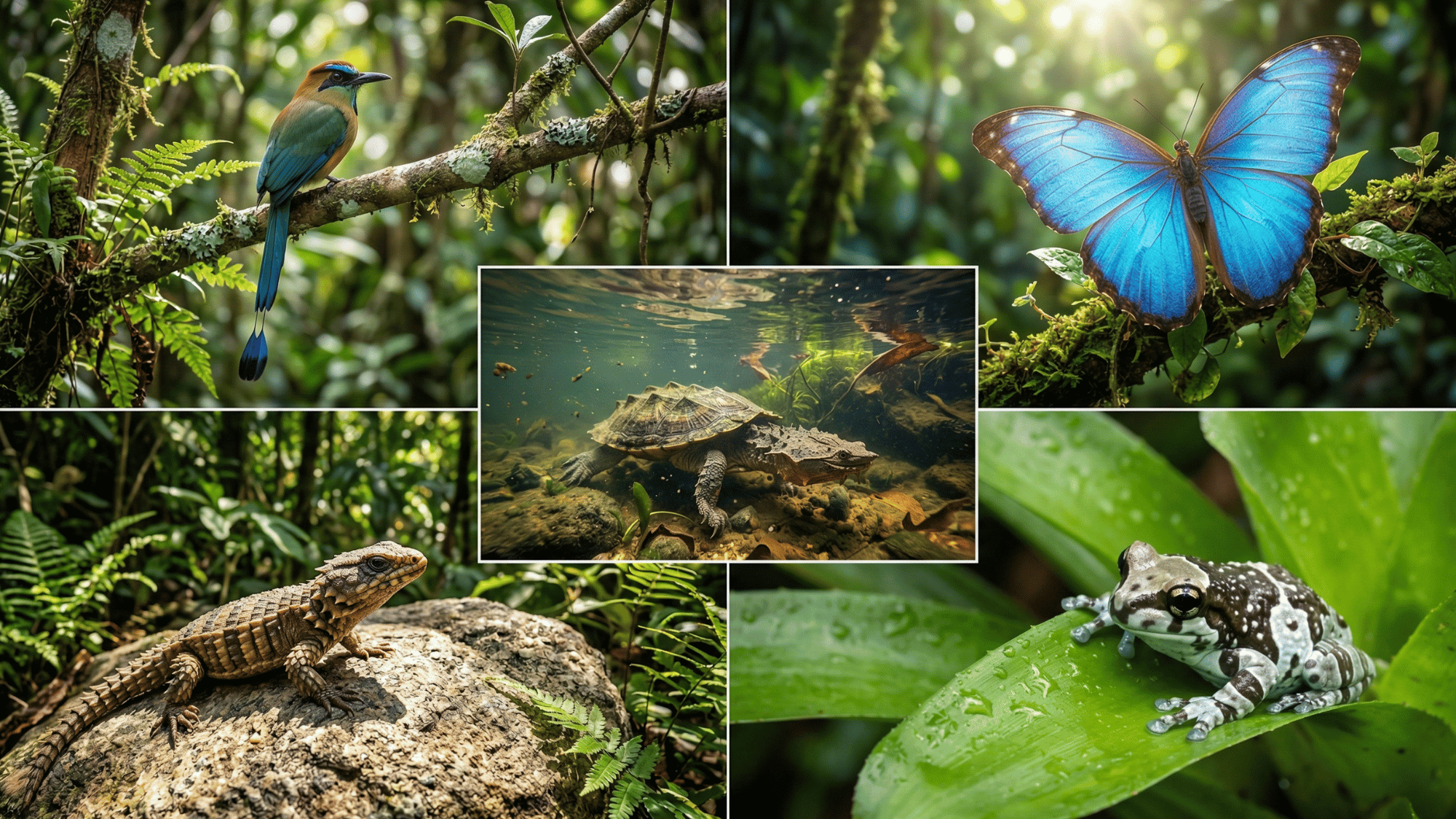
Beyond land and trees, the Amazon is rich with birds, aquatic species, and small creatures that add to its incredible biodiversity.
11. Amazonian Motmot
The Amazonian motmot is a colorful bird known for its distinctive tail feathers. It feeds on insects, fruits, and small reptiles. These birds often sit quietly before swooping down on prey. They contribute to both pest control and seed dispersal.
12. Blue Morpho Butterfly
The blue morpho butterfly is famous for its bright blue wings. It lives in rainforest areas and feeds on fruit juices and plant matter. Its flashing wings help confuse predators. It is one of the most recognizable insects in the Amazon.
13. Matamata Turtle
The matamata turtle is a strange-looking reptile found in slow-moving waters. Its rough shell and skin help it blend into its surroundings.
It feeds by sucking in fish and small aquatic animals. This turtle relies heavily on camouflage for survival.
14. Armadillo Lizard
The armadillo lizard is known for its tough, armored scales. It curls into a ball when threatened, protecting its soft underside. This reptile feeds on insects and small invertebrates. Its unique defense mechanism makes it stand out.
15. Amazon Milk Frog
The Amazon milk frog is a tree-dwelling amphibian with smooth skin. It secretes a milky substance that helps protect it from predators. These frogs live near water and are active at night. They thrive in humid rainforest environments.
Challenges Endangering Animals in the Amazon
Animals in the Amazon rainforest face several serious threats that endanger their survival and disrupt the balance of this vital ecosystem.
- Deforestation: Large areas of forest are cleared for logging, reducing habitats and food sources.
- Climate Change: Altered weather patterns affect plant growth and water availability for wildlife.
- Illegal Hunting: Poaching reduces animal populations and disrupts the food chain.
- Habitat Fragmentation: Forests are broken into smaller sections, isolating animal populations.
- Mining Activities: Mining pollutes rivers and destroys natural habitats.
- Agricultural Expansion: Land cleared for farming reduces biodiversity and natural ecosystems.
Wrapping It Up
The Amazon rainforest is truly a treasure of nature, home to some of the rarest and most different animals on Earth. From giant anacondas to tiny tree frogs, every creature adds to the beauty and wonder of this magical forest.
These animals depend on the rainforest to survive, and the rainforest depends on them too. It is our duty to protect this incredible place and the lives within it.
Without proper care and awareness, we risk losing these amazing species forever, an irreplaceable loss for the entire world.