Scissor skills are an important part of a child’s early development. They help build hand control, coordination, and precision over time.
These skills do not develop all at once. They follow a step-by-step pattern based on how the body grows.
Understanding this progression makes it easier to know what is expected at each age. It also helps identify what is normal and what may need attention.
As you begin to notice these stages in your child, having a few simple cutting activities to try at home can make it easier to turn that understanding into everyday practice
How Scissor Skills Develop Over Time
Scissor skills depend on several systems working together. These systems improve step-by-step as a child grows.
- Hand strength: allows opening and closing the scissors
- Finger control: helps the thumb and fingers move separately
- Bilateral coordination: lets one hand cut while the other holds paper
- Visual control: helps guide cutting in the right direction
These skills build gradually and are often strengthened through regular hand use in play and daily activities.
Scissor Skills by Age
Scissor skills develop in stages as hand control and coordination improve over time. Each age shows different abilities, moving from simple snipping to more controlled cutting.
1.5 to 2 Years: Early Exploration
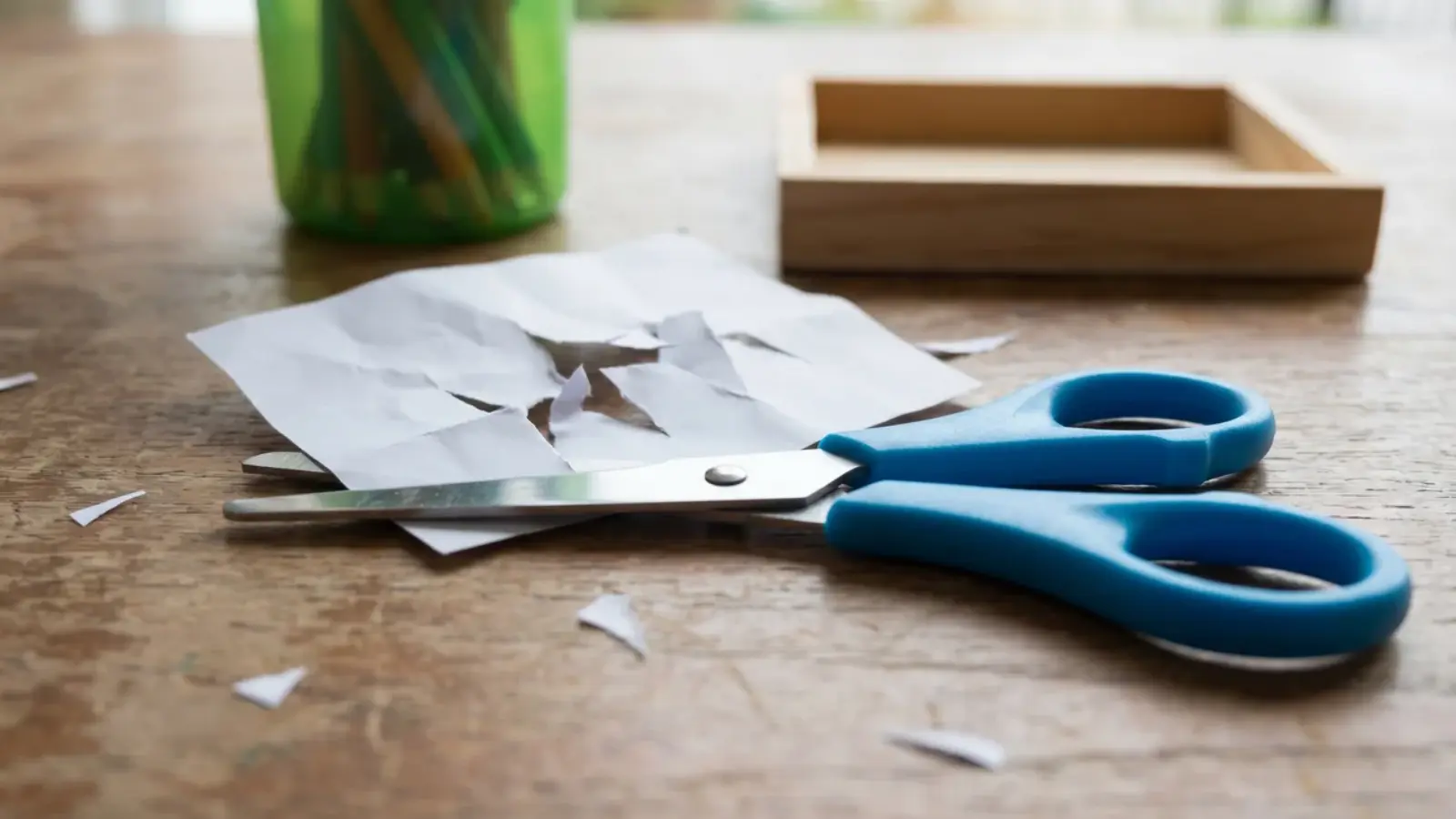
At this stage, children are just starting to interact with scissors.
- They may hold scissors awkwardly
- They often use both hands to open and close
- Movements are random and not controlled
This happens because finger strength is still limited. The child cannot yet control each finger separately. The outcome is simple movement practice, not actual cutting.
2 to 3 Years: Beginning Control
Children start gaining better control over the motion.
- They can open and close scissors more intentionally
- They begin snipping paper edges
- One hand may start doing most of the work
This stage develops as finger strength improves. The brain begins coordinating movement more effectively. However, cutting is still not guided.
3 to 4 Years: Cutting Across Paper
At this stage, cutting becomes more purposeful.
- Children can cut across a piece of paper
- They attempt to follow straight lines
- One hand cuts while the other holds the paper
This shift happens due to better coordination between both hands. Visual tracking also improves during this stage.
4 to 5 Years: Improved Accuracy
Children begin to show more control and direction.
- They can follow lines with better accuracy
- They start cutting simple shapes
- They learn to turn paper while cutting
This stage develops from stronger coordination and better visual control. The outcome is smoother cutting, but not perfect precision.
Curves and detailed shapes may still be difficult. This is due to the need for finer control.
5 to 6 Years: Mature Control
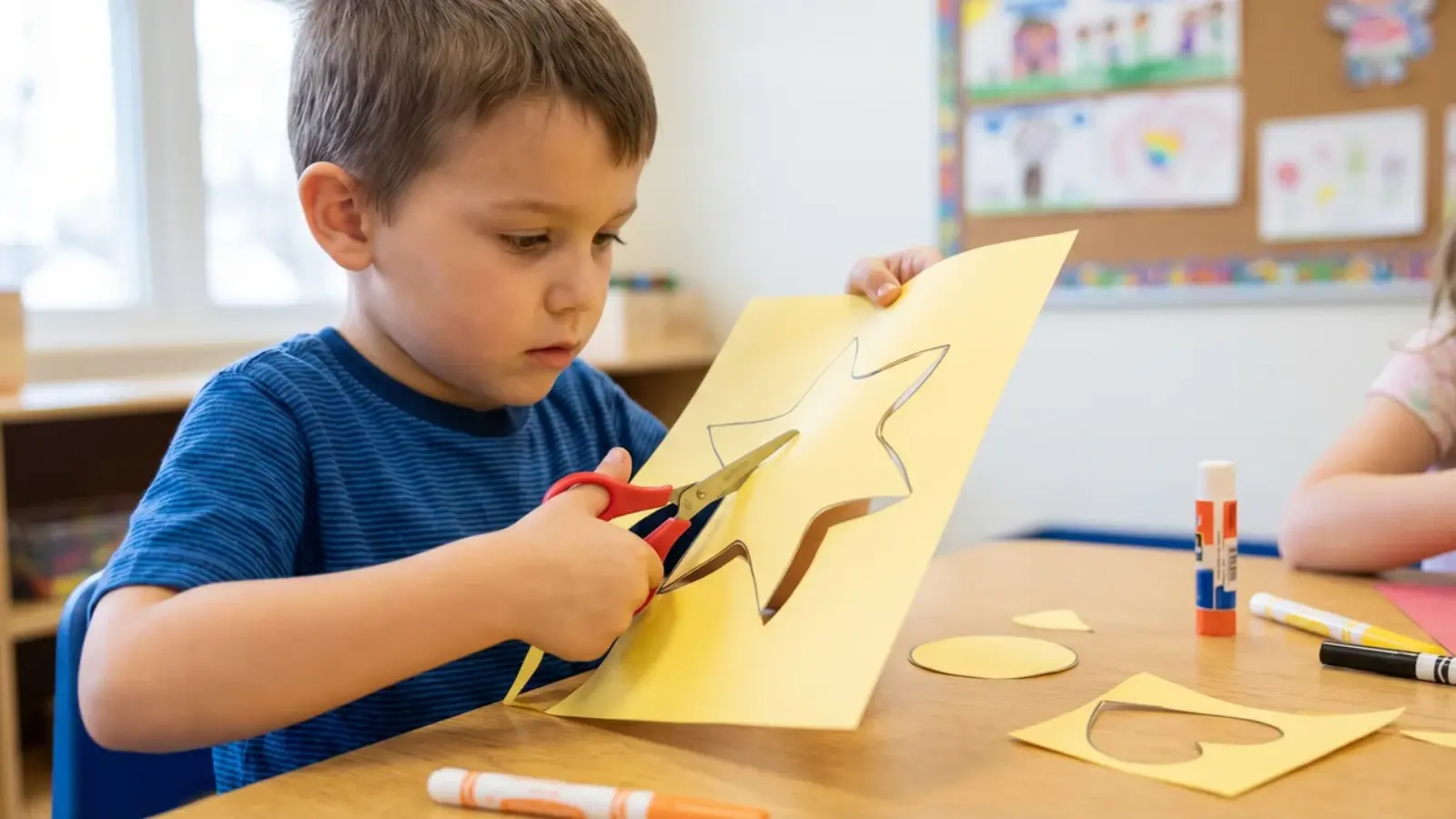
By this stage, scissor skills are much more refined.
- Children use a proper grip consistently
- They can cut shapes with smoother edges
- They can handle curves and more detailed patterns
This level is possible because fine motor control is more developed. Hand and eye coordination work together efficiently. Cutting becomes more accurate and independent.
As control improves, these skills begin to carry over into early writing tasks. Children can manage pencils more easily and start forming shapes with greater confidence and consistency
Why Scissor Skills Develop in This Sequence
Scissor skills follow a clear developmental order. This is because the body builds control step by step. Large movements develop first.
Smaller and more precise movements come later. Strength develops before control. Control develops before accuracy.
Each stage supports the next one. Without early strength and coordination, precision cannot develop.
This is why children cannot skip stages. Practice helps, but it cannot replace physical readiness.
Normal Variation vs. Developmental Concern
Some variation in development is expected. Not all children follow the exact same timeline.
| Category | What It Includes | What It Means |
|---|---|---|
| Normal Variation | Slight delays within a few months | Small delays are common and usually resolve with time |
| Differences in hand preference | Some children take longer to show clear hand dominance | |
| Uneven cutting during learning stages | Irregular cuts are expected while skills are still developing | |
| Developmental Concern | Difficulty opening and closing scissors by around age 3 | May indicate weak hand strength or limited finger control |
| No progress toward controlled cutting by age 4 | Suggests delays in coordination or motor skill development | |
| Poor grip or control by age 5 to 6 | May reflect ongoing challenges with fine motor skills |
These issues may relate to weak hand strength or coordination challenges. If delays are consistent and noticeable, further support may be helpful.
Common Misconceptions About Scissor Skills
It’s easy to form the wrong expectations when kids start learning to cut. A few common beliefs can make the process feel more frustrating than it needs to be.
- Neat cutting should happen early: This isn’t realistic. Control builds slowly, so uneven or rough cuts are part of normal development.
- More practice leads to instant improvement: Progress doesn’t happen overnight. It depends on how hand strength and coordination develop, not just how often a child practices.
- Messy cutting means poor ability: Irregular cuts are expected in the early stages. They show that a child is still learning control, not that they lack ability.
- Grip does not matter in early stages: Early habits play a big role. A proper grip from the start makes it easier to build better control later.
Understanding these points helps you set realistic expectations and support your child with more patience and confidence.
Conclusion
Scissor skills improve gradually as strength, control, and coordination develop. Each stage plays a key role in building the next level of ability.
Children move from simple movements to more accurate cutting over time. Small differences in progress are normal and expected.
Looking at development by age gives a clearer picture of what to expect. It also helps in recognizing when progress may need closer attention.
Have you noticed your child’s progress with scissor skills? Share your experience or questions in the comments below.