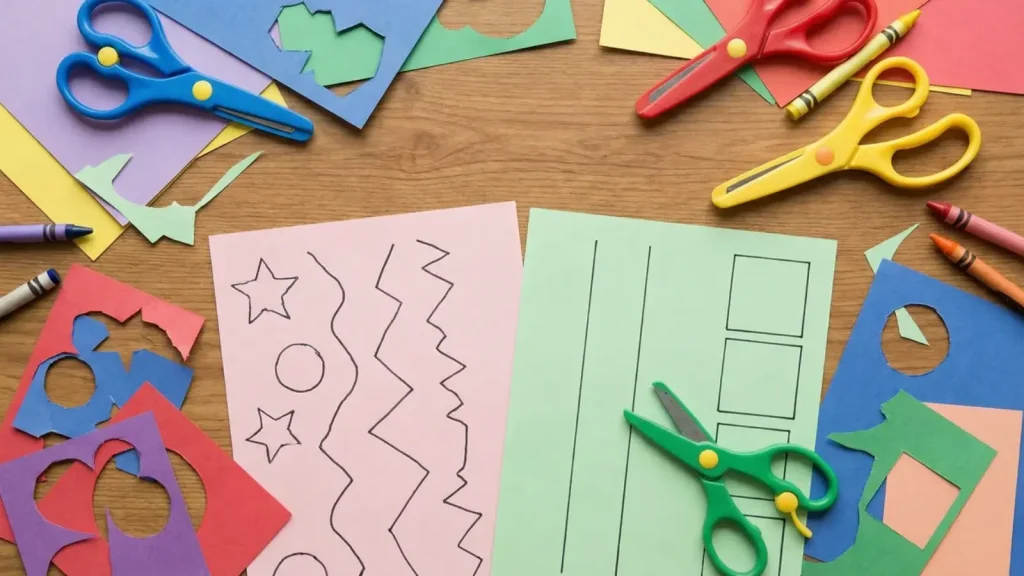
If your child struggles with cutting, it’s easy to think they just need more practice with scissors. But in many cases, the problem starts much earlier.
Cutting is not just about using a tool. It depends on how well a child can control their hand movements, follow directions, and coordinate both hands.
As explained in the main guide, these abilities develop before scissors are even introduced. When the foundation is strong, cutting feels smoother and more manageable.
In this post, we’ll focus on what’s happening beneath the surface. You’ll see why cutting challenges often come from missing foundational skills and how these gaps affect control, accuracy, and progress.
Why Cutting Problems Often Start Before Scissors
Cutting problems rarely begin with the scissors themselves. They usually start earlier, with how well a child can control their hand movements.
Cutting requires steady, repeated actions. A child must open and close the scissors smoothly while guiding them along a path. Understanding cutting progression can make this much clearer. This depends on control, coordination, and timing working together.
When these skills are not developed, the movement breaks down. The scissors may open unevenly, and the hand may not follow the intended direction. This leads to cuts that go off track or stop midway.
The result is often frustration. The child may slow down, lose interest, or avoid the task altogether.
It’s easy to assume that more practice will solve this. But without the right foundation, repeated cutting only reinforces the same mistakes instead of improving control.
The Core Skills that Directly Control Scissor Use
As explained earlier, cutting depends on specific control skills, not just practice. These core abilities directly influence how smoothly a child can use scissors and follow a path.
When even one of these is weak, the overall movement becomes less stable and harder to manage.
Finger Control and Grip Strength
Finger control allows a child to open and close scissors with precision instead of using the whole hand. Grip strength supports steady pressure during movement.
When this is weak, the scissors may open unevenly or slip. This leads to shaky cuts and frequent stops, making the task feel harder than it should.
Visual Tracking and Direction Control
Visual tracking helps the child guide scissors along a line or shape. The eyes continuously adjust to the movement as the hand progresses.
When this coordination is weak, the child struggles to stay on track. Cuts may drift away from the line, especially when direction changes or curves are involved.
Stabilizing Hand Coordination
Cutting requires one hand to move the scissors while the other holds the paper steady. This coordination keeps the surface stable during movement.
When it is missing, the paper shifts or turns unexpectedly. As a result, the child loses accuracy and finds it difficult to complete even simple cutting tasks.
These core abilities do not develop on their own. They are strengthened through simple hand-based activities that build control, coordination, and steady movement over time
Why Practice Alone Doesn’t Fix Cutting Struggles
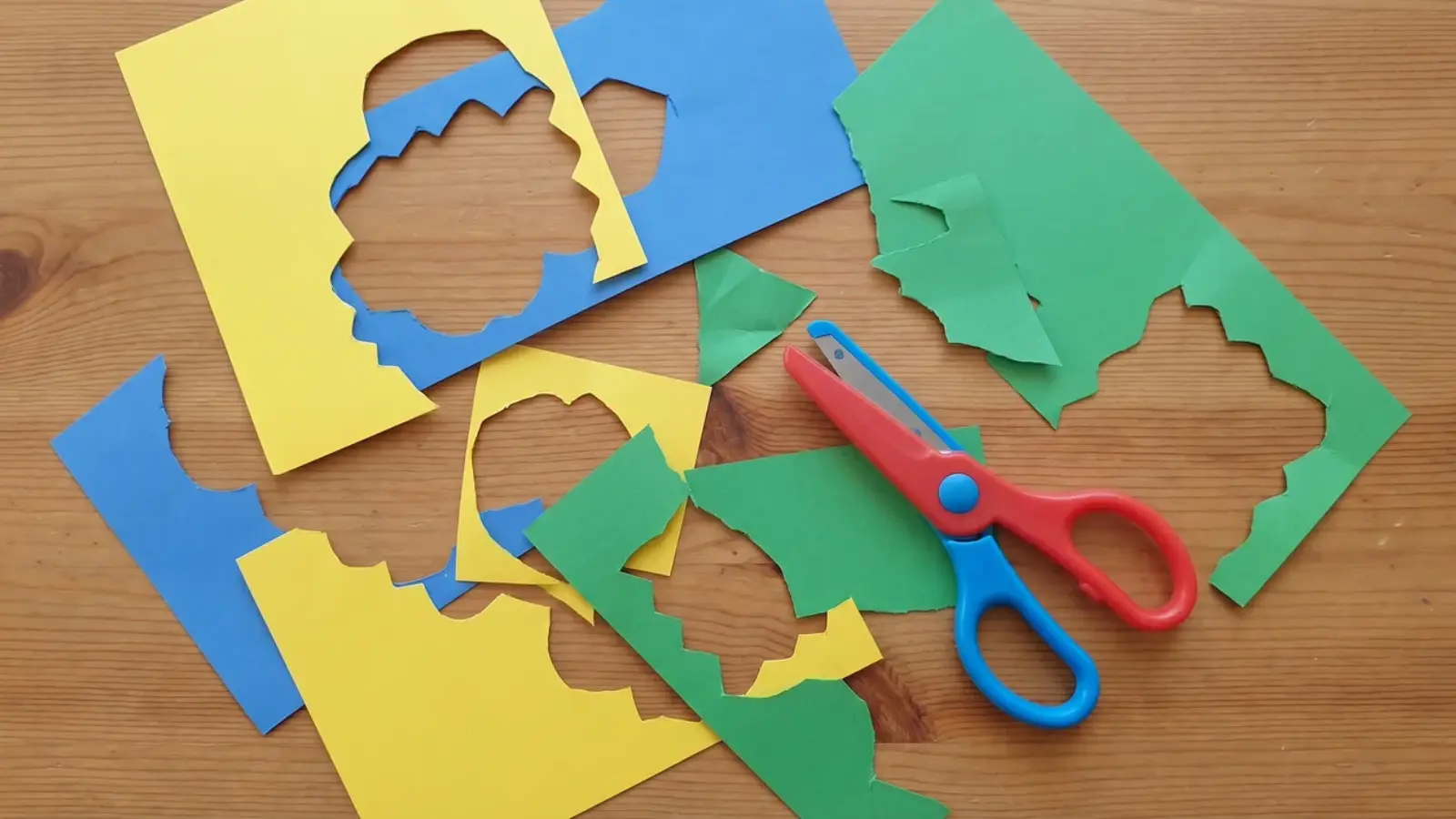
It may seem like more cutting practice will solve the problem, but without proper control, it often does not work that way.
The cause lies in how the child is practicing. If the underlying control is weak, the child repeats the same incorrect movements. The focus stays on using the scissors, not on improving movement quality. As a result, the same errors keep happening.
This leads to a repetition problem. The child may get slightly better at opening and closing scissors, but still struggles with direction and accuracy.
Over time, progress slows down or stops completely. This plateau can feel confusing because effort is there, but results are not improving.
The issue is not a lack of practice. It is a lack of foundation. Until control improves, practice alone will continue to reinforce the same mistakes.
Early Movement Gaps that Affect Cutting Accuracy
Cutting accuracy often breaks down due to gaps in early movement control.
- Directional control is limited: The child struggles to guide scissors along straight or curved paths, especially when direction changes.
- Movement adjustment is missing: Cutting needs small corrections during motion. Without this, mistakes cannot be fixed mid-task.
- Resulting difficulty: The child can snip paper but cannot follow lines or cut shapes with accuracy.
These gaps may seem small, but they directly affect how controlled and precise cutting becomes.
How Weak Foundations Show Up During Cutting Tasks
When foundational skills are weak, the signs become visible during simple cutting tasks. These behaviors often reflect control issues rather than a lack of effort.
Control Issues
Cuts often look uneven or shaky, and the child may pause frequently during the task. Scissors may not open and close smoothly, showing difficulty in maintaining consistent movement.
This lack of control makes even simple cutting feel challenging and slows down overall progress significantly for the child.
Coordination Issues
The child may struggle to follow lines or stay on the intended path while cutting. At the same time, the paper may shift or turn because both hands are not working together.
This lack of coordination affects accuracy and makes it harder to complete even basic cutting tasks properly.
Endurance Issues
The child may get tired quickly or lose focus before finishing the task. Cutting may feel effort-heavy, leading to slower movement and reduced interest.
Over time, the child may begin to avoid cutting activities altogether because the task feels difficult and less manageable than expected.
Why Strengthening the Foundation Changes Cutting Performance
When the foundation improves, cutting performance changes in a noticeable way. The child no longer struggles with basic control, so movements become smoother and more consistent.
This happens because the hands require less effort to perform each action. Finger control improves how scissors open and close, while coordination helps guide movement along a path.
As these processes become more automatic, the child can focus on the task instead of managing the movement.
The outcome is clear. Cuts become cleaner, accuracy improves, and the child feels more confident. What once felt difficult starts to feel manageable, leading to better engagement and steady progress.
Conclusion
Cutting difficulties are rarely just about the scissors. They are usually a sign that the underlying skills are still developing. When control, coordination, or stability is missing, even simple cutting tasks can feel difficult and frustrating.
The key is understanding where the problem starts. Once the foundation improves, cutting becomes smoother, more accurate, and less effortful. This shift builds confidence and supports steady progress.
As covered throughout, cutting is closely linked to writing readiness. Strong control during cutting often leads to better pencil use later. When the base is in place, both skills begin to improve more naturally.
If you’ve noticed your child struggling with cutting, feel free to share your experience in the comments.