

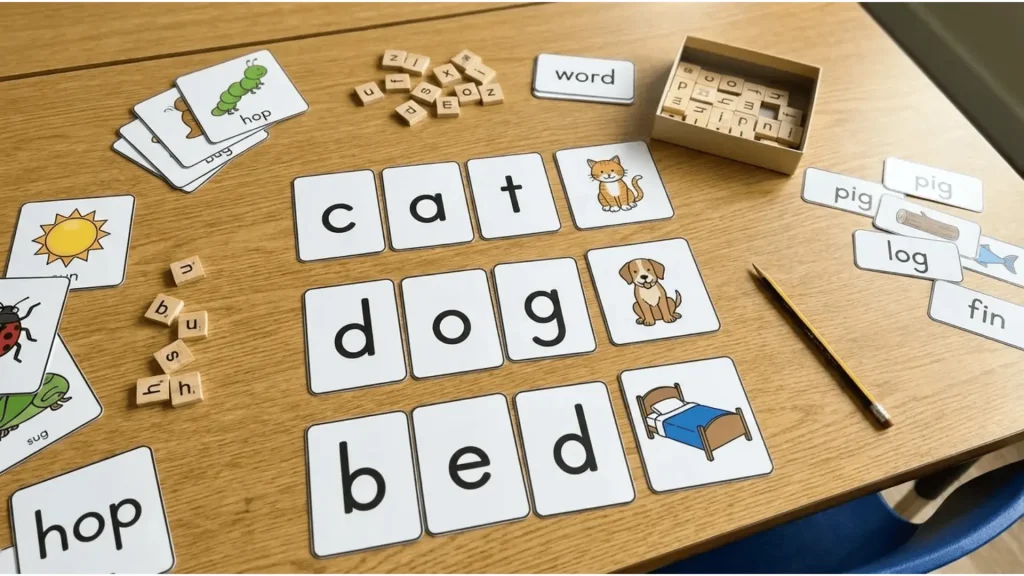
How do young readers learn to blend sounds into words? CVC words are often the first step in phonics learning. These simple three-letter words help students understand how letters and sounds work together.
Teachers often look for engaging ways to teach these words. Games and hands-on activities can make phonics lessons easier and more enjoyable for students.
This blog shares practical CVC word activities teachers can use during reading lessons. The ideas include simple games, classroom tasks, and group activities that help students practice blending, reading, and spelling CVC words.
What are CVC words and Why They Matter
CVC words are simple three-letter words made with a consonant, vowel, and consonant pattern, such as cat, dog, sun, and pen.
They help young readers understand how sounds work together to form words.
CVC words matter because they build early phonics skills, improve blending practice, and give students confidence as they begin reading and spelling simple words.
- Help students connect letters with sounds
- Make sound blending easier to practice
- Build early reading confidence
- Support spelling and word-building skills
- Prepare students for longer words and simple sentences
Fun CVC Word Activities for the Classroom
Interactive activities make phonics lessons more engaging for young learners.
These tasks help students practice reading, blending sounds, and spelling simple CVC words in a fun and active way.
1. CVC Word Picture Match
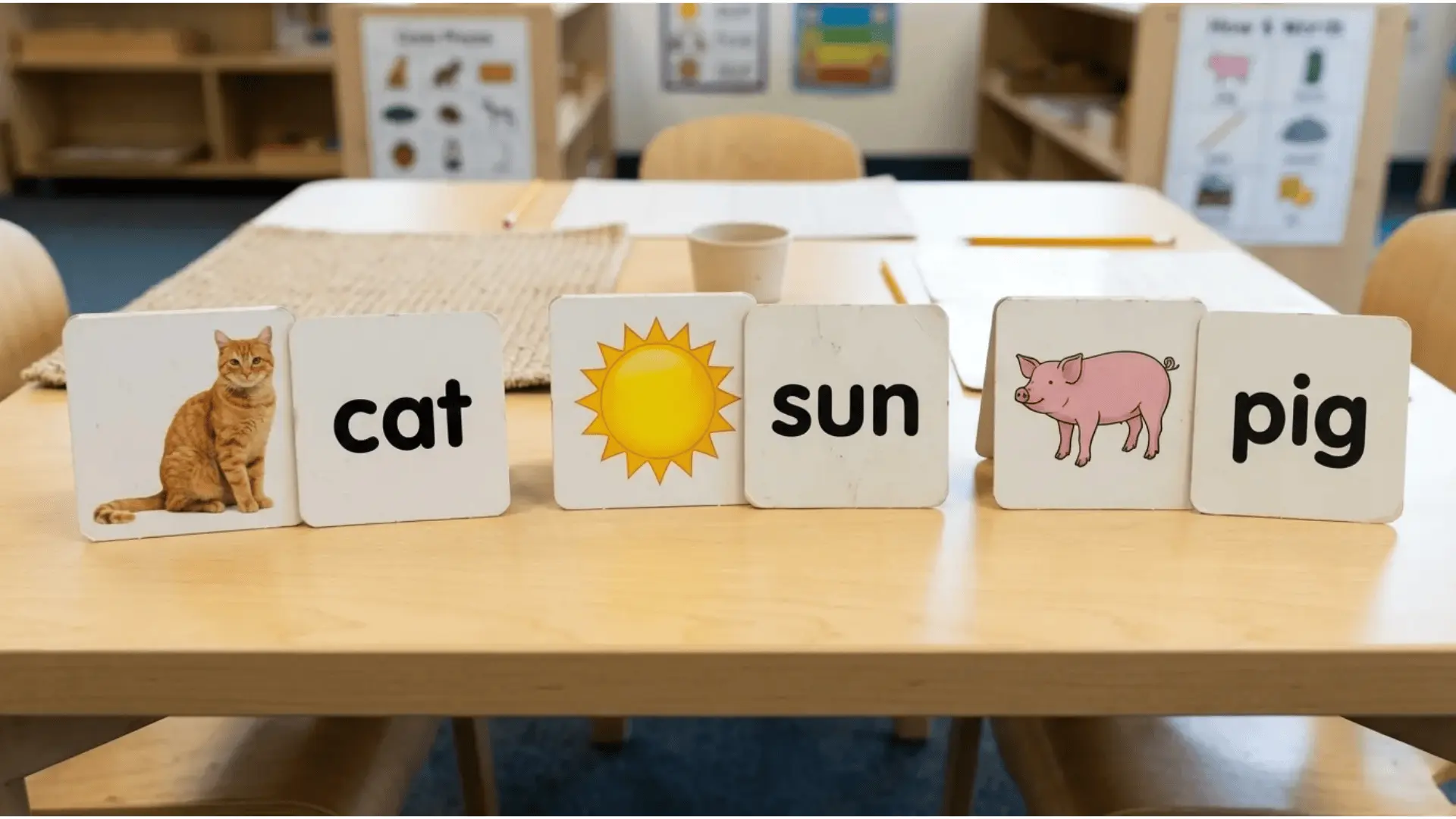
In this activity, students match pictures with the correct CVC word. Seeing the picture helps them connect the word with its meaning and sounds.
Examples include:
- Cat Image: Match the picture with the word cat.
- Sun Image: Match the picture with the word sun.
- Pig Image: Match the picture with the word pig.
Picture matching helps students connect letter sounds with familiar objects. It also strengthens word recognition and early reading skills.
2. Build the Word Activity
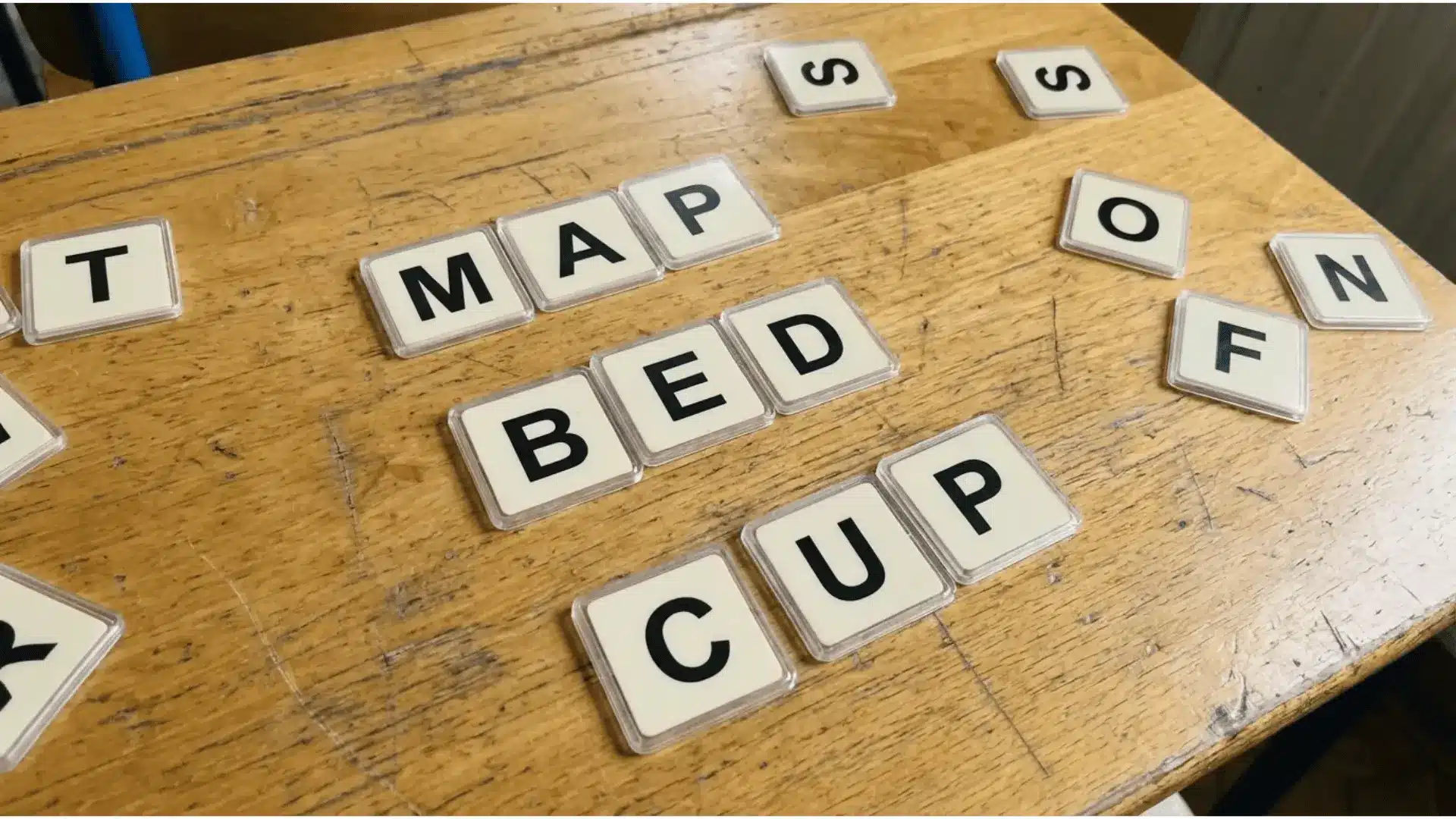
In this activity, students use letter cards, tiles, or magnetic letters to build CVC words. Teachers say a word aloud, and students arrange the letters in the correct order to spell the word.
Examples include:
- Word Build: Students hear the word map and place the letters m – a – p to spell it.
- Sound Order: Students listen to the sounds in bed and arrange b – e – d correctly.
- Blend Practice: Students blend c – u – p to form the word cup.
Teachers can ask students to say each sound before placing the letter. This step helps them connect letters with sounds.
The activity also allows students to check their spelling visually. Seeing the word formed helps reinforce phonics patterns.
3. CVC Word Bingo Game
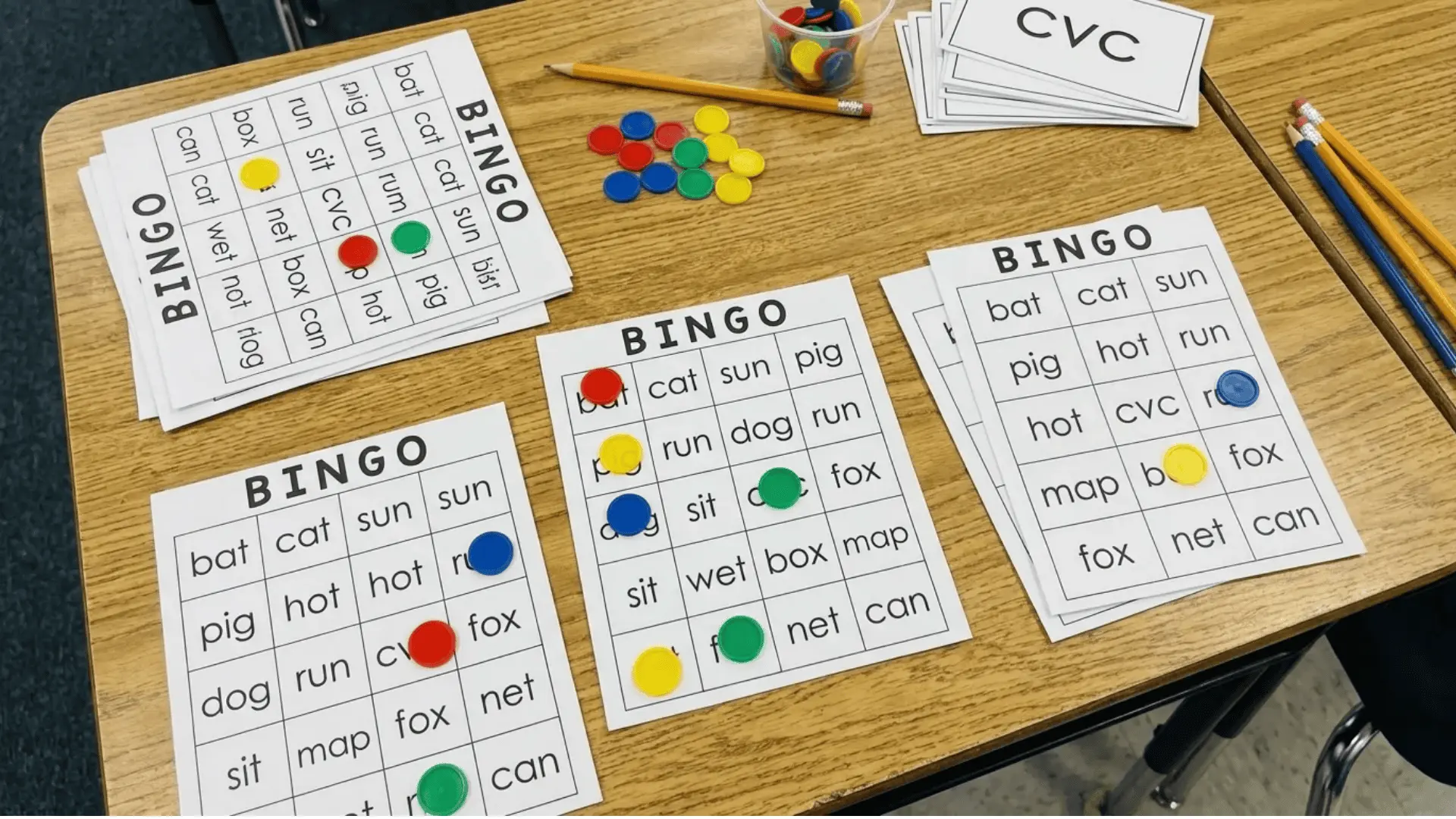
In this game, each student receives a bingo card filled with different CVC words. The teacher calls out a word, and students listen carefully to find the correct word on their card.
Examples include:
- Word Call: The teacher says the word “bat.”
- Student Search: Students look for the word bat on their bingo cards.
- Match Check: When they find the word, they mark the square.
The first student to complete a row calls out Bingo. This activity helps students practice listening to sounds and quickly recognizing simple CVC words.
It also strengthens reading confidence while keeping phonics practice fun.
4. CVC Word Hop Game
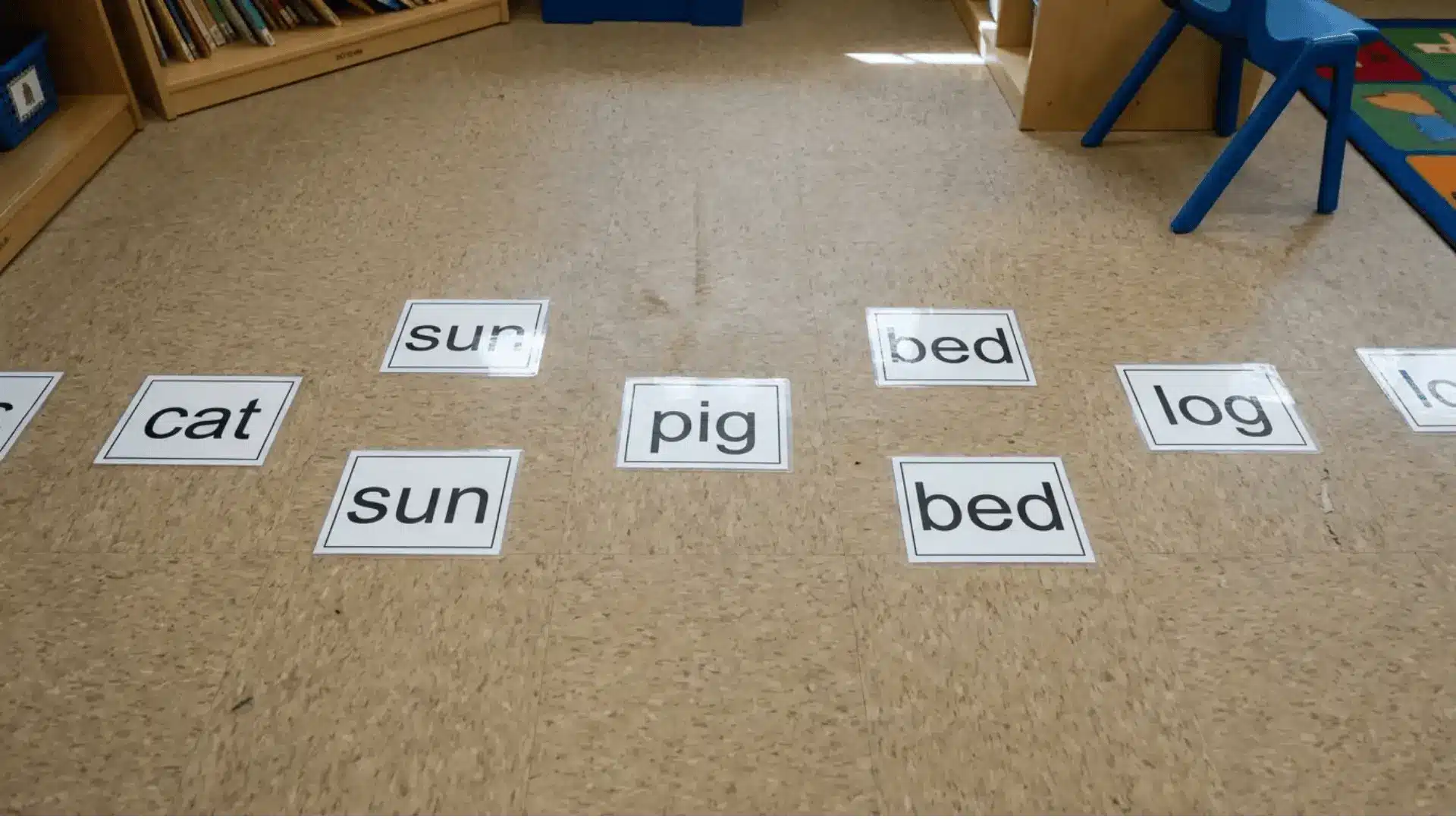
CVC Word Hop is a movement-based phonics activity that keeps students active while practicing reading. Teachers place CVC word cards on the floor around the classroom.
Students listen to the word the teacher says and jump to the correct word card.
Examples include:
- Word Read: The teacher says the word “log.”
- Student Jump: Students jump to the word log on the floor.
- Sound Check: Students say each sound /l/, /o/, /g/ while standing on the word.
Teachers can repeat the activity using other CVC words such as cat, sun, pig, bed, or cup. Students listen carefully, recognize the word, and move to the correct card.
This activity combines phonics practice with physical movement. It helps students stay focused while strengthening sound-blending and word recognition skills.
5. Magnetic Letter Word Building

In this activity, students use magnetic letters to build simple CVC words on a board or metal surface. Teachers say a word aloud, and students choose the correct letters to spell the word.
Examples include:
- Word Build: Students use magnetic letters p – e – n to spell pen.
- Sound Swap: Replace p with t to change “pen” to “ten”.
- Letter Change: Change e to i to turn “ten” into “tin”.
Students can read each new word aloud after building it. This helps them hear how changing one letter creates a new word.
Magnetic letter activities help students understand how sounds and letters work together. They also show how small letter changes can create many different words.
6. CVC Word Sorting Activity
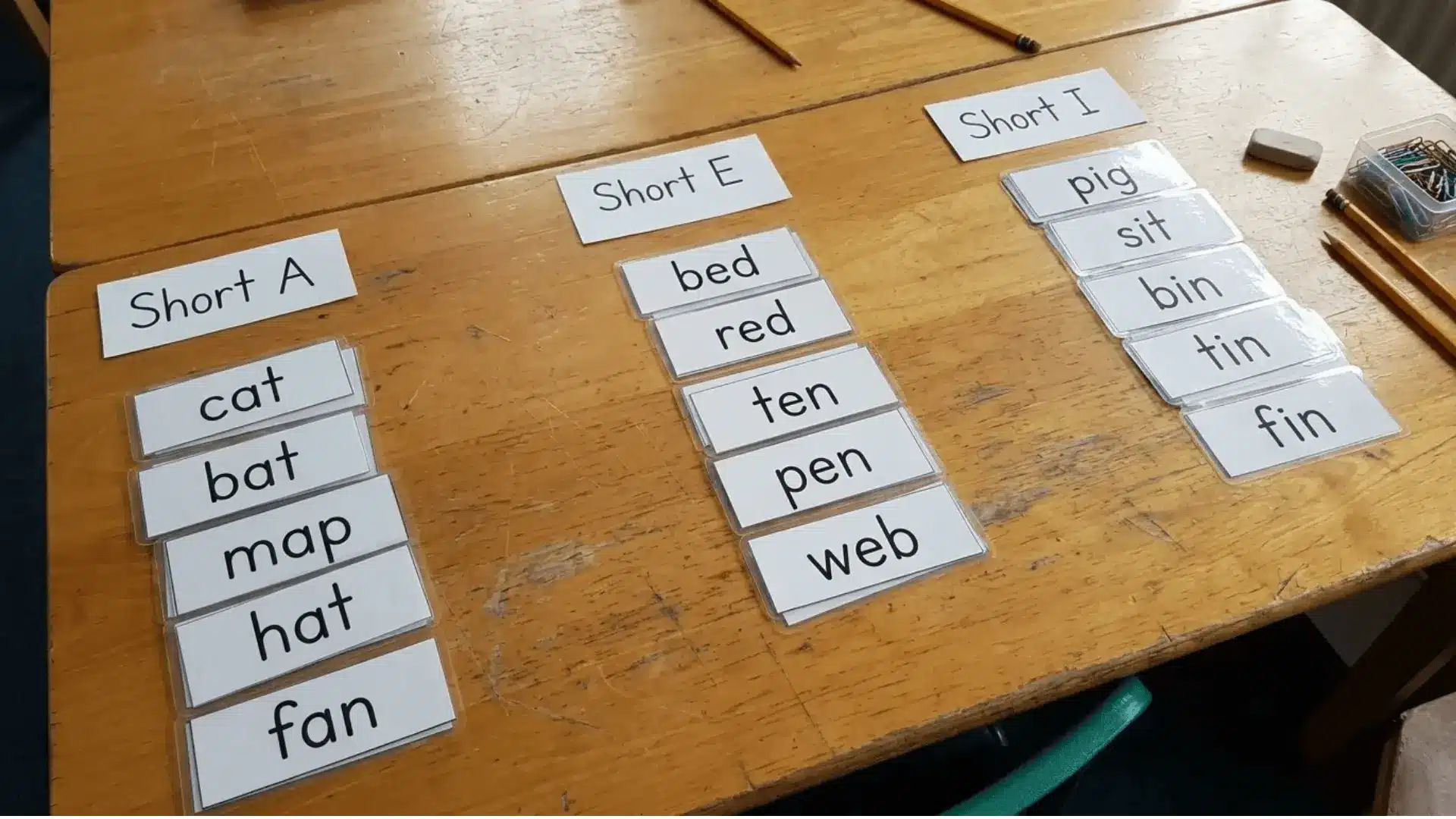
In this activity, students sort CVC words based on their middle vowel sound. This helps them notice how vowel sounds change the pronunciation of words.
Examples include:
- Short A Words: cat, bat, map
- Short E Words: bed, red, hen
- Short I Words: pig, lid, pin
Teachers can give students word cards and ask them to place each word under the correct vowel group. Students can also read the words aloud as they sort them.
Sorting activities help students recognize phonics patterns and understand how vowel sounds affect word reading.
Planning Daily CVC Word Lessons
Teachers can include CVC word activities in daily reading lessons. A simple routine helps keep phonics practice clear and organized for young learners.
| Day | Lesson Focus | Activity Plan | Practice Task |
|---|---|---|---|
| Monday | Introduce CVC Words | Explain that CVC words have a consonant, vowel, and consonant sound, such as cat, dog, and sun. | Students read 5 simple CVC words aloud. |
| Tuesday | Sound Blending | Help students blend sounds slowly, such as /c/ /a/ /t/ → cat. | Students blend and read short CVC word cards. |
| Wednesday | Word Building | Use letter tiles or cards to build CVC words by changing one sound at a time. | Students make 3–5 CVC words with teacher support. |
| Thursday | Reading Practice | Give students short CVC word lists or simple sentences using CVC words. | Students read words or sentences with a partner. |
| Friday | Review And Check | Review the week’s CVC words through a game, quick quiz, or matching activity. | Students read, write, or match CVC words independently. |
This routine helps students practice sounds, reading, and spelling regularly. It supports steady phonics development and builds early reading confidence.
Tips for Teaching CVC Words
Simple teaching strategies help students understand phonics more easily. Regular practice helps children recognize sounds and read simple words with confidence.
- Start with Short Vowel Sounds: Begin with short vowel sounds such as a, e, and i. These vowels appear in many beginner CVC words, like cat, bed, and pig, making them easier for students to learn first.
- Use Visual and Sound Support: Use pictures along with spoken sounds. Seeing an image while hearing the sounds helps students connect the word with its meaning.
- Practice with Daily Activities: Include short phonics activities every day. Regular practice with word reading and sound blending helps students build strong early reading skills.
Final Thoughts
CVC word activities give young students a strong start in phonics. These simple words help children practice blending sounds, recognizing patterns, and building reading confidence.
When learning is hands-on and fun, students stay engaged and motivated. Teachers can easily work these activities into daily lessons through picture matching, word building, or movement games.
Even small, consistent practice sessions make a big difference over time. The key is keeping it interactive and low-pressure. Want more ideas to support early literacy in your classroom?
Check out our other blogs for fresh phonics activities, teaching tips, and reading strategies you can use right away.
Frequently Asked Questions
What Age Should Students Start Learning CVC Words?
Most students begin learning CVC words in preschool, kindergarten, or early first grade. They should first know basic letter sounds before blending words.
Are CVC Words the Same as Sight Words?
No. CVC words are sounded out using phonics, while many sight words are learned by quick recognition. Some CVC words can also become sight words with practice
How Do You Help Students Who Struggle with Blending?
Break the word into sounds, stretch each sound slowly, then say the word together. Using counters, fingers, or letter tiles can make blending easier


